Table of Contents
ToggleYour entryway does heavy lifting. It’s where shoes pile up, keys vanish, and guests form their first opinion of your home. The right furniture turns this high-traffic zone from a dumping ground into an organized, welcoming space. Whether you’re working with a grand foyer or a narrow hallway, smart furniture choices solve real problems, corralling clutter, providing a spot to sit while wrestling with boots, and setting the design tone for everything beyond. This guide walks through the essential pieces, sizing strategies, and styling decisions that make an entryway work hard and look sharp.
Key Takeaways
- Furniture for entryway serves dual purposes—solving practical clutter problems while establishing your home’s visual design and adding resale value through an organized first impression.
- Console tables and storage benches are foundational pieces that maximize function in any entryway size, with console tables handling daily drop-offs and benches providing seating for putting on shoes.
- Space-specific furniture selection is critical: small entries require vertical storage and compact pieces, medium entries fit standard console-and-bench combinations, and large foyers benefit from symmetrical layouts with substantial pieces.
- Material durability matters in high-traffic areas—solid wood and metal frames withstand daily abuse better than engineered wood, while performance fabrics and vinyl upholstery resist moisture and stains at doorways.
- Strategic styling ties furniture to your home’s design through coordinated wood tones, matching metal finishes, and layered textures, while mirrors above consoles and appropriately-sized rugs enhance both functionality and perceived space.
Why Entryway Furniture Matters More Than You Think
Most homeowners underestimate the entryway until they’re tripping over shoes or searching for keys every morning. Functional furniture here prevents daily frustrations and protects your home’s interior.
A proper entryway setup keeps dirt and moisture from tracking through the house. Benches with storage give family members a place to remove muddy boots before they hit carpet or hardwood. Console tables catch mail, sunglasses, and pocket contents before they migrate to kitchen counters. Without designated spots for everyday items, clutter spreads.
From a design perspective, the entryway establishes visual expectations. Guests spend 3-7 seconds forming first impressions, what they see stepping through your door colors their perception of the rest of your space. Cohesive furniture choices signal intention and care.
Practical entryway furniture also adds resale value. Home buyers notice organized, well-defined spaces. A thoughtfully furnished entry suggests the rest of the home receives similar attention. It’s a small investment that pays dividends in daily function and long-term home value.
Essential Pieces Every Entryway Needs
Console Tables: The Entryway Workhorse
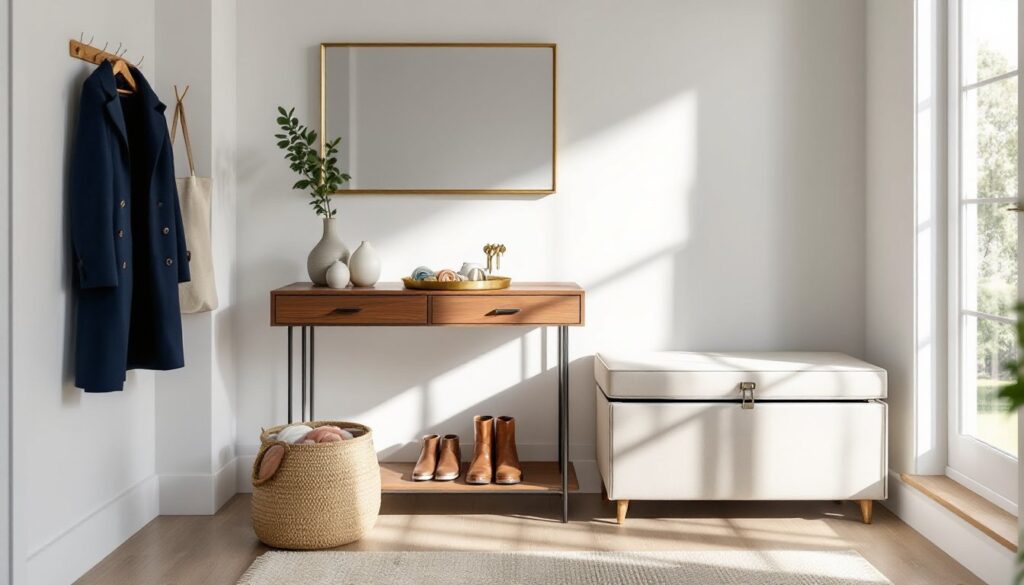
Console tables anchor most successful entryway layouts. Standard dimensions run 30-36 inches tall, 12-18 inches deep, and 36-60 inches wide, tall enough to use standing, shallow enough to avoid blocking pathways.
Look for tables with lower shelves or drawers. The tabletop handles daily drop-offs (keys, mail, phone), while concealed storage hides dog leashes, reusable shopping bags, and seasonal accessories. Open lower shelves work for displaying baskets that corral smaller items. Drawers keep things completely out of sight but require reaching down.
Material choice affects durability. Solid wood (oak, maple, walnut) handles the abuse of daily use and ages well. Engineered wood with veneer costs less but chips more easily at corners, fine for low-traffic homes, risky with kids or pets. Metal frames with wood or stone tops offer modern aesthetics and serious durability.
Many homeowners follow the design principles for entryways that emphasize both form and function when selecting console tables. Mount a mirror or artwork above the table at eye level (57-60 inches to center) to create a focal point and give guests a last-minute appearance check before heading out.
Benches and Seating Solutions
Seating transforms an entryway from a pass-through zone into a functional prep area. Benches 18 inches deep and 18-20 inches tall match standard chair height and provide comfortable seating for putting on shoes.
Storage benches combine seating with concealed compartments. Lift-top designs hide boots, scarves, and pet supplies. Some models include cubbies underneath for breathable shoe storage, important in humid climates where enclosed storage can trap moisture and create odors.
Backless benches fit tighter spaces and maintain sightlines through narrow entryways. They work well floating in the center of a foyer. Benches with backs feel more furniture-like and suit larger spaces where they can anchor against a wall.
Upholstery matters for comfort and maintenance. Vinyl or faux leather wipes clean, critical near doorways where wet coats and dirty bags land. Performance fabrics (often polyester blends with stain treatments) offer softer seating while resisting moisture. Skip delicate materials like velvet or linen unless the entryway sees light use.
For small entries, consider a simple wooden stool or ottoman (16-18 inches square). It provides perching space without the footprint of a full bench.
Storage Options for Clutter-Free Entryways
Storage furniture prevents the entryway from becoming a staging area for household chaos. The right pieces match your household’s specific needs.
Hall trees combine coat hooks, a bench, and sometimes a mirror in one vertical unit. They occupy 24-30 inches of floor space and work well in corners or against short wall sections. Look for models with 4-6 hooks at varying heights, high for adults’ coats, lower for kids’ backpacks.
Coat racks (freestanding or wall-mounted) handle outerwear without requiring a closet. Freestanding models need 18-24-inch-diameter bases for stability when loaded with heavy winter coats. Wall-mounted versions save floor space but require hitting studs or using appropriate drywall anchors, toggle bolts rated for 50+ pounds if you’re hanging it on drywall alone.
Shoe cabinets with slatted doors or tilt-out drawers keep footwear accessible but hidden. Standard units hold 12-18 pairs in a footprint around 24 inches wide by 12 inches deep. Ventilated designs prevent moisture buildup.
Baskets and bins offer flexible, movable storage. Wicker, wire, or fabric baskets sit on console table shelves or tuck under benches. Label them (“Gloves,” “Dog Supplies,” “Outgoing Mail”) to maintain organization. For modern aesthetic inspiration that incorporates smart storage, spaces featured on design-forward platforms often showcase innovative furniture solutions.
Choosing Furniture for Different Entryway Sizes
Entryway dimensions dictate furniture scale and arrangement. Measure your space before shopping, and account for door swing clearance.
Small entryways (less than 25 square feet): Prioritize vertical storage. A wall-mounted coat rack above a narrow console (12 inches deep or less) keeps the floor clear. Skip the bench if it blocks the walkway, a small ottoman that slides under the console when not needed works better. Single-function pieces beat multi-function compromises in tight spaces where each inch matters.
Medium entryways (25-50 square feet): Standard console-and-bench combinations fit comfortably. Place the console against the longest wall and position a bench perpendicular or opposite, leaving 36 inches of clear pathway between furniture pieces. This width allows two people to pass comfortably. Add a narrow shoe cabinet or hall tree if you have a corner available.
Large entryways or foyers (50+ square feet): Symmetry creates impact. Flank the entry door with matching console tables or place a substantial 60+ inch console on the wall opposite the entry with seating on both sides. Round entry tables work well in the center of spacious foyers, look for 36-48 inch diameters that leave at least 3-4 feet of clearance around the perimeter for traffic flow.
Door swing direction affects layout. Inswing doors require keeping furniture clear of the arc. Outswing doors free up wall space immediately inside but may limit exterior furniture like boot trays or umbrella stands.
For narrow hallways serving as entryways, furniture can’t protrude more than 10-12 inches from the wall without creating bottlenecks. Look for wall-mounted solutions (floating shelves, shallow cabinets, peg rails) that maximize function while preserving passage width. Contemporary home design sites like Homedit often feature creative solutions for challenging entry layouts.
Style Tips to Make Your Entryway Furniture Shine
Cohesive styling ties entryway furniture into your home’s overall design while adding personality.
Match wood tones to nearby flooring or trim. If your home features warm oak floors, a console in similar tones creates continuity. Contrast works too, dark walnut furniture pops against light floors, but avoid mixing more than two wood finishes in one small space.
Coordinate metal finishes. If your door hardware is brushed nickel, choose console table legs, coat hooks, and basket frames in the same finish family. Mixing metals (like pairing brass hooks with chrome table legs) reads as unintentional rather than eclectic.
Add functional decor. A large bowl or tray on the console corrals keys and loose change. A table lamp (not just overhead lighting) creates warmth and makes the space usable during evening arrivals. Keep the tabletop two-thirds clear, overstuffed surfaces look cluttered rather than styled.
Layer textures without adding visual weight. A woven basket, ceramic vase, and linen table runner introduce variety without competing for attention. Stick to 3-5 decorative objects maximum on console tables.
Incorporate vertical elements. Tall items like floor vases, umbrella stands, or framed art leaning against the wall draw the eye upward, making low-ceiling entryways feel more spacious.
Use mirrors strategically. A mirror above the console reflects natural light from nearby windows and makes the space feel larger. Size it proportionally, the mirror should span two-thirds to three-quarters of the console width for balanced composition.
Rugs define the zone and protect floors. Choose indoor-outdoor rugs or natural fiber options (jute, sisal) that handle dirt and moisture. Size the rug so it extends 12-18 inches beyond the furniture footprint on all sides, or runs the full width of the entry hallway. Outdoor-rated rug pads prevent slipping on hard floors, critical in high-traffic entries.
Entryway furniture sets the functional and aesthetic tone the moment someone steps through your door. The right pieces, sized appropriately, styled cohesively, and selected for real-world use, transform a neglected transition space into an organized, welcoming introduction to your home. Measure carefully, prioritize storage, and choose durable materials that’ll handle years of daily traffic.