Table of Contents
ToggleDesigning a functional, age-appropriate bedroom for a girl involves more than picking pretty furniture. A well-chosen furniture set lays the foundation for organization, comfort, and long-term usability as she grows. Whether starting from scratch or upgrading a toddler’s room, the right pieces balance safety, storage, and style without requiring a total overhaul every few years. This guide walks through the practical decisions, material quality, sizing, configuration, and smart storage, that turn a furniture set into a room that works as hard as it looks good.
Key Takeaways
- A quality girls bedroom furniture set should prioritize solid wood or high-grade engineered wood with dovetail joints and soft-close drawer mechanisms for long-lasting durability and safety.
- Safety features including ASTM F2057 tip-over resistance standards, anti-tip hardware, rounded edges, and guardrails (5+ inches above mattress) are essential at every age.
- Convertible and modular girls bedroom furniture pieces extend usability as your child grows, eliminating the need for costly replacements every few years.
- Smart storage solutions like under-bed drawers, double-hang closet rods, floating shelves, and anchored bookcases maximize space while keeping floors clear and organized.
- Modern and cottage-style furniture adapts better to changing tastes than heavily themed pieces; reserve themes for inexpensive accessories like bedding and wall decals instead.
- Careful room planning with floor measurements, doorway clearance (30 inches minimum around beds), and ceiling height assessment prevents costly mistakes before purchasing furniture.
What to Look for in a Girls Bedroom Furniture Set
Focus on construction quality first. Solid wood (oak, maple, pine) and high-grade engineered wood (plywood with hardwood veneer) outlast particleboard. Check drawer glides, ball-bearing or soft-close mechanisms hold up better than plastic tracks. Dovetail joints on drawers signal durability.
Safety features matter at every age. Furniture should meet ASTM F2057 standards for tip-over resistance. Look for anti-tip hardware (brackets and straps) included in the packaging. Avoid sharp corners on bed frames and dressers: rounded edges or protective bumpers reduce injury risk. If the set includes a bunk or loft bed, guardrails should be at least 5 inches above the mattress surface per Consumer Product Safety Commission (CPSC) guidelines.
Finish and materials impact both aesthetics and maintenance. Water-based paints and stains with low or zero VOC (volatile organic compounds) improve indoor air quality. Laminate surfaces resist scratches and spills better than bare wood but can’t be refinished. Solid wood can be sanded and restained as tastes change.
Consider scalability. Convertible cribs that transition to toddler beds, twin beds with trundle options, or dressers that double as changing tables extend the furniture’s useful life. Modular pieces let parents add or swap components without replacing the entire set.
Popular Styles and Themes for Girls Bedroom Furniture
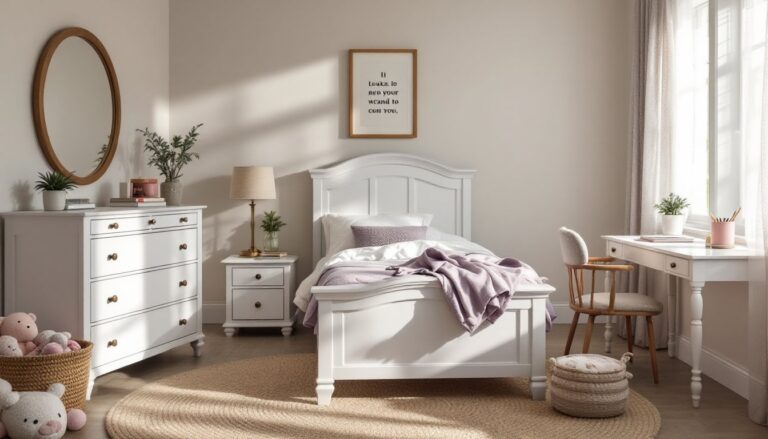
Traditional/Classic sets feature ornate details, curved legs, turned finials, raised-panel drawer fronts, often in white or pastel finishes. These work well in older homes with crown molding and wainscoting but can feel heavy in small rooms.
Modern/Contemporary designs emphasize clean lines, flat-panel construction, and neutral palettes (gray, natural wood tones, matte black). Hardware is minimal or integrated. This style adapts easily to changing decor and appeals to older kids and teens who want a more mature look.
Cottage/Farmhouse furniture combines painted finishes (distressed white, sage, soft blue) with natural wood accents. Planked details, X-bracing on bed frames, and metal hardware give a relaxed, lived-in feel. It pairs well with shiplap, barn doors, and other rustic architectural elements.
Glamorous/Hollywood Regency sets incorporate mirrored surfaces, metallic accents (gold, rose gold, chrome), and plush upholstered headboards. These pieces make a statement but require regular cleaning to maintain the finish. Best suited for teens who’ll commit to upkeep.
Themed furniture, princess castles, canopy beds with tulle, or character-branded sets, appeals to younger children but has a short style lifespan. If going themed, keep large furniture neutral and add themes through bedding, wall decals, and accessories that are easier and cheaper to swap out. Many designers at Homedit recommend this approach to avoid costly furniture replacements as tastes mature.
Essential Pieces to Include in Your Furniture Set
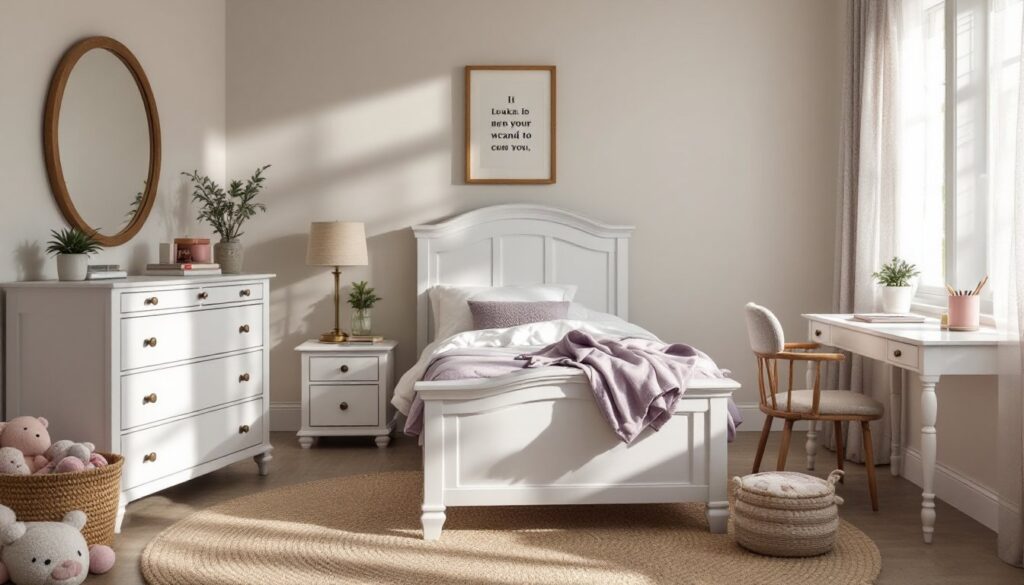
A basic set typically includes a bed frame, nightstand, and dresser. These three pieces establish the room’s footprint and storage capacity.
Bed frame options range from simple platform beds (no box spring needed, good for low ceilings) to canopy beds (add height and drama). Twin beds (39 inches × 75 inches) fit most kids’ rooms: full beds (54 inches × 75 inches) accommodate sleepovers and provide growing room but require more floor space. Bunk beds or loft beds maximize vertical space in shared rooms or small footprints, ensure ceiling height allows at least 33 inches between the mattress top and ceiling for safe sitting clearance.
Nightstands should be within arm’s reach of the bed and proportional to bed height. A single drawer plus open shelf provides space for a lamp, book, and phone charger. Look for cord management grommets or cutouts in the back panel.
Dressers come in two main types: low wide dressers (6-8 drawers, around 30-36 inches tall) that can double as a TV stand or display surface, and tall narrow dressers (chest of drawers, 5-6 drawers, 48-54 inches tall) that save floor space. Drawer depth matters, at least 14 inches deep for folded clothing, 6 inches for accessories or underwear.
Optional desks or vanities become essential as assignments demands increase. A desk should be 28-30 inches tall with knee clearance of at least 24 inches wide. Built-in hutches or wall-mounted shelves keep supplies organized. Vanities need good task lighting and a mirror: some sets integrate a fold-down mirror in the dresser top.
How to Choose the Right Size and Configuration
Start by measuring the room. Map out door swings, window placement, closet doors, and outlets. Leave at least 30 inches of walkway clearance around the bed and 36 inches in front of dressers for drawer operation.
Sketch a floor plan on graph paper or use a free online room planner. Cut out scaled furniture footprints to test arrangements before moving heavy pieces. Most twin bed frames measure roughly 41 inches × 78 inches including frame rails: full beds run 56 inches × 78 inches.
For shared rooms, place beds on opposite walls or use a bunk/loft configuration. If using two twin beds, the standard room size to comfortably fit them side-by-side with clearance is about 10 feet × 12 feet minimum. Consider matching furniture sets for symmetry or intentionally mismatched pieces for individual expression.
Ceiling height affects bunk and loft bed feasibility. Standard 8-foot ceilings work with low loft beds (mattress platform around 40 inches high) but feel cramped with full-height bunks. 9-foot ceilings or higher handle standard bunk beds comfortably.
Account for growth. A 5-year-old needs different storage than a 12-year-old. Choose adjustable shelving, modular drawer inserts, and furniture that doesn’t require replacement when interests shift. If budget allows, invest in quality pieces sized for adult use, a full-size bed and a solid wood dresser will serve through high school and beyond.
Smart Storage Solutions for Growing Girls
Under-bed storage recovers wasted space. Platform beds with built-in drawers eliminate the need for a box spring and provide seasonal clothing or extra bedding storage. Alternatively, use rolling bins (measure height clearance first, most bed frames offer 10-14 inches under-bed clearance). Bed risers add 3-6 inches of height if needed but verify weight capacity and use on hard flooring (risers can dent carpet).
Closet organization upgrades multiply usable space without adding furniture. Double-hang rods (upper rod at 80 inches, lower at 40 inches) fit children’s shorter clothing. Add shelf dividers, hanging organizers, or modular cube systems. If the existing closet lacks a rod, install one with closet rod brackets rated for at least 50 pounds, use a stud finder to anchor into wall studs or header framing.
Floating shelves or wall-mounted cubbies keep floors clear and display favorite items. Install with appropriate anchors, toggle bolts in drywall or lag screws into studs. Each shelf should support at least 20 pounds for books or decor. Space shelves 10-12 inches apart for flexibility.
Bookcases and storage cubes corral toys, books, and hobby supplies. Units with adjustable shelves adapt to changing needs. Anchor tall bookcases to the wall with L-brackets to prevent tip-overs, this is especially important with IKEA or similar ready-to-assemble units. Fabric or plastic bins in cubes simplify cleanup and hide clutter. Home decorating ideas often showcase creative labeling systems that make it easier for kids to maintain organization.
DIY Ideas to Personalize and Upgrade Your Furniture Set
Paint or stain refresh: Sand existing finishes with 120-grit then 220-grit sandpaper to create tooth for new paint. Use a deglosser if the piece has a thick varnish. Prime with a bonding primer (like Zinsser B-I-N or KILZ Adhesion) before applying two coats of satin or semi-gloss paint. Coverage is roughly 350-400 square feet per gallon for most latex paints. Let cure for 72 hours before heavy use. Chalk paint skips priming but requires a topcoat wax or poly for durability.
Hardware swaps: Replacing knobs and pulls instantly updates the look. Measure existing hole spacing (center-to-center distance for pulls) to find compatible replacements. Standard knobs use a single screw: pulls typically use 3-inch or 4-inch spacing. Fill old holes with wood filler, sand, and touch up paint if switching styles.
Headboard upholstery: Wrap a simple wooden headboard in batting and fabric, stapling to the back. Use high-density foam (1-2 inches thick) for extra comfort. Fabrics like canvas, denim, or microfiber are durable and washable. Avoid loose weaves that snag. This project requires a staple gun, scissors, and measuring tape, no power tools.
Stenciling or decals: Add patterns, monograms, or motifs with stencils and acrylic paint or high-quality vinyl decals. Stencil with a foam pouncer (not a brush) for crisp edges. Tape off surrounding areas with painter’s tape. Seal stenciled designs with clear poly if the surface will see wear.
LED lighting: Battery-operated or plug-in LED strip lights under shelves or behind headboards add ambiance and task lighting. Look for kits with adhesive backing and remote controls. For permanent installations, hardwire LED puck lights to a wall switch, this requires basic electrical knowledge and possibly a permit depending on local codes. When unsure about electrical work, hire a licensed electrician. Keep up with current interior design trends by adding accent lighting in complementary colors.
Drawer liners and organizers: Cut non-slip shelf liner or felt to fit drawer bottoms. Add spring-loaded dividers or small bins to sort accessories, art supplies, or jewelry. Expandable drawer organizers adjust to fit different widths.
Conclusion
Selecting a girls bedroom furniture set comes down to balancing immediate needs with long-term flexibility. Prioritize sturdy construction, safety features, and storage capacity that adapts as she grows. Whether choosing classic, modern, or themed styles, the best sets integrate seamlessly with the room’s architecture and leave space for personalization. With thoughtful planning and a few DIY upgrades, the furniture becomes a foundation for years of comfort and creativity.