Table of Contents
ToggleUltra modern living room furniture isn’t about following trends, it’s about stripping design down to its essentials. Clean lines, functional forms, and materials that speak for themselves. If you’ve ever walked into a space and felt instantly calm because nothing was fighting for attention, that’s the effect we’re after. This style works particularly well in open-concept homes where the living room flows into dining and kitchen areas, creating visual continuity without clutter. Whether you’re furnishing a new build or updating an existing space, understanding the principles behind ultra modern design helps you make choices that’ll age well instead of looking dated in three years.
Key Takeaways
- Ultra modern living room furniture prioritizes clean lines, geometric precision, and function over decoration, creating spaces that feel intentional and timeless rather than trendy.
- Lower seat heights (16-18 inches) and floating bases are signature ultra modern features that create visual lightness and make rooms feel more spacious, especially in homes with standard 8-foot ceilings.
- Material quality is essential—choose brushed metal, top-grain leather, performance fabrics, and durable woods with natural finishes to ensure your furniture ages well and resists a dated appearance.
- Accurate measurements and proper scale planning are critical; leave 30-36 inches for primary pathways and select statement sofas and minimalist tables that maintain visual balance without overwhelming the space.
- Performance fabrics with stain-resistant technology and modular sectional designs offer both style and practicality, adapting to open-concept layouts while simplifying maintenance and cleaning.
What Defines Ultra Modern Living Room Furniture?
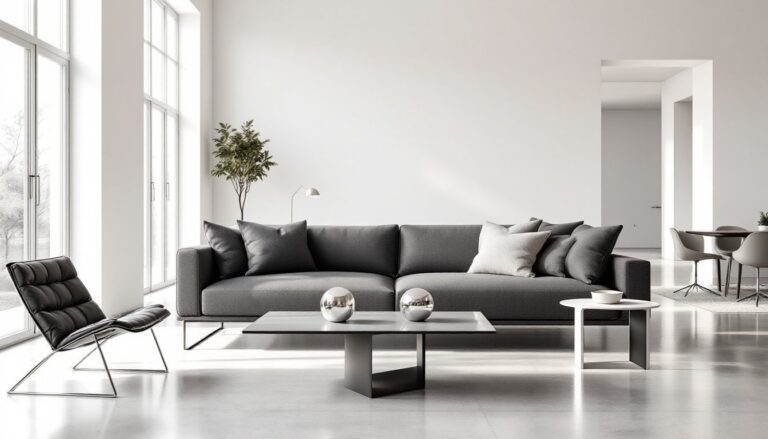
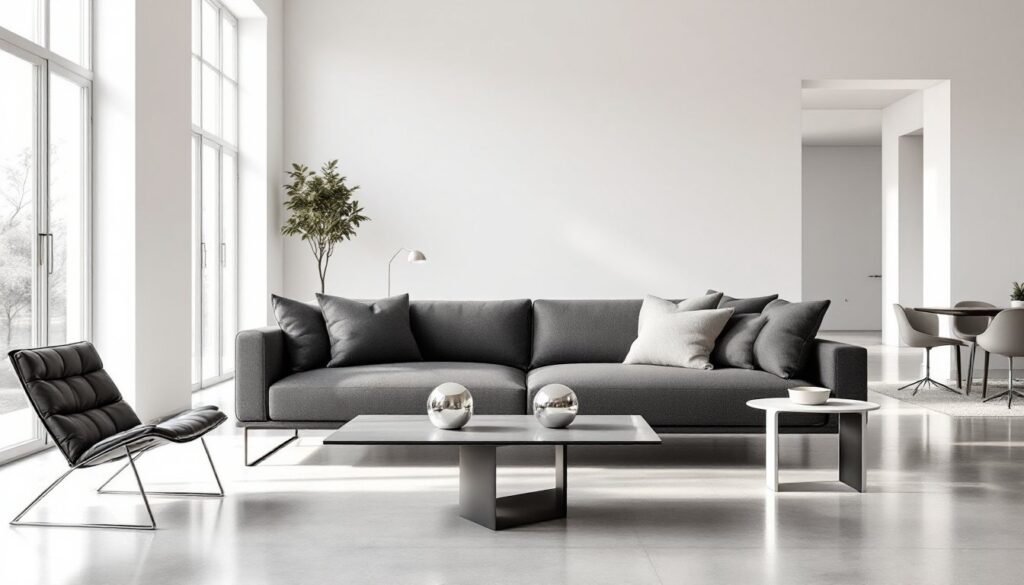
Ultra modern furniture is defined by geometric precision, minimal ornamentation, and an emphasis on function over decoration. Think straight edges, low profiles, and silhouettes that don’t apologize for being simple. This isn’t minimalism for minimalism’s sake, it’s about letting each piece serve a clear purpose without visual noise.
The style emerged from mid-century modernism but evolved past the warm woods and organic curves. Contemporary ultra modern pieces favor cooler palettes, industrial materials, and sharper angles. You’ll see cantilevered chairs, floating credenzas, and sofas with exposed metal frames rather than skirted bases.
Color plays a restrained role. Neutrals dominate, black, white, gray, and taupe, with occasional pops from a single accent color. Patterns are rare: when they appear, they’re geometric rather than organic. The overall effect should feel curated, not collected. Each piece needs breathing room.
One critical distinction: ultra modern furniture often sits lower to the ground than traditional styles. Sofas with seat heights around 16-18 inches (versus the standard 18-20 inches) create horizontal emphasis and make ceilings feel taller. It’s a spatial trick that works especially well in rooms with 8-foot ceilings.
Essential Pieces for an Ultra Modern Living Room
Statement Sofas and Sectionals
The sofa anchors everything. Look for pieces with clean-lined frames and legs made from brushed metal, powder-coated steel, or solid walnut with minimal finishing. Avoid rolled arms, tufting, and decorative nailheads, those belong in different design languages.
Modular sectionals work well in ultra modern spaces because they adapt to room layouts without looking bulky. L-shaped configurations define seating zones in open floor plans without physical walls. Prioritize pieces with removable covers, high-end upholstery in performance fabrics like solution-dyed acrylic or treated linen stands up to daily use and simplifies cleaning.
Many modern sofa designs emphasize low profiles and floating bases that create negative space beneath the frame. This visual lightness prevents the sofa from dominating the room, even in smaller spaces. Seat depth matters: 32-36 inches allows for relaxed lounging without looking overstuffed.
If you’re considering a modern executive desk in an adjacent home office, coordinate material finishes so the living room and workspace feel cohesive in an open layout.
Minimalist Coffee Tables and Side Tables
Coffee tables in ultra modern settings serve as sculptural elements, not just surfaces. Glass tops paired with metal bases maintain sightlines across the room. Alternatively, solid surface tables in marble, concrete, or lacquered wood make bold statements without busy details.
Dimensions should relate to your sofa: coffee table height typically runs 16-18 inches, about level with or slightly lower than the sofa seat. Length should be roughly two-thirds the sofa’s length for visual balance. Leave at least 14-18 inches between the table edge and seating for comfortable legroom.
Side tables often feature asymmetric designs, C-shaped bases that slide under sofa arms, or cantilevered tops that appear to float. Materials like powder-coated steel, smoked glass, or polished chrome reinforce the industrial-meets-refined aesthetic. Skip anything with decorative aprons or turned legs.
Nesting tables offer flexibility without clutter. When not in use, they stack to minimize footprint, a practical choice for spaces that shift between everyday living and entertaining.
Materials and Finishes That Define Contemporary Style
Material choice separates authentic ultra modern furniture from pieces that just look sleek. Stainless steel, brushed nickel, and matte black metal form the backbone of contemporary frames and accents. These materials age well and resist the dated look that trendy finishes develop.
For upholstery, leather in black, white, or gray remains a staple, but specify full-grain or top-grain rather than bonded leather, which degrades quickly. Vegetable-tanned leather develops a natural patina: if that bothers you, stick with aniline-dyed options that maintain consistent color.
Performance fabrics have improved dramatically. Solution-dyed acrylics now rival natural fibers in texture while offering stain resistance and colorfastness. Brands using Crypton or Sunbrella technology provide cleanability without the plasticky feel of earlier synthetics.
Wood appears sparingly, usually in walnut, oak, or ash with natural or dark stained finishes. Avoid distressed or whitewashed treatments, they clash with ultra modern’s refined simplicity. Wood grains should be straight and consistent: highly figured wood reads as busy.
Glass and acrylic keep spaces feeling open. Tempered glass coffee tables should be at least 3/8-inch thick for durability: anything thinner feels flimsy and risks breakage. Acrylic (often called Lucite) offers similar transparency with better impact resistance, though it scratches more easily than glass.
Concrete and polished concrete bring industrial texture without roughness. Sealed properly, concrete surfaces resist staining and develop subtle variations over time. Expect 15-20 pounds per square foot for concrete furniture, make sure your floor structure can handle the load, especially in upper-story rooms or older homes.
Publications like Design Milk regularly feature emerging material applications in contemporary furniture, from recycled metals to engineered composites that mimic natural stone.
How to Choose Ultra Modern Furniture for Your Space
Start with accurate measurements. Note not just room dimensions but also ceiling height, window placement, door swings, and fixed elements like radiators or built-ins. Ultra modern furniture’s low profiles work best with clear floor space, crowding pieces together undermines the clean aesthetic.
Scale matters more than in traditional rooms. A bulky sectional might technically fit, but if it dominates the space, it works against the design intent. Opt for furniture that leaves at least 30-36 inches of clearance for primary pathways and 18-24 inches for secondary routes between pieces.
Consider sight lines from adjacent rooms. In open-concept layouts, the back of your sofa is as important as the front. Choose pieces that look finished from all angles, or position furniture so less attractive views face walls.
Lighting interacts with materials in ways that photos don’t capture. Glossy finishes reflect both natural and artificial light, beneficial in dim rooms but potentially glaring in south-facing spaces with large windows. Matte and brushed finishes diffuse light more evenly.
Test before buying when possible. Many model home furniture pieces demonstrate how ultra modern styles work in real spaces, giving you a better sense of scale and material quality than showroom vignettes.
Budget realistically. Quality ultra modern furniture costs more upfront because it relies on precision manufacturing and durable materials rather than decorative shortcuts. A well-made piece with a welded steel frame and top-grain leather will outlast cheaper alternatives with stapled joints and bonded leather by a decade or more.
If you’re mixing styles, limit yourself to one or two traditional or transitional pieces as intentional counterpoints. Blending home styles furniture requires a clear vision, otherwise it reads as indecision rather than curation.
For those interested in other aesthetic directions, Emerald Home Furniture offers contemporary pieces that bridge modern and transitional styles, though with less emphasis on the stark minimalism discussed here.
Conclusion
Ultra modern living room furniture works because it respects both form and function without excess. The style demands precision, measurements matter, material quality shows, and poor planning becomes obvious. But get it right, and you’ll have a space that feels intentional rather than decorated. Focus on a few well-chosen pieces with clean lines and honest materials, leave room for negative space, and resist the urge to fill every corner. The result is a living room that stays relevant regardless of shifting trends.