Table of Contents
ToggleMetal outdoor patio furniture hits a sweet spot that’s hard to match: it’s built to last through seasons of weather, holds up under daily use, and brings a clean, intentional look to any outdoor space. Unlike wood that needs annual sealing or wicker that can fray and fade, metal pieces deliver structural integrity and low-maintenance reliability. Whether outfitting a compact balcony or a sprawling deck, understanding the different metal types, their strengths, and how to maintain them makes all the difference between furniture that lasts a decade and pieces that rust out after two summers.
Key Takeaways
- Metal outdoor patio furniture lasts 15-20 years with basic maintenance, significantly outlasting wood or resin alternatives that require frequent refinishing or become brittle after a few years.
- Aluminum is ideal for coastal and humid climates due to natural corrosion resistance, while steel and wrought iron require protective coatings and annual inspections to prevent rust in wet conditions.
- Proper frame construction—including welded joints, 1.5mm+ wall thickness, and even powder-coat coverage—directly determines whether metal furniture furniture remains stable and durable through years of use.
- Routine monthly cleaning with mild soap and water, plus immediate touch-ups on damaged areas, prevents rust spread and extends the life of metal outdoor patio furniture significantly.
- Metal furniture’s design flexibility allows for everything from lightweight foldable bistro sets to ornate cast aluminum pieces, making it adaptable to both modern minimalist and traditional garden aesthetics.
Why Choose Metal Patio Furniture for Your Outdoor Space
Metal furniture brings structural advantages that other materials can’t quite replicate. It handles weight and stress without warping, sagging, or splitting, critical when dealing with temperature swings and UV exposure. A properly finished metal frame won’t splinter, crack along the grain, or develop the soft spots that eventually plague wood and composite materials.
Durability sits at the top of the list. Quality metal furniture routinely lasts 15-20 years outdoors with basic maintenance, and many pieces can be refinished if the coating eventually fails. Compare that to resin furniture that becomes brittle after a few years of sun exposure or wood that requires stripping and resealing every 12-18 months.
Weather resistance varies by metal type, but all properly coated metals handle rain, humidity, and UV better than most alternatives. Steel and wrought iron need protective finishes to prevent rust, while aluminum resists corrosion naturally. Either way, a metal frame won’t rot, mold, or become a home for insects the way organic materials can.
The design flexibility of metal also matters. Manufacturers can bend, weld, and cast metal into profiles and curves that would be impractical or weak in wood. This allows for lightweight bistro styles that fold for storage or intricate scrollwork in traditional designs, options that suit both modern minimalist patios and classic garden settings.
Stability in wind is another practical benefit. Metal furniture has enough mass to stay put during gusts that would send lighter resin chairs tumbling across the yard. Heavier pieces like cast iron or steel won’t need constant repositioning after every storm.
Types of Metal Used in Outdoor Patio Furniture
Aluminum Furniture
Aluminum dominates the affordable and mid-range metal furniture market for good reason. It naturally forms a protective oxide layer that prevents rust, even in coastal environments with salt spray. This makes it the go-to choice for regions with high humidity or near bodies of water.
Cast aluminum pieces replicate the ornate look of traditional wrought iron but weigh 50-60% less. Manufacturers pour molten aluminum into molds to create detailed patterns and vintage-inspired designs. These pieces typically weigh 15-25 pounds for a chair, making them easy to rearrange but still stable enough for windy conditions.
Extruded or tubular aluminum frames offer a more modern, streamlined aesthetic. Furniture makers use this type for contemporary sectionals, dining sets, and minimalist lounge chairs. The tubing walls are typically 1.2-2mm thick in quality pieces, any thinner and the frames can dent or flex under weight.
Aluminum furniture often comes with a powder-coated finish that adds color and extra protection. This electrostatically applied coating bakes onto the metal at high temperature, creating a durable surface that resists chipping and fading better than paint. Expect this finish to hold up for 5-7 years of full sun exposure before showing wear.
The main limitation is strength-to-weight ratio for heavy-duty applications. While aluminum handles normal use fine, it can dent if impacted hard or flex slightly under loads exceeding 250-300 pounds depending on frame design.
Wrought Iron and Steel Options
Wrought iron furniture represents traditional craftsmanship, though true wrought iron (which contains iron and silica slag) is rarely manufactured today. What’s sold as “wrought iron” is typically mild steel that’s been welded, bent, and shaped to mimic the classic look.
Steel furniture is substantially heavier, a dining chair can weigh 35-50 pounds, which means excellent stability but limited portability. Moving a full steel dining set usually requires two people and advance planning. This weight comes from denser material: steel’s density is about 7.85 g/cm³ compared to aluminum’s 2.70 g/cm³.
The strength advantage is real. Steel frames handle heavier weight capacities (often 300-400 pounds per seat) and maintain rigidity even with thinner profile designs. This allows for delicate scrollwork and narrow frame members that would bend in aluminum.
Rust protection is non-negotiable with steel. Manufacturers apply several protective layers:
- Galvanizing (zinc coating) for corrosion resistance
- Primer to seal the surface
- Powder coating for color and additional protection
Even with these treatments, steel furniture needs annual inspection for coating damage, especially around joints, welds, and any areas where the finish has chipped. Exposed steel will develop surface rust within days in humid conditions and can pit deeply if neglected for a season.
Stainless steel offers superior rust resistance for high-end pieces, particularly in marine environments. Look for 304-grade stainless (18% chromium, 8% nickel) for most outdoor applications. It’s pricier but eliminates rust concerns entirely, though the material can still show water spots and requires occasional cleaning to maintain its appearance.
How to Choose the Right Metal Furniture for Your Patio
Start with climate and exposure. Coastal areas with salt air demand aluminum or stainless steel: steel and iron will fight a losing battle against corrosion even with good maintenance. Inland locations with dry climates can use any metal type successfully, while humid regions work well with aluminum but require diligent upkeep if choosing steel.
Weight matters more than most people think. If the furniture stays in place year-round, heavier steel or iron makes sense, it won’t shift, and the mass provides a substantial, permanent feel. For spaces that need seasonal rearranging or storage, aluminum’s lighter weight prevents back strain and makes one-person moves possible.
Measure the space accurately before shopping. Allow 36 inches of clearance around dining tables for chair pullout and foot traffic. For lounge areas, maintain at least 24-30 inches between furniture pieces for comfortable movement. Metal furniture can’t be trimmed or adjusted after purchase, so dimensions are final.
Check frame construction carefully. Quality indicators include:
- Welded joints rather than bolted connections (stronger, fewer failure points)
- Wall thickness of 1.5mm minimum for aluminum tubing
- Even powder coat coverage without drips, thin spots, or rough texture
- Reinforced stress points at leg-to-frame connections
Cushion compatibility affects comfort significantly. Metal frames alone are uncomfortable for extended sitting, plan for 2-3 inch thick cushions with outdoor-rated fabric and quick-dry foam. Some frames include built-in slings or mesh panels that eliminate the need for separate cushions.
Consider maintenance commitment honestly. Aluminum needs occasional cleaning but little else. Steel and iron require annual touch-ups, rust checks, and possibly full refinishing every 5-7 years depending on climate. If that maintenance sounds like a burden, stick with aluminum or stainless options.
Weight capacity isn’t always listed but matters for durability. Test pieces in person by sitting down firmly, quality frames shouldn’t flex or creak. For heavy-use areas or larger users, steel frames provide extra confidence over aluminum’s lighter construction.
Maintenance Tips to Keep Your Metal Furniture Looking New
Routine cleaning prevents most problems. Wash metal furniture monthly during use seasons with mild dish soap and water using a soft sponge or microfiber cloth. Rinse thoroughly, soap residue attracts dirt and can dull finishes over time. For stubborn grime, add a tablespoon of white vinegar to a gallon of water.
Inspect for coating damage twice per season, particularly after winter storage or severe weather. Check welds, joints, and any areas that contact the ground, these are where finish failure typically starts. Catching a chip early means a quick touch-up: ignoring it leads to rust that spreads under the coating.
Touch-up damaged areas immediately on steel or iron furniture:
- Sand the damaged spot with 220-grit sandpaper to remove rust and feather the edges
- Wipe clean with a tack cloth or damp rag
- Apply rust-inhibiting primer (Rust-Oleum or similar) in thin coats
- Finish with color-matched spray paint or powder coat touch-up compound
Aluminum doesn’t rust but can develop white oxidation. Remove this with a paste of baking soda and water, rubbing gently with a soft cloth. For stubborn oxidation, automotive aluminum polish works well but requires more elbow grease.
Winter storage extends furniture life significantly. If space allows, store metal pieces in a garage, shed, or basement. Avoid wrapping in plastic directly against the metal, moisture gets trapped and accelerates corrosion. Use breathable furniture covers or old sheets with air circulation.
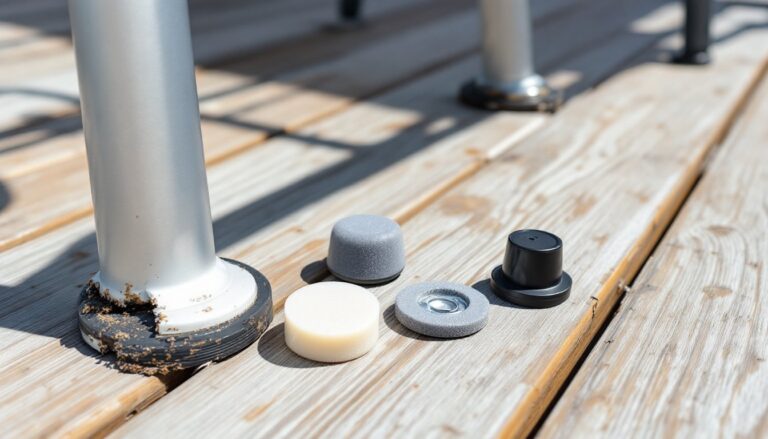
If storage isn’t possible, invest in quality outdoor furniture covers with ventilation panels and tie-downs. Cheap covers without vents create condensation problems. Position furniture slightly off the ground using deck blocks or furniture risers to prevent standing water contact, prolonged moisture exposure will eventually penetrate any coating.
Cushion storage matters too. Even “outdoor” cushions last longer when stored dry indoors during off-seasons. The foam cores can absorb water through seams and develop mildew that’s difficult to eliminate fully.
Lubricate moving parts annually. Folding mechanisms, reclining hinges, and adjustable components need white lithium grease or silicone spray, avoid petroleum-based products that can break down powder coating. Work the mechanisms several times after lubricating to distribute the product.
For high-traffic areas or frequently used pieces, consider an automotive paste wax application once per season. This adds a protective layer over powder coating and makes future cleaning easier. Apply thin, let haze, then buff, same process as waxing a car.
Styling Ideas for Metal Outdoor Furniture
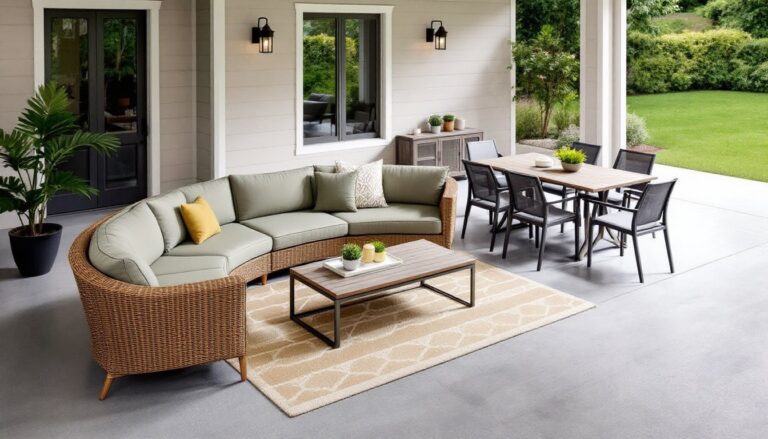
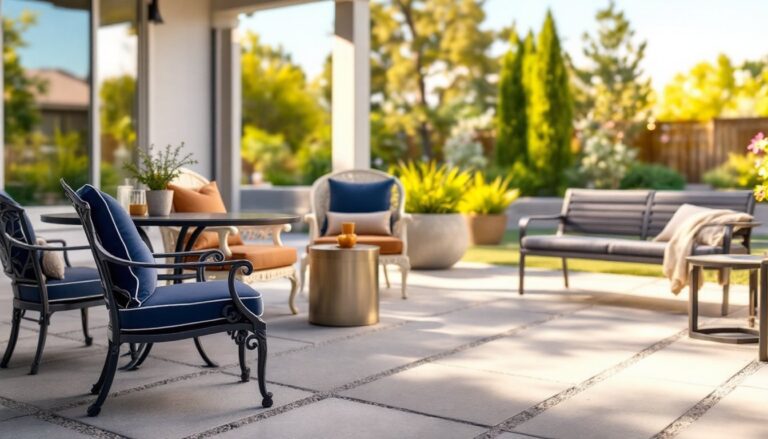
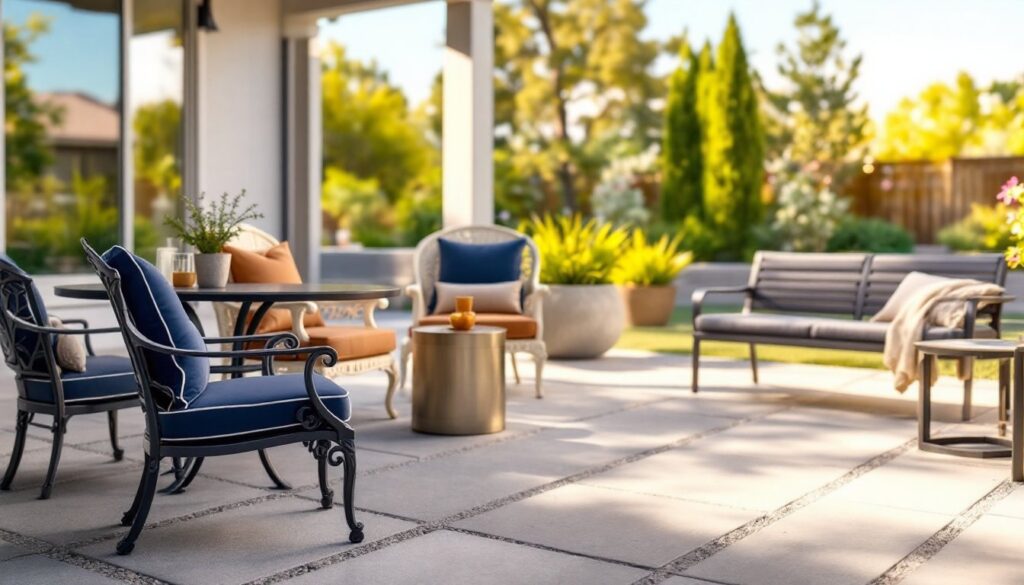
Metal furniture’s neutral finish makes it a versatile foundation for multiple design directions. Black powder-coated frames work with virtually any color scheme and bring modern sophistication to patios. Pair them with bold cushion colors, terracotta, deep blue, or forest green, for visual impact without overwhelming smaller spaces.
For traditional or cottage aesthetics, white or cream-finished metal pieces replicate vintage garden furniture. Cast aluminum with scrollwork details pairs naturally with floral cushions and creates the relaxed feel common in Southern porch designs. Layer in potted plants, hanging baskets, and natural fiber rugs to soften the metal’s hard edges.
Mixed material combinations add textural interest. Metal frames work well with:
- Wood tabletops (teak, cedar, or composite decking material)
- Glass surfaces for dining tables (tempered glass rated for outdoor use)
- Stone or concrete accent tables alongside metal seating
This approach brings warmth and variety while maintaining durability across all elements.
Industrial-modern spaces benefit from raw steel or stainless finishes left natural. Skip powder coating entirely for an authentic warehouse-loft aesthetic, though this only works in dry climates or covered areas. Combine with concrete planters, Edison bulb string lights, and minimalist accessories.
Scale the furniture to the space appropriately. Delicate bistro sets suit small balconies and intimate corners but look lost on large decks. Conversely, heavy wrought iron or substantial steel pieces anchor big patios but overwhelm tight spaces. When in doubt, measure existing furniture dimensions from indoor rooms for comparison.
Lighting integration enhances metal furniture at night. Solar post caps on table umbrellas, LED strip lighting under aluminum frames, or strategically placed lanterns make outdoor spaces functional after dark. Metal frames generally handle heat from nearby fire features better than wood or resin alternatives, making them practical for arranging around fire pits or outdoor fireplaces.
Consider patina development for steel and iron pieces. Some homeowners prefer the aged, slightly rusted look that develops over time, it adds character and reduces maintenance if the rust is stable surface oxidation rather than structural corrosion. This works particularly well in rustic or garden-focused outdoor settings where a weathered appearance feels intentional rather than neglected.