Table of Contents
ToggleA covered patio sits somewhere between indoor comfort and backyard freedom, protected from weather but still open to fresh air. That middle ground creates unique furniture requirements. Too delicate, and humidity warps it. Too utilitarian, and it feels like you’re sitting in a garden shed. The right furniture transforms a covered patio from an afterthought into the most-used room in the house. This guide covers practical setups for different styles, sizes, and uses, whether someone’s building a reading nook, a full dining area, or a spot to host friends without worrying about sudden rain.
Key Takeaways
- Choose covered patio furniture made from moisture-resistant materials like powder-coated aluminum, marine-grade polymers, solid teak, cedar, or solution-dyed acrylic fabrics to prevent warping, mildew, and corrosion.
- Synthetic wicker requires minimal maintenance compared to natural rattan, making it ideal for exposed patios, though quality resin wicker costs more upfront ($400–$1,200 for sectionals).
- Mix metal frames with wood components using powder-coated aluminum or steel paired with teak or ipe wood, and always use nylon or rubber washers at connection points to prevent moisture-related damage.
- Pair deep-seat sectionals with 5–7 inch cushions in medium-firm foam and arrange in L or U shapes to create conversation zones and define your covered patio lounge area.
- Plan dining tables around actual usage: 60×36 inches for six people with at least 36–48 inches of clearance, and prioritize stackable chairs for easier storage and cleaning.
- For small patios (8×10 feet or less), invest in multi-function pieces like wall-mounted drop-leaf tables, stackable seating, and built-in benches to maximize usability without crowding.
Why Choosing the Right Furniture for Your Covered Patio Matters
Covered patios occupy a unique environmental zone. They’re sheltered from direct rain and harsh sun, but still exposed to temperature swings, humidity, and condensation. Standard indoor furniture won’t hold up, particle board swells, upholstery mildews, and metal hardware corrodes.
The right furniture needs to handle moisture without constant maintenance. Look for materials rated for outdoor or transitional use: powder-coated aluminum, marine-grade polymers, solid teak or cedar, and solution-dyed acrylic fabrics. These resist UV degradation and water intrusion without requiring weekly treatment.
Functionality matters as much as durability. A covered patio often serves multiple roles, morning coffee spot, weekend dining area, evening lounge. Furniture should support those uses without constant rearranging. Modular pieces, stackable seating, and tables with adjustable height or leaves offer flexibility without cluttering the space. Weight is another consideration: heavy pieces stay put in wind, but lightweight options make seasonal cleaning easier.
Classic Wicker and Rattan Seating Arrangements
Wicker and rattan furniture has anchored covered patios for generations, and for good reason. Natural rattan, harvested from palm species, offers a lightweight, flexible frame that handles humidity better than most hardwoods. Synthetic wicker (typically high-density polyethylene or HDPE resin) mimics the look while adding UV resistance and easier cleaning.
Natural rattan works well under solid roof coverage with minimal side exposure. It needs occasional wiping and benefits from furniture paste wax once a season to prevent drying and cracking. Natural rattan softens over time, developing a patina that many homeowners prefer.
Synthetic wicker tolerates more exposure and requires almost no maintenance, hose it down and let it dry. It won’t splinter, fade as quickly, or harbor mildew. The trade-off is weight and initial cost: quality resin wicker runs $400–$1,200 for a sectional set, compared to $200–$600 for natural rattan equivalents.
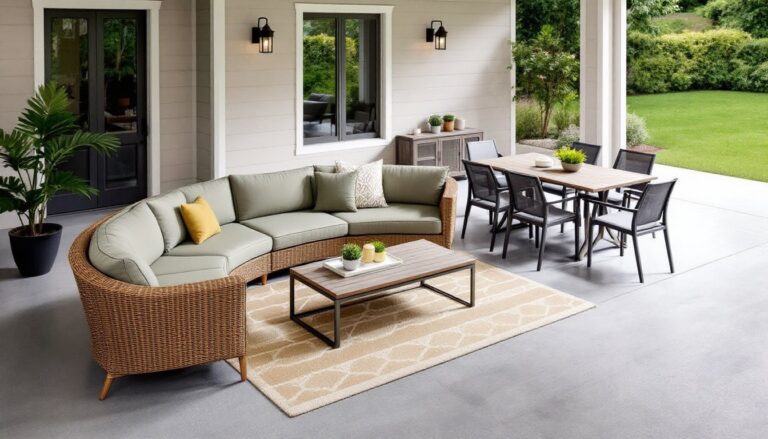
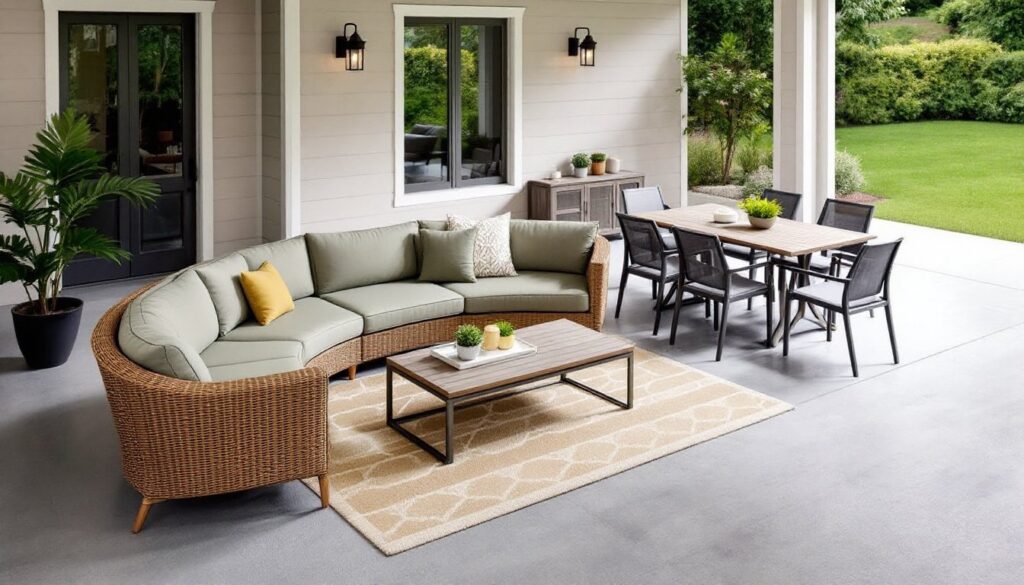
For seating arrangements, consider a curved sectional (typically three to five pieces) around a low coffee table. This setup encourages conversation and fits corner spaces efficiently. Add weather-resistant cushions in solution-dyed acrylic fabric (Sunbrella is the common benchmark), these resist fading and can be spot-cleaned with mild soap. Keep cushion depth at 4–6 inches for comfort without excessive bulk.
Skip thin, decorative wicker that’s meant for indoor sunrooms. It won’t survive even light outdoor exposure. Check frame construction, look for aluminum or powder-coated steel frames wrapped in wicker, not just woven strands around a flimsy wire skeleton.
Modern Metal and Wood Furniture Combinations
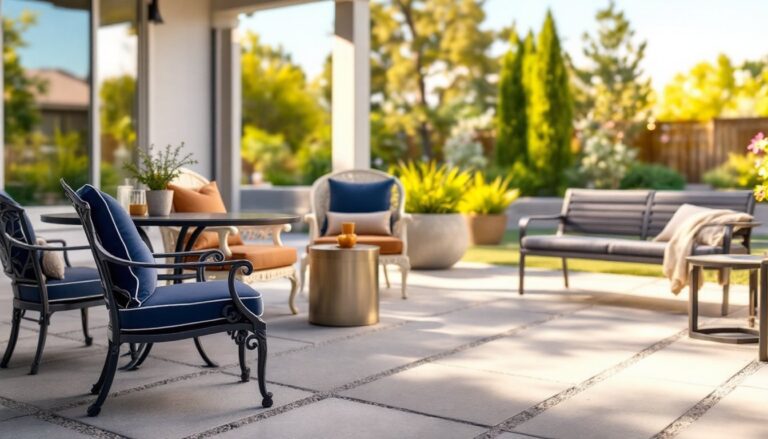
Mixed-material furniture brings clean lines and industrial aesthetics to covered patios. Pairing metal frames with wood seats or tabletops balances durability with warmth. This combination works especially well in contemporary or minimalist outdoor designs.
Powder-coated aluminum is the go-to metal for frames. It’s lightweight (easy to move for cleaning), won’t rust, and handles temperature extremes without expanding or contracting noticeably. Look for a coating thickness of at least 2–3 mils for longevity. Avoid bare aluminum or thin paint finishes, they’ll oxidize and flake within a season.
Steel with powder coating offers more weight and stability, ideal for dining tables or benches that won’t move often. Steel frames paired with teak or ipe wood slats create a sturdy, modern look. Just verify that welds are smooth and fully coated: any exposed steel will rust.
For wood components, teak, cedar, and ipe are the workhorses. Teak contains natural oils that repel water and resist rot, it’ll weather to silver-gray unless treated annually with teak oil. Cedar is lighter and more affordable but requires sealing every 1–2 years to prevent splitting. Ipe (Brazilian walnut) is incredibly dense and hard, nearly impervious to moisture, but difficult to work with and pricey ($12–$18 per board foot).
Typical setups include a metal-frame sofa with slatted wood back and armrests, paired with a matching coffee table. For dining, a steel-leg table with a thick teak or reclaimed wood top seats six comfortably and handles spills better than glass. Ensure wood surfaces are sanded smooth (120-grit minimum) and sealed with marine-grade spar urethane or penetrating oil for best results.
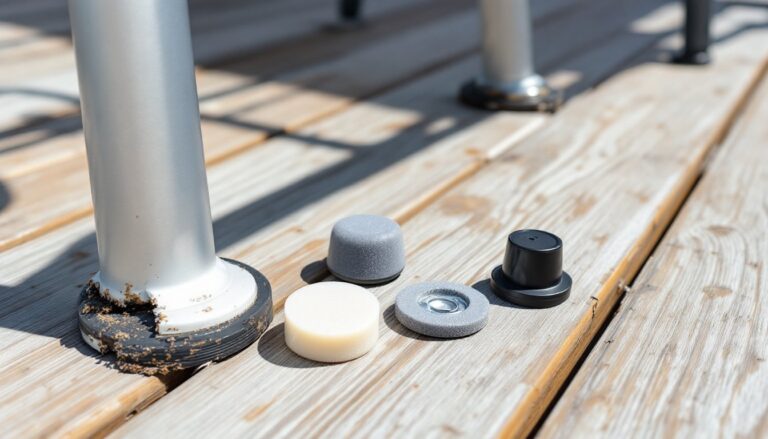
Avoid mixing untreated wood with metal in direct contact, moisture trapped between dissimilar materials accelerates corrosion and rot. Use nylon or rubber washers at connection points.
Cozy Lounge Furniture for Relaxation and Entertainment
When the goal is comfort, reading, napping, or hosting friends with drinks, lounge furniture takes center stage. Deep seating, chaise lounges, and oversized chairs turn a covered patio into an extension of the living room.
Deep-seat sectionals typically feature seat depths of 24–30 inches (compared to 18–22 inches for standard seating). Pair with thick cushions (5–7 inches) in a medium-firm foam to avoid the saggy, impossible-to-get-up-from feel. Arrange pieces in an L or U shape to define the space and create natural conversation zones.
Chaise lounges and daybeds work well in corners or along railings. Look for adjustable backrests (usually three to five positions) and frames wide enough for actual lounging, at least 28 inches across. Aluminum and synthetic wicker are common materials: just make sure the weave density is tight enough to avoid sagging under weight.
Outdoor poufs and ottomans add flexible seating or footrest options. Opt for weatherproof covers (Sunbrella or similar) with removable, washable cases. Poufs filled with recycled polystyrene beads hold shape better than loose foam chips.
For entertaining, integrate side tables at arm height (typically 20–24 inches) to hold drinks without reaching. Nesting tables save space when not in use. If running electricity to the patio, add a floor or table lamp with an outdoor-rated cord and bulb, standard indoor lamps aren’t built for humidity and temperature shifts.
Consider adding an outdoor rug to define the lounge area and soften the feel underfoot. Polypropylene rugs resist moisture, mildew, and fading. Size the rug so front legs of all seating rest on it, or go large enough to fit the entire furniture footprint with 12–18 inches of border.
Dining Sets That Make Outdoor Meals Special
A covered patio with a solid dining set becomes the default spot for family meals and weekend gatherings. Choosing the right table and chairs requires balancing size, material, and comfort.
Table sizing: For six people, plan for a table at least 60 inches long and 36 inches wide. Eight requires 72–84 inches in length. Round tables (48-inch diameter for four, 60-inch for six) work well in square or circular patios and encourage conversation. Leave at least 36 inches of clearance around the table for chair movement, 48 inches is more comfortable.
Material options:
- Teak tables develop a weathered patina and handle spills without staining. Expect $600–$1,800 for a solid teak table seating six.
- Powder-coated aluminum with a faux-wood or stone top offers the look of wood or stone with less weight and maintenance. Tops should be at least 1 inch thick to avoid flexing. Price range: $400–$1,200.
- Concrete or stone composite tables provide a modern, heavy-duty option. They won’t tip in wind and handle hot dishes without scorching. Concrete needs sealing every 1–2 years to prevent staining. Expect $800–$2,000+.
Seating: Match chairs to table height (standard dining height is 28–30 inches: seat height should be 17–19 inches). Many homeowners prioritize outdoor dining comfort by choosing stackable aluminum or resin chairs with contoured backs, easier to store and clean than upholstered options. If adding cushions, choose quick-dry foam with drainage channels and mesh bottoms to avoid water pooling.
Extendable tables with a butterfly leaf or drop-in insert adapt to different group sizes without taking up permanent space. Verify the extension mechanism is corrosion-resistant (stainless steel or coated aluminum) and smooth to operate.
For casual dining or smaller groups, a bistro set (30-inch round table with two chairs) fits tighter spaces and works well for morning coffee or light meals.
Space-Saving Furniture Solutions for Smaller Covered Patios
Not every covered patio spans 300 square feet. For compact spaces, 8×10 feet or smaller, strategic furniture choices maximize usability without crowding.
Folding bistro sets pack down when not in use and deploy in seconds. Metal folding chairs with slatted wood seats handle weather and fold flat for garage storage. A 24–30 inch round or square table fits two comfortably and tucks into a corner.
Wall-mounted drop-leaf tables attach to posts or walls and fold down when needed. A 36-inch drop-leaf provides dining space for two to three, then folds to just 6 inches deep. Ensure mounting into solid structure, a pressure-treated 4×4 post or wall studs, not just siding. Use stainless steel or galvanized lag screws (minimum ¼-inch diameter, 3 inches long) into pilot holes.
Stackable seating (chairs or stools) stores vertically when guests leave. Resin and molded polypropylene chairs withstand stacking without scratching and cost $30–$80 each. Metal stacking chairs with powder coating offer more style but weigh more.
Built-in benches along railings or walls save floor space and add seating without legs to navigate around. Frame with 2×4 or 2×6 pressure-treated lumber, attach securely to structure, and top with composite decking, cedar, or teak slats. Add hinged lids to create storage underneath for cushions, garden tools, or outdoor toys.
Narrow console tables (12–18 inches deep) along a back wall hold plants, drinks, or serving dishes without blocking walkways. Look for designs with lower shelves to maximize vertical storage.
In tight quarters, prioritize multi-function pieces. An outdoor storage bench provides seating, surface space, and hidden storage. Nesting side tables expand when needed and tuck away when not. These approaches make small patios feel intentional rather than cramped.
Conclusion
Covered patio furniture isn’t about recreating an indoor living room outside, it’s about choosing pieces that handle the environment while supporting how the space actually gets used. Whether that’s wicker sectionals for lounging, a solid teak dining set for weekend meals, or folding bistro chairs that stash in winter, the right furniture turns a covered slab into the most practical square footage in the house.