Table of Contents
ToggleConverting a spare room into a home office guest room isn’t just smart, it’s practical for anyone who works from home but still needs to host overnight visitors. Instead of dedicating an entire room to a bed that gets used twice a year, a dual-purpose setup maximizes square footage without compromising functionality. The key is choosing furniture that serves both roles without creating visual chaos or making either function feel like an afterthought. With the right layout, storage, and design approach, a single room can handle daily work and weekend guests without anyone feeling cramped.
Key Takeaways
- A home office guest room combination maximizes limited square footage by eliminating the need for separate single-purpose spaces while adding real estate value and daily functionality.
- Choose a 48- to 60-inch desk with solid surfaces and pair it with closed storage solutions like cabinets or credenzas to keep work clutter hidden from guests.
- Consider space-saving bed alternatives such as Murphy beds, daybeds with trundles, or high-quality sleeper sofas instead of standard queen beds that dominate the room.
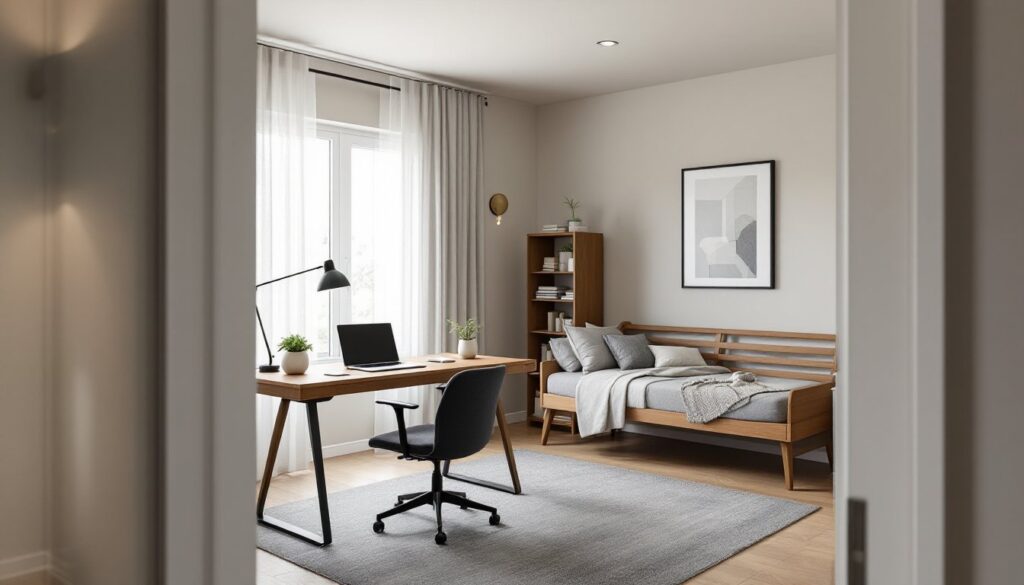
- Position the desk near a window for natural light and place the bed against the longest wall to create natural visual zones without needing a room divider.
- Ensure unified design through consistent wall colors (soft grays, taupes, or muted blues), matching wood tones, layered lighting, and coordinated textiles to make the dual-purpose room feel intentional rather than cramped.
- Plan for at least two dedicated electrical outlets for office equipment to avoid extension cord hazards and ensure proper compliance with building codes.
Why a Home Office Guest Room Combination Makes Sense
Most homes don’t have unlimited square footage, and dedicating separate rooms to a guest bed and a workspace often means underutilizing both. A combined home office guest room solves that problem by creating a room that earns its keep daily while still accommodating visitors when they arrive.
From a real estate perspective, a flexible room adds more value than a single-purpose guest bedroom. Buyers appreciate versatility, especially in smaller homes where every room needs to pull double duty. Even if resale isn’t on the radar, the ability to work productively five days a week while hosting family over the holidays makes better use of the space.
This setup also simplifies furniture decisions. Instead of furnishing two rooms with separate desks, beds, and storage, consolidating into one thoughtfully designed space reduces both cost and clutter. The room feels intentional rather than pieced together, and guests won’t feel like they’re sleeping in a storage closet.
Essential Furniture for a Dual-Purpose Room
Choosing the Right Desk and Storage Solutions
The desk is the backbone of the workspace, so it shouldn’t be an afterthought squeezed into a corner. A 48- to 60-inch desk provides enough surface area for a monitor, keyboard, and paperwork without overwhelming the room. L-shaped desks work well in corners, freeing up wall space for the bed, but a standard rectangular desk offers more layout flexibility.
Avoid glass-top desks in shared spaces, they show every fingerprint and can feel cold when guests are present. Solid wood or laminate surfaces in neutral tones blend better with bedroom furnishings and won’t clash with bedding or curtains.
Storage is where most dual-purpose rooms fail. A desk with built-in drawers handles office supplies, but the room also needs closed storage for work gear that guests don’t need to see. A tall bookshelf with cabinet doors at the bottom, a credenza, or even a small filing cabinet keeps clutter contained. Open shelving can work for books or decor, but resist the urge to pile it with work files or charging cables, guests shouldn’t feel like they’re sleeping in a cubicle.
Bed Options That Won’t Compromise Your Workspace
The bed choice makes or breaks the room’s functionality. A standard queen bed dominates the space and turns the office into a bedroom with a desk shoved in the corner. Instead, consider these options:
-
Murphy bed (wall bed): Folds vertically into a cabinet or wall unit, completely clearing floor space during work hours. Modern Murphy beds come in full, queen, and twin sizes, with some models incorporating desks or shelving. Expect to pay $1,500 to $3,500 depending on the mechanism and finish, and factor in installation, most require anchoring to wall studs.
-
Daybed: Functions as seating during the day and a bed at night. A twin daybed with a trundle underneath accommodates two guests without monopolizing the room. Pair it with throw pillows and it reads as a sofa rather than a bed.
-
Sleeper sofa: A high-quality sleeper with a memory foam or hybrid mattress (not a traditional innerspring pull-out) provides comfortable seating for Zoom calls and decent sleeping for guests. Look for models with 5- to 6-inch thick mattresses, anything thinner feels like sleeping on a futon.
-
Folding guest bed: A folding frame with a 4- to 5-inch foam mattress stores in a closet and sets up in under a minute. Not as comfortable as a real bed, but fine for short stays and takes up zero floor space when not in use.
Avoid loft beds or bunk configurations unless the room has 9-foot or higher ceilings, anything lower feels claustrophobic and makes the workspace feel like a dorm room.
Layout and Space Planning Tips
Layout determines whether the room feels like two functions crammed together or one cohesive space. Start by measuring the room and sketching a scaled floor plan, graph paper works, or use free tools like RoomSketcher.
Place the desk near a window if possible. Natural light reduces eye strain and makes long work sessions more tolerable. If the window is small or oddly placed, position the desk so the monitor isn’t directly in front of or behind the window, glare and backlighting make screens hard to read.
The bed should sit against the longest uninterrupted wall, leaving the desk on an adjacent wall or in a corner. This separation creates visual zones without needing a room divider. If the room is narrow (less than 10 feet wide), consider placing the desk and bed on the same wall with a narrow console or bookshelf between them.
Leave at least 24 to 30 inches of clearance around the bed for making it and moving around comfortably. Desk chairs need 36 inches of clearance behind them to roll out without hitting the bed or other furniture. If space is tight, a corner desk setup tucks into an L-shaped nook and keeps traffic flow open.
Electrical outlets often dictate layout more than aesthetics. A home office needs access to at least two dedicated outlets, one for the computer and monitor, another for a printer, lamp, or chargers. If outlets are scarce or poorly located, hire an electrician to add a new circuit rather than running extension cords across the room. That’s not just a code issue (NEC 210.52 requires receptacles every 12 feet in habitable rooms): it’s a tripping hazard and limits furniture placement.
If the room will double as a true workspace (not just occasional laptop use), check if local codes require additional considerations. Some jurisdictions classify home offices differently when it comes to egress windows, smoke detectors, or ventilation, particularly in finished basements.
Design Tricks to Make the Room Feel Cohesive
A successful dual-purpose room doesn’t look like an office or a bedroom, it looks like a well-designed space that happens to serve both functions. That starts with color and finish consistency.
Choose a neutral wall color that works for both productivity and relaxation. Soft grays, warm taupes, or muted blues feel professional without being sterile. Save bold accent colors for accessories that can be swapped or removed when guests arrive. Design experts often suggest balancing paint tones with furniture finishes to create a unified look.
Match wood tones across furniture pieces. If the desk is walnut, don’t pair it with a pine bed frame, the clash reads as mismatched rather than eclectic. Stick to one dominant wood finish and one metal finish (brushed nickel, matte black, or oil-rubbed bronze) for hardware, lamps, and curtain rods.
Textiles tie the room together. A rug under the desk defines the work zone, while coordinating bedding and window treatments soften the space. Avoid overly busy patterns, solid or subtle textures (linen, waffle weave, or small geometric prints) feel sophisticated without competing for attention.
Lighting needs to be layered. A desk lamp (preferably LED with adjustable color temperature) handles task lighting, while a bedside lamp or wall sconce provides ambient light for guests. Overhead lighting should be on a dimmer, bright light for focused work, softer light when the room shifts to guest mode. Recessed cans or a flush-mount fixture work better than a statement chandelier, which can feel too bedroom-specific.
Hide work clutter before guests arrive. Closed storage, cable management boxes, and a tidy wall setup keep the space from feeling like a working office. A simple basket or decorative box can corral charging cables, notepads, and other daily-use items that don’t need to be on display.
Consider a folding screen or curtain on a ceiling-mounted track if the room is large enough. This isn’t necessary in most setups, but in open-plan spaces or large rooms, a lightweight room divider can visually separate the work area from the sleeping area without permanent construction. Homeowners looking for storage-friendly desk solutions often find modular units that blend into various room styles.
Personal touches matter, but keep them neutral. Guests don’t want to sleep surrounded by work awards or family photos clustered on the desk. A few pieces of art, a small plant, or a decorative object on a shelf make the room feel finished without being overly personal. Interior designers on Apartment Therapy frequently highlight how small-space setups benefit from multipurpose decor.
Conclusion
A home office guest room works when both functions are treated with equal importance. The desk shouldn’t be an afterthought crammed next to the bed, and the bed shouldn’t sabotage daily productivity. With smart furniture choices, intentional layout, and cohesive design, the room serves both roles without compromise, and without feeling like a cluttered multipurpose catchall.