Table of Contents
ToggleBeige living room furniture has been anchoring interiors for decades, and for good reason. It’s neutral enough to play well with almost any color, texture, or style, yet it brings warmth that stark whites or grays can’t quite match. Whether someone’s furnishing a new home or updating a tired living room, beige pieces offer a reliable foundation that adapts as tastes evolve. The trick isn’t choosing beige: it’s choosing the right beige for the space and styling it so the room feels intentional, not washed out. This guide walks through why beige furniture remains a smart pick, how to select pieces that fit the room, and proven strategies for making beige look polished instead of bland.
Key Takeaways
- Beige living room furniture provides a timeless, versatile foundation that adapts to evolving tastes and design styles without becoming dated like trendy alternatives.
- Choosing the right beige undertone matters—cool beiges suit modern and coastal designs, while warm beiges work best in traditional and rustic interiors, so always test samples in your actual room.
- Quality construction, including kiln-dried hardwood frames, high-density foam cushions (1.8 lb/ft³ minimum), and performance fabrics, ensures your beige furniture maintains its appearance through regular use and potential spills.
- Layer textures and contrast through throw pillows, blankets, rugs, artwork, and warm-toned lighting to prevent beige furniture from looking flat or washed out in your living room.
- A well-chosen area rug is essential for anchoring beige upholstery, with an 8×10 or 9×12 size working for most living rooms and creating visual definition against hardwood or tile flooring.
Why Beige Living Room Furniture Never Goes Out of Style
Beige isn’t trendy, it’s enduring. That distinction matters. Trendy colors look great for a season or two, then feel dated. Beige sits in the sweet spot between warm and cool, which means it doesn’t clash with changing accent colors, seasonal decor, or the inevitable rug or art purchase down the line.
Practical versatility is the biggest reason beige furniture keeps showing up in living rooms year after year. A beige sofa pairs just as comfortably with navy throw pillows as it does with rust, olive, or burnt orange. Swap the accessories, and the room takes on a completely different mood without replacing the anchor piece. That kind of flexibility saves money and time, two things DIYers value.
Beige also works across design styles. Modern spaces benefit from the softness beige adds to clean lines and minimal palettes. Traditional rooms lean into the warmth. Farmhouse, coastal, industrial, beige furniture finds a home in all of them because it doesn’t compete for attention. It supports the design rather than dictating it.
Another underrated advantage: beige hides wear better than darker or brighter upholstery. Light dirt and pet hair don’t stand out as starkly, and minor fading from sunlight through windows is far less noticeable. For high-traffic living rooms, that durability translates to a longer-looking-good lifespan without constant deep cleaning or slipcover swaps.
Finally, beige reads as calm. Living rooms are gathering spaces, and beige tones create a backdrop that feels settled rather than stimulating. That doesn’t mean boring, it means the room can handle bold art, patterned textiles, or vibrant accents without tipping into visual chaos.
Choosing the Right Beige Furniture Pieces for Your Space
Not all beige is created equal. The color spans a wide range, from greige (gray-beige) to taupe, sand, cream, and warm tan. The undertones matter. Cool beiges lean gray or blue and pair well with modern or coastal schemes. Warm beiges carry yellow, peach, or brown undertones and suit traditional or rustic interiors.
Before committing to any piece, check the beige against the room’s existing wall color and flooring. Beige that looks perfect in a showroom can read pink or green once it’s sitting on oak hardwood under warm LED bulbs. Always request fabric samples or swatches and view them in the actual room at different times of day.
Beige Sofas and Sectionals: The Foundation of Your Living Room
Sofas and sectionals are the heaviest lifts, both physically and financially, so they deserve careful selection. Start by measuring the room and mapping out traffic flow. A standard three-seat sofa runs about 84 to 90 inches wide: sectionals can easily stretch 120 inches or more. Leave at least 30 to 36 inches of clearance around the sofa for comfortable movement.
For upholstery fabric, performance fabrics are worth the upgrade if the living room sees kids, pets, or frequent use. Brands like Crypton or Sunbrella offer stain-resistant, bleach-cleanable options in a range of beige tones. Linen and cotton blends look great but require more maintenance. Avoid delicate silk blends unless the room is formal and low-traffic.
Frame construction matters more than most homeowners realize. Look for kiln-dried hardwood frames, maple, oak, or birch, with corner blocks and double-dowel joints. Avoid frames made from particleboard or softwoods like pine, which sag over time. Cushions should use high-density foam (at least 1.8 lb/ft³ density) wrapped in batting for shape retention. Down-wrapped foam offers a softer sit but requires regular fluffing.
Consider leg style and height. Exposed wood or metal legs in walnut, black, or brass add visual interest to an otherwise neutral piece and make vacuuming underneath easier. Low-profile or skirted sofas can make a room feel heavier but work well in traditional settings.
Accent Chairs, Coffee Tables, and Complementary Pieces
Accent chairs in beige upholstery or natural materials like rattan or cane add seating without overwhelming the palette. Choose a different texture or pattern than the sofa, if the sofa is smooth linen, try a nubby boucle or a subtle geometric print on the chair. Scale matters: a chair’s seat height should be within 2 inches of the sofa’s seat height for visual cohesion.
Coffee tables anchor the seating area and provide an opportunity to introduce contrast. Natural wood tones, walnut, oak, or reclaimed pine, warm up beige upholstery. For a lighter feel, consider whitewashed or pale oak finishes that echo the neutrality without blending in completely. Glass tops keep sightlines open but show fingerprints and dust readily.
Size guidelines: the coffee table should sit about 16 to 18 inches from the sofa edge and measure roughly two-thirds the length of the sofa. Too small, and it looks like an afterthought: too large, and it crowds the room.
Side tables and media consoles in beige, cream, or natural wood continue the neutral theme while adding function. Mixing materials, a beige upholstered ottoman with a metal side table and a wood console, keeps the space from feeling flat. If everything is beige upholstery, the room loses definition.
How to Style Beige Furniture to Avoid a Washed-Out Look
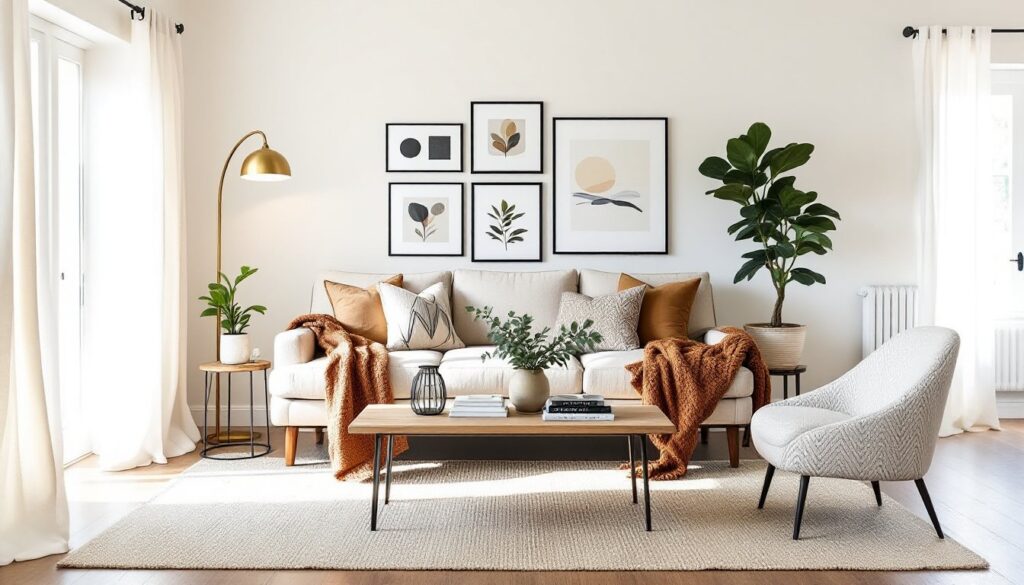
Beige furniture becomes a problem when it’s paired with beige walls, beige rugs, and beige curtains with no variation in tone, texture, or contrast. The fix is straightforward: layer textures and introduce contrast through accessories and accents.
Start with textiles. Throw pillows in varied textures, linen, velvet, wool, faux fur, add depth even when they stay within a neutral palette. Mix pillow sizes: pair 22-inch square euro pillows in back with 18-inch and 12-inch lumbar pillows in front. Don’t be afraid of pattern. Stripes, checks, subtle florals, or geometric prints in low-contrast tones (think cream and taupe) give the eye something to land on without shouting.
Throws and blankets draped over a sofa arm or chair back introduce both texture and an opportunity for color. A chunky knit throw in charcoal, a woven cotton blanket in rust, or a faux sheepskin adds visual weight.
Rugs are non-negotiable. A beige sofa on hardwood or tile needs a rug to anchor it. Natural fiber rugs like jute or sisal bring in texture and work well in casual spaces, though they can feel scratchy underfoot. Wool rugs are softer and more durable but cost more. Patterned rugs, Oriental, tribal, or modern geometric, introduce color and pattern without requiring a furniture swap. Make sure the rug is large enough: all front legs of the sofa and chairs should sit on it, or all furniture should sit fully on it. An 8×10 or 9×12 rug works for most living rooms.
Wall color and art make or break beige furniture. If walls are also beige or off-white, the room can feel flat. Consider painting an accent wall in a deeper tone, charcoal, navy, sage, or terracotta, or adding board-and-batten, shiplap, or picture frame molding painted in a contrasting color. Even a fresh coat of warm white (with a slight cream or yellow base) can add dimension.
Art and wall decor are where personality enters the room. Large-scale art pieces, gallery walls, or mirrors in bold frames create focal points. Black-framed art or mirrors add crisp contrast against beige upholstery. Brass or gold frames warm the space: matte black or wrought iron adds an industrial edge.
Lighting layers the space and changes how beige reads. Ambient lighting from overhead fixtures or recessed cans should be warm-toned (2700K to 3000K color temperature) to avoid making beige look gray or dingy. Add task lighting with floor or table lamps, and use accent lighting, picture lights, sconces, or LED strips, to highlight architectural features or art. Dimmer switches allow flexibility depending on time of day and mood.
Greenery introduces life and color. Real plants, fiddle leaf figs, snake plants, pothos, or monstera, add organic shapes and vibrant green against neutral furniture. If maintaining live plants isn’t realistic, high-quality faux plants have come a long way. Avoid dusty silk plants that look dated.
Metal accents, lamp bases, picture frames, hardware on furniture, or decorative objects, add shine and contrast. Mixing metals is fine: brass, black iron, and brushed nickel can coexist if distributed evenly across the room.
Finally, don’t forget the ceiling and trim. Painting the ceiling a shade lighter than the walls or adding crown molding in crisp white adds architectural interest. Even in a rental, peel-and-stick molding or removable wallpaper on one wall can transform the space without a major commitment.
Conclusion
Beige living room furniture isn’t a fallback choice, it’s a strategic one. It offers flexibility, longevity, and a neutral foundation that supports nearly any design direction. The key is treating beige as a canvas, not the finished painting. Layer in texture, contrast, and intentional accents, and the result is a living room that feels curated and comfortable, not safe or sterile. For more room design ideas and styling strategies, plenty of resources exist to help refine the look further.