Table of Contents
ToggleSetting up an outdoor zone where kids can play, eat snacks, and burn energy without destroying adult furniture is a game-changer for parents. Kids patio furniture isn’t just miniature versions of grown-up sets, it’s purpose-built to handle rough use, resist the elements, and keep little ones safe. Whether carving out a corner of the deck or dedicating a patch of the backyard, the right furniture turns outdoor time into independent play time. This guide walks through what to buy, what to avoid, and how to set up a space that lasts more than one summer.
Key Takeaways
- Kids patio furniture is purpose-built with proportional sizing and lightweight construction to prevent tipping hazards and keep children safe while handling rough outdoor play.
- Plastic (HDPE) and powder-coated metal are the most durable materials for kids patio furniture, resisting UV fade, corrosion, and weather damage better than wood or wicker.
- Rounded edges, stable wide-set legs, smooth surfaces, and non-toxic finishes are critical safety features that prevent common injuries during active outdoor play.
- Defining a dedicated kids zone with shade, storage, and flexible seating arrangements encourages independence while containing chaos and teaching responsibility.
- Weekly cleaning with mild soap and water plus seasonal deep cleaning with vinegar or baking soda solutions keeps kids patio furniture looking new and extends its lifespan.
- Regular hardware inspections and prompt repairs to damage prevent safety hazards and ensure furniture remains stable and functional through multiple seasons of use.
Why Invest in Dedicated Kids Patio Furniture?
Adult patio furniture isn’t scaled for kids, and that creates problems. Chairs are too tall, tables force awkward reaching, and heavy materials pose tipping hazards. Dedicated kids furniture solves these issues with proportional dimensions and lighter construction that children can move themselves.
Kids furniture also takes abuse that would wreck standard pieces. Expect seats to become stepping stools, tables to host arts and crafts with permanent markers, and everything to be dragged across concrete. Purpose-built pieces use materials and finishes that tolerate this treatment.
Another practical benefit: kids furniture corrals the chaos. When children have their own designated zone with scaled seating and surfaces, toys and activities stay contained instead of migrating across the entire patio. It creates boundaries without gates or constant reminders.
Finally, owning their own furniture gives kids a sense of ownership and responsibility. They’re more likely to clean up and respect a space that’s clearly theirs. It’s a low-stakes way to teach outdoor maintenance habits early.
Types of Kids Patio Furniture to Consider
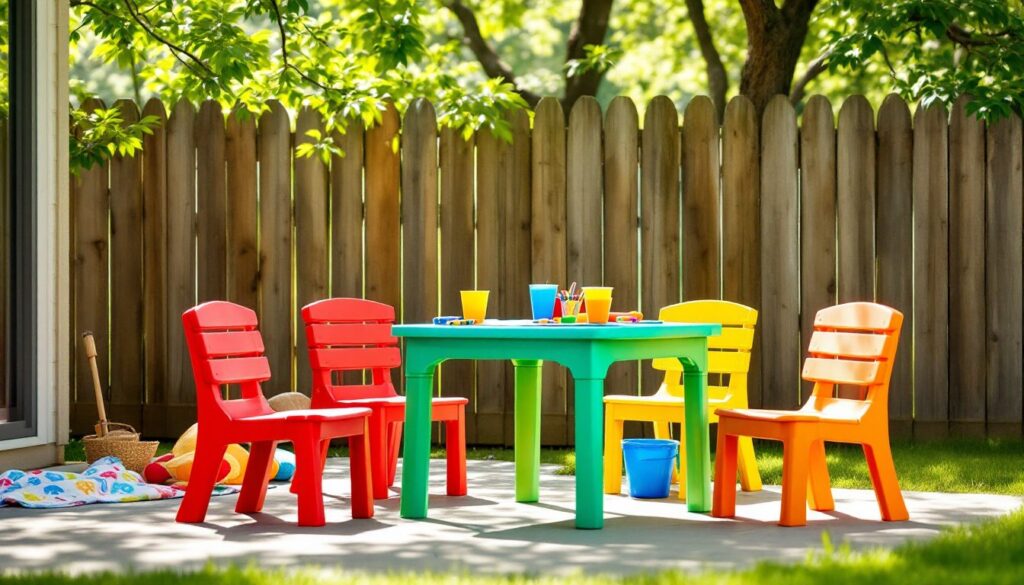
Table and chair sets are the foundation. Look for sets with 2–4 chairs and a table sized for snacks, crafts, or small games. Standard kids table height runs 18–20 inches, with chair seats at 10–12 inches. Sets often come in plastic, wood, or metal: each has trade-offs covered in the materials section.
Benches work well for group seating and take up less footprint than individual chairs. A 36-inch bench seats two to three kids comfortably. Benches with storage underneath do double duty, hiding outdoor toys or cushions.
Lounge chairs and bean bags create casual hangout spots. Look for weather-resistant bean bag covers filled with polystyrene beads or foam chunks. Mesh-backed lounge chairs designed for pools also work on patios and dry quickly after rain.
Picnic tables offer built-in seating and a larger surface for group activities. Kids picnic tables typically measure 33–36 inches long and sit lower than adult versions. Some models include attached benches that can’t tip or separate.
Play structures with integrated seating blur the line between furniture and equipment. Examples include playhouse setups with built-in benches or activity tables with sandbox inserts. These work best when you have space to dedicate to a permanent kids zone.
Material Matters: Choosing Durable and Safe Options
Plastic (HDPE or polypropylene) dominates the kids furniture market for good reasons. It’s lightweight, easy to clean, won’t splinter, and handles UV exposure without immediate fading. High-density polyethylene (HDPE) outlasts standard polypropylene and resists cracking in freeze-thaw cycles. Downsides: cheaper plastic can become brittle after 2–3 seasons, and bright colors may fade unevenly.
Wood offers a classic look but requires maintenance. Cedar and teak naturally resist rot and insects, but pine or fir need annual sealing to prevent warping and mildew. Check that all edges are sanded smooth and sealed, splinters are a constant risk with untreated wood. Wood furniture is heavier, which prevents tipping but makes it harder for kids to rearrange.
Metal (aluminum or powder-coated steel) provides durability without the weight of iron. Aluminum won’t rust, making it ideal for humid climates. Steel frames offer more strength but need a quality powder-coat finish to prevent corrosion. Avoid bare metal in direct sun: it heats up enough to burn skin on summer afternoons. Many designs inspired by Southern Living outdoor ideas blend metal frames with wood slats for a balanced approach.
Wicker and resin wicker look appealing but tend to unravel with rough handling. Natural wicker deteriorates quickly outdoors. Resin wicker (synthetic) holds up better but still snags on zippers and buckles. Reserve wicker for covered porches rather than open patios.
Avoid furniture with lead-based paints or toxic finishes. Look for products certified by ASTM International or labeled as meeting CPSC safety standards for children’s products.
Safety Features Every Parent Should Look For
Rounded edges and corners are non-negotiable. Sharp corners at kid height turn into forehead magnets during active play. Quality pieces use radius edges or protective caps on metal and wood corners.
Stability and weight distribution prevent tip-overs. Test furniture by pressing down on one edge, if it lifts easily, it’s too light or poorly balanced. Wide-set legs and low centers of gravity improve stability. For chairs, a spread of at least 12–14 inches between front and back legs reduces tipping risk.
Smooth, burr-free surfaces matter on metal and wood. Run your hand across all surfaces, especially undersides and joints where kids grab to move furniture. Powder-coated metal should have even coverage with no exposed edges.
Finger-safe folding mechanisms are critical if buying collapsible furniture. Hinges and joints should have guards that prevent pinching. Avoid spring-loaded folding chairs designed for adults, the mechanisms have too much force for small hands to control safely.
UV-resistant and non-toxic finishes protect both the furniture and the kids. Verify that paints, stains, and sealants are labeled as child-safe and free from VOCs (volatile organic compounds). Many quality outdoor brands highlight certifications on packaging.
Proper anchoring for fixed installations applies if setting up permanent seating or tables. Bolt heavy pieces to decking or use ground anchors for units placed on grass or gravel. This prevents tip-overs and keeps zones defined during windy weather.
Design Ideas for Creating a Kids Outdoor Zone
Start by defining the zone with a clear boundary. An outdoor rug (look for UV- and mold-resistant polypropylene) anchors the space visually and provides a softer surface than bare concrete or pavers. Rugs sized 5×7 feet or 6×9 feet fit a table set with room for movement.
Shade is essential for extended use. A 9-foot market umbrella covers most kids table sets, or install a 10×10-foot pop-up canopy for larger areas. Permanent options include sail shades mounted to posts or fascia boards. Ensure shade structures are anchored properly, summer storms can turn lightweight canopies into kites.
Separate activity stations within the kids zone keep things interesting. Position a table for crafts or snacks, a bench near a sandbox or water table, and a lounge chair in a shaded reading nook. Variety prevents boredom and spreads wear across multiple pieces instead of beating up one table.
Vertical storage keeps supplies organized. Mount weatherproof bins or cubbies on a fence or shed wall to hold outdoor toys, chalk, bubbles, and sunscreen. The Kiddo Cabana concept integrates playhouse structures with built-in storage, creating a dedicated hub for outdoor play. This setup keeps clutter off furniture surfaces and teaches kids to return items after use.
Add low-voltage lighting for evening use. Solar-powered stake lights or string lights on a timer extend outdoor time past sunset. Position lights to illuminate the table and path to the door without creating harsh glare.
Flexible seating arrangements adapt as kids grow and interests change. Choose lightweight pieces kids can rearrange themselves. Avoid built-in configurations that lock furniture into one layout, modularity is key for a space that evolves with your family.
Maintenance Tips to Keep Kids Furniture Looking New
Weekly quick cleaning prevents buildup. Hose down plastic and metal furniture, then wipe with a sponge and mild dish soap. For wood, use a damp cloth and dry immediately to prevent water spots and mildew. Avoid pressure washers, the force can crack plastic joints and strip finishes from wood.
Seasonal deep cleaning tackles stains and grime. Mix 1 cup white vinegar with 1 gallon warm water for plastic furniture: scrub with a soft brush and rinse. For stubborn marks, make a paste of baking soda and water, apply for 10 minutes, then scrub. Wood furniture benefits from a cleaner designed for outdoor use, followed by a fresh coat of sealant if the finish looks worn.
Winter storage extends furniture life significantly. If storing in a shed or garage, clean and dry everything first to prevent mold. Stack chairs and tables to save space, and cover with breathable tarps, plastic sheeting traps moisture and encourages mildew. If leaving furniture outside, invest in UV-resistant covers with tie-downs to prevent wind damage.
Touch up damage promptly. Sand rough spots on wood and apply matching stain or sealant. For metal, sand away rust spots, apply a rust-converter primer, then touch up with spray paint in a matching color. Plastic cracks can sometimes be repaired with plastic epoxy, but replacement is often more practical.
Inspect hardware and joints every few months. Tighten loose screws and bolts before they strip out or fall off. Apply a small amount of silicone spray to hinges and folding mechanisms to keep them operating smoothly. Replace any cracked or bent parts immediately, compromised structural components create safety hazards.
Resources like The Spruce offer detailed guides on maintaining specific materials and tackling tough stains that inevitably accumulate on kids furniture.
Conclusion
Kids patio furniture transforms outdoor spaces from off-limits zones into functional play areas that take real use. Focus on proportional sizing, durable materials, and safety features that prevent common injuries. With regular maintenance and smart design choices, a well-planned kids zone can serve multiple children through years of snacks, crafts, and outdoor adventures.