Table of Contents
ToggleQuality outdoor furniture isn’t cheap, and leaving it exposed to the elements is like parking a car outside without a roof, it’ll work until it doesn’t. Sun fades cushions, rain accelerates rust, and winter snow can warp frames. A good cover adds years to the lifespan of patio sets, fire pit seating, and lounge chairs. But not all covers are created equal. Cheap polyester tears after one season, while overkill commercial-grade vinyl costs more than the furniture itself. This guide walks through what actually matters when choosing a cover, from material specs to proper sizing, so homeowners can protect their investment without wasting money on products that fail after six months.
Key Takeaways
- A quality outdoor patio furniture cover extends furniture lifespan by 3-5 years and costs far less than replacing damaged pieces, with UV-resistant fabrics blocking 90-98% of sun exposure to prevent fading.
- Choose between individual piece covers for flexibility and better ventilation, or full set covers for speed and seamless protection based on your furniture layout and climate conditions.
- Essential cover features include double-stitched seams, built-in mesh vents to prevent mildew, secure fastening systems (click-close buckles are most reliable), and UV-resistant coatings rated for 1,000+ hours of exposure.
- Material choice matters: polyester (600-1200 denier) suits seasonal use, breathable synthetic blends work best in coastal areas, and heavy-duty vinyl provides commercial-grade protection for harsh climates and valuable furniture.
- Accurate measuring is critical—add 2-4 inches to width and depth, and 4-6 inches to height—and always measure your actual furniture rather than relying on manufacturer dimensions to ensure proper fit.
- Regular maintenance including monthly inspections, 2-3 annual cleanings with mild soap, and complete drying before storage significantly extends cover durability and prevents mildew damage.
Why Your Patio Furniture Needs a Quality Cover
Outdoor furniture sits in conditions that would destroy indoor pieces in weeks. UV radiation breaks down fabric dyes and weakens synthetic fibers. Moisture, whether from rain, morning dew, or humidity, promotes mildew on cushions and accelerates corrosion on metal frames. Temperature swings cause wood to expand and contract, leading to cracks and joint failure.
A quality cover acts as a barrier against all three threats. UV-resistant fabrics block 90-98% of sun exposure, preventing the fading that turns vibrant cushions into washed-out eyesores. Waterproof coatings keep moisture off frames and cushions, stopping mildew before it starts. During winter, covers shield furniture from snow load and ice accumulation that can bend aluminum frames or crack resin wicker.
The math is straightforward: a $150 cover set can extend the life of a $1,200 patio set by 3-5 years. Without protection, most outdoor furniture shows significant wear within 2-3 seasons. With proper covering during off-season or between uses, that timeline stretches to 5-8 years or more. Many garden design experts recommend covering furniture year-round in harsh climates, removing covers only during active use.
Beyond longevity, covers reduce maintenance. Uncovered furniture needs frequent cleaning to remove pollen, bird droppings, and tree sap. Covered pieces stay cleaner, requiring only occasional wipe-downs rather than deep scrubbing or cushion replacement.
Types of Outdoor Patio Furniture Covers
Covers come in several configurations, each suited to different furniture layouts and storage needs. The main categories are individual piece covers, full set covers, and specialty covers for specific items like fire pits or grills.
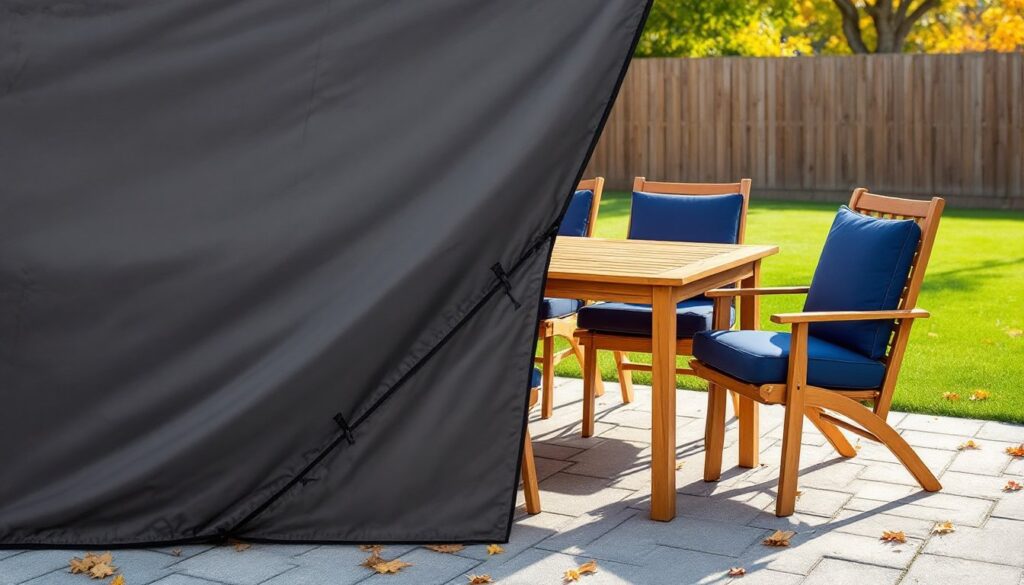
Individual piece covers wrap single chairs, tables, or loungers. They’re ideal for modular setups where furniture gets rearranged frequently or when only certain pieces need protection. Most individual covers use elastic hems or drawstring closures to stay secure in wind. They’re also easier to handle solo, no need for help wrestling a king-size tarp over an entire dining set.
Full set covers (also called sectional or conversation set covers) drape over entire furniture groupings. They work best for permanent arrangements like built-in seating or heavy dining sets that don’t move. These covers typically measure 80-120 inches wide and use reinforced corner seams to handle the weight distribution. Many homeowners considering outdoor living upgrades find full-set covers more practical for large, fixed installations.
The trade-off: individual covers offer better ventilation (reducing mildew risk) and easier on-and-off access, but cost more per square foot and can look cluttered. Full set covers provide seamless protection and faster setup but trap more moisture if ventilation isn’t built in.
Individual Piece Covers vs. Full Set Covers
Individual piece covers excel when:
- Furniture gets rearranged seasonally (moving lounge chairs to follow sun patterns)
- Only high-value items need protection (covering a $400 teak bench while leaving $50 resin side tables exposed)
- Storage space is limited (folded individual covers take less room than a giant tarp)
- Quick access matters (uncovering just two chairs for impromptu use)
Full set covers work better when:
- Furniture stays put year-round (built-in sectionals, heavy stone tables)
- The goal is speed (covering an 8-piece dining set in under five minutes)
- Aesthetics matter (one sleek cover vs. four mismatched individual pieces)
- Wind is a constant issue (fewer edges mean fewer spots for gusts to catch)
Some homeowners split the difference, using individual covers for lounge chairs and side tables while deploying a full cover over the main dining set. This hybrid approach balances flexibility with convenience.
Key Features to Look for When Buying Patio Furniture Covers
The difference between a cover that lasts one season and one that lasts five comes down to specific construction details. Start with seams: double-stitched or heat-welded seams resist tearing far better than single-stitch construction. Check that seams are reinforced at stress points (corners, zipper pulls, tie-down loops).
Ventilation is non-negotiable in humid climates. Look for built-in air vents, usually mesh panels near the bottom, that allow moisture to escape without letting rain in. Without vents, condensation builds up underneath, creating the exact damp environment covers are meant to prevent.
Secure fastening systems keep covers in place during windstorms. Options include:
- Elastic hems with adjustable toggles (easy but can lose tension over time)
- Drawstring closures with cord locks (reliable but slower to adjust)
- Click-close buckles with straps (most secure, requires threading under furniture)
- Velcro panels (convenient but degrades with dirt exposure)
Avoid covers that rely solely on loose draping, they’ll end up in the neighbor’s yard after the first 20 mph gust.
UV-resistant coatings are essential for year-round use. Look for fabrics rated to 1,000+ hours of UV exposure (roughly 3-4 seasons of full sun). Cheaper covers skip this coating and begin deteriorating after one summer.
Material Durability and Weather Resistance
Material choice determines how well a cover performs and how long it lasts. The most common options:
Polyester (600-1200 denier): The budget-friendly standard. A 600-denier polyester cover with water-resistant coating handles light seasonal use but typically lasts 1-2 years. 1200-denier polyester with PVC or polyurethane backing offers better durability (3-4 years) at moderate cost. Look for solution-dyed polyester, which embeds color during fiber production rather than surface-dyeing, this resists UV fading significantly longer.
Heavy-duty vinyl (10-18 oz): Commercial-grade protection. These covers handle extreme weather, from desert sun to lake-effect snow. Vinyl is fully waterproof (not just water-resistant) and shrugs off mildew. Downsides: weight (harder to handle), stiffness in cold weather, and higher cost. Best for high-value furniture in harsh climates.
Breathable synthetic blends (polyester-canvas hybrids): A middle ground. These fabrics allow some air circulation while maintaining water resistance. They’re lighter than vinyl but tougher than basic polyester. As noted in many home improvement guides, breathable covers work especially well in coastal areas where salt air and humidity demand both protection and ventilation.
Water resistance vs. waterproof: Water-resistant covers repel light rain but eventually allow moisture through during heavy downpours. Waterproof covers (usually vinyl or PVC-backed polyester) block all water penetration. For areas with regular rainfall, waterproof is worth the upgrade.
Avoid untreated canvas or thin (under 300-denier) polyester, these degrade quickly and provide minimal protection.
How to Measure and Choose the Right Size Cover
A cover that’s too small won’t reach the ground, leaving furniture exposed. One that’s too large creates fabric pools where water collects and wind catches. Accurate measuring is essential.
For individual pieces, measure three dimensions:
- Width: Side to side at the widest point (usually armrests on chairs)
- Depth: Front to back, including any protruding elements (legs, footrests)
- Height: Ground to the tallest point (top of backrest or umbrella)
Add 2-4 inches to width and depth measurements, and 4-6 inches to height. This tolerance accounts for irregular shapes and allows the cover to drape slightly rather than stretching tight (which stresses seams).
For tables with chairs tucked in, measure the entire footprint with chairs pushed under. If chairs have high backs that extend above the table, account for that in the height measurement. A standard 60-inch round table with six chairs tucked in typically needs a 76-84 inch diameter cover with 28-32 inches of height.
For sectional or L-shaped arrangements, sketch the layout from above and measure the maximum width, depth, and any offsets. Some manufacturers offer custom covers for complex shapes, worth considering for built-in seating that cost thousands.
Common sizing mistakes:
- Measuring furniture with cushions removed (then the cover doesn’t fit when cushions are in place)
- Forgetting to account for umbrella poles (which add 8-10 feet of height)
- Assuming manufacturer dimensions are accurate (always measure the actual furniture)
- Ignoring ground clearance (covers should reach within 1-2 inches of the ground for full protection)
Most quality cover manufacturers provide detailed sizing charts with recommended dimensions for specific furniture types. When between sizes, go larger, excess fabric can be cinched with straps, but short covers can’t be stretched.
Proper Care and Maintenance for Long-Lasting Protection
Even the best cover will fail early if neglected. Basic maintenance extends lifespan and ensures continued protection.
Before covering furniture: Remove or brush off loose debris. Pollen, leaves, and dirt trapped under covers accelerate fabric wear and promote mildew. For cushions, ensure they’re completely dry, covering damp cushions guarantees mold growth.
During covered periods: Inspect covers monthly. Check for:
- Tears or holes (repair immediately with patch kits designed for outdoor fabrics)
- Loosened tie-downs or buckles (retighten before wind causes damage)
- Water pooling on top (reposition cover to eliminate low spots)
- Debris accumulation (brush off snow, leaves, and branches)
Cleaning covers: Most covers need cleaning 2-3 times per year. For polyester covers, use mild soap and a soft brush, then rinse with a garden hose. Avoid pressure washers, they can damage waterproof coatings. For vinyl covers, use vinyl cleaner or a mix of dish soap and warm water, wiping in sections.
Allow covers to dry completely before storage. Folding damp covers creates permanent mildew stains and odors. Hang covers over a railing or fence in full sun for 2-3 hours after cleaning.
Off-season storage: When covers aren’t in use, fold loosely and store in a dry location (garage, shed, or weatherproof deck box). Avoid plastic bins, they trap moisture. Mesh storage bags allow airflow while keeping covers clean.
Repairs: Small tears (under 3 inches) can be patched with outdoor fabric repair tape or vinyl patch kits. For tears along seams, use a heavy-duty needle and UV-resistant thread to restitch. Larger damage (over 6 inches, or holes in high-stress areas) usually means it’s time for replacement.
Winter considerations: In snow-prone areas, shake off snow accumulation regularly. While covers are designed to handle weather, leaving heavy snow loads for weeks stresses seams and can collapse furniture underneath. For areas with sustained freezing, consider adding furniture risers (plastic or composite blocks) to lift furniture 2-3 inches off the ground, preventing ice contact that can damage feet and legs.