Table of Contents
ToggleBlack living room furniture isn’t for the timid, it’s a design choice that commands attention and anchors a space with confidence. Whether someone’s working with a cramped apartment or a sprawling open-concept floor plan, black pieces deliver impact without eating up visual real estate the way bulky, ornate furniture can. It’s also surprisingly forgiving: black hides wear, pairs with nearly any color scheme, and works across styles from mid-century modern to industrial farmhouse. This guide walks through selecting the right black furniture pieces, balancing bold tones without creating a cave, and pairing materials and colors that let black furnishings shine rather than overwhelm.
Key Takeaways
- Black living room furniture creates timeless appeal by avoiding trend cycles and anchoring spaces with intentional, sophisticated design that works across multiple styles.
- Strategic placement of one or two statement black furniture pieces—like sofas and coffee tables—provides visual impact without overwhelming smaller spaces when balanced with light walls and layered lighting.
- Black upholstery and finishes are practical choices that hide wear, pet hair, and spills better than lighter materials, requiring less frequent deep cleaning for busy households.
- Layered lighting combining ambient, task, and accent sources is essential to prevent black furniture from creating a dark, cave-like atmosphere and keeping the room feeling open and inviting.
- Pairing black living room furniture with warm neutrals (terracotta, camel), cool tones (navy, sage), or textured materials (leather, linen, wood) adds visual interest and prevents monotony.
- Mix matte, satin, and brushed finishes rather than relying on all high-gloss surfaces to achieve a refined look that avoids appearing cheap or dated.
Why Black Living Room Furniture Creates Timeless Appeal
Black furniture has staying power because it sidesteps trend cycles. Unlike the beige-on-beige palettes that dominated the 2000s or the all-white Scandinavian wave that followed, black reads as intentional rather than dated. It anchors a room the way a solid foundation anchors a house, everything else can shift, but the bones stay put.
From a practical standpoint, black upholstery and finishes hide pet hair, minor scuffs, and the inevitable coffee spill better than lighter tones. Leather or polyester-blend fabrics in black require less frequent deep cleaning than cream linen, which matters for households with kids or animals. It’s not indestructible, but it’s more forgiving.
Black also offers serious design flexibility. Pair it with warm woods and terracotta for a Mediterranean vibe, chrome and glass for industrial-modern, or soft pastels and natural fibers for contemporary Scandinavian. The furniture itself doesn’t dictate the style, the surrounding elements do. That’s the hallmark of a neutral done right.
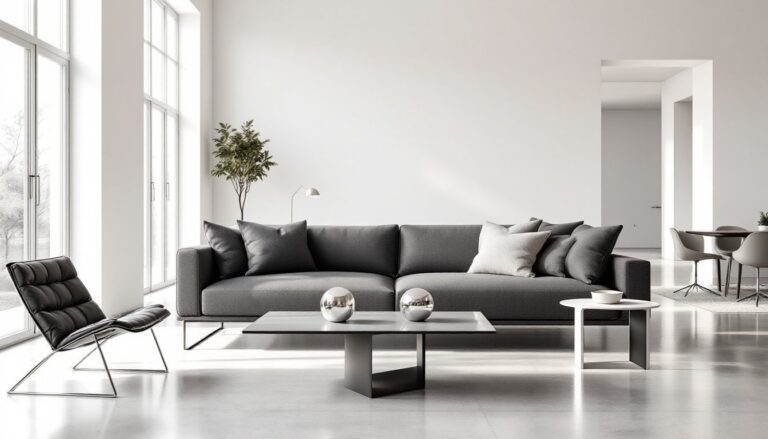
Another consideration: black furniture can make a small room feel larger when used strategically. A low-profile black sofa against a light wall recedes visually, creating the illusion of more floor space. The contrast between dark furniture and bright walls draws the eye upward, emphasizing ceiling height. Designers frequently use this trick in basement living rooms or narrow townhome layouts where every visual inch counts.
Essential Black Furniture Pieces for Your Living Room
Not every piece needs to be black, strategic placement is key. Focus on one or two statement items rather than a full matched set, which can feel heavy-handed.
Black Sofas and Sectionals
Black sofas are the workhorse of any living room. For durability, prioritize frame construction first: kiln-dried hardwood frames (oak, maple, or birch) outlast softwood or particle board by decades. Check that corner blocks are glued and screwed, not just stapled. A solid frame supports reupholstering down the line if the fabric wears out before the bones do.
Sectionals work well in open-concept spaces where the living area bleeds into the kitchen or dining zone. A black L-shaped sectional visually defines the seating area without requiring a physical room divider. Stick to modular designs if the layout might change, moving a 10-foot one-piece sectional through a standard 32-inch doorway is a nightmare.
For upholstery, top-grain leather ages best but comes with a premium price tag. Bonded leather (leather scraps glued to fabric backing) looks decent initially but peels within a few years. If budget’s tight, a tightly woven polyester-blend fabric holds up better than cheap leather alternatives. Avoid overly trendy silhouettes that’ll look dated in five years, classic track arms or rolled arms age more gracefully than ultra-modern geometric shapes.
Black Coffee Tables and Accent Tables
A black coffee table grounds the seating arrangement and provides a visual anchor point. Materials matter here:
- Powder-coated steel: Durable, scratch-resistant, works well in high-traffic homes. Wipe spills immediately to prevent water spots.
- Solid wood with black stain or paint: Adds warmth. Use furniture wax or polyurethane topcoat to protect the finish from cup rings.
- Tempered glass with black metal frame: Keeps sightlines open in small rooms. Glass is 5-7 times stronger than standard glass but can still shatter under impact, not ideal for homes with young kids.
Standard coffee table height is 16-18 inches, about 1-2 inches lower than sofa seat height. Measure before buying, tables that are too low or too high throw off the room’s proportions.
Black accent tables (side tables, console tables, nesting tables) add functionality without visual clutter. A narrow black console table behind a sofa provides display space and storage without blocking walkways. Look for pieces with lower shelves or drawers, wasted vertical space is a missed opportunity in smaller homes.
Styling Tips to Balance Black Furniture in Your Living Room
Black absorbs light, so balance is non-negotiable. A room full of black furniture with dark walls and minimal lighting feels like a cave, not a curated space.
Start with wall color. Light or mid-tone walls (soft grays, warm whites, beiges, even pale blues) provide contrast that makes black furniture pop rather than disappear. Painting one accent wall a darker shade creates depth without overwhelming the space, but avoid painting all walls dark unless the room has abundant natural light from large windows or skylights.
Lighting is critical. Black furniture needs layered lighting to avoid a dim, heavy feel. Combine ambient lighting (overhead fixtures or recessed cans), task lighting (reading lamps, swing-arm sconces), and accent lighting (picture lights, LED strips under shelving). Aim for 50-75 lumens per square foot in living spaces, less feels dingy, more feels clinical.
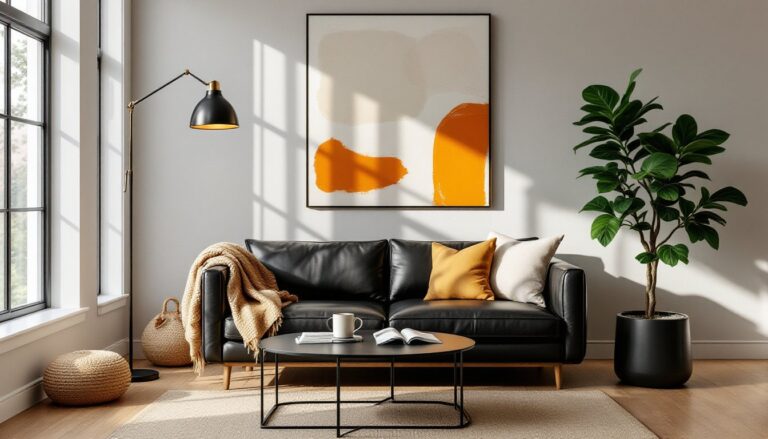
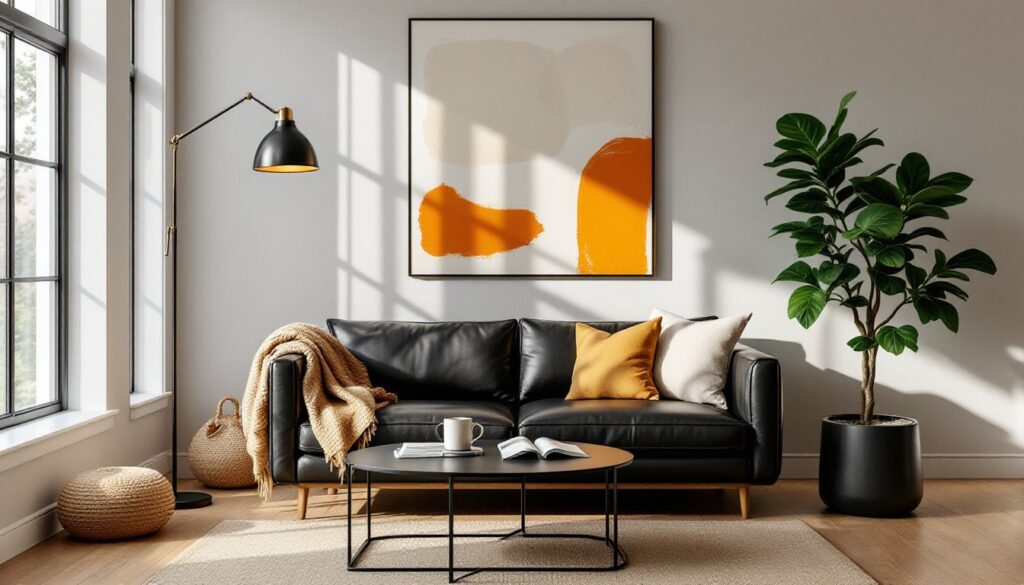
Throw in texture variation to break up the monochrome. A black leather sofa pairs well with a chunky knit throw, linen pillows, or a jute rug. Smooth, reflective surfaces (like a black lacquer coffee table) balance nicely against matte or rough textures (raw wood, woven baskets, brushed metal). Mixing textures adds visual interest without requiring color.
Artwork and wall decor provide breathing room. Large-scale art with bright colors or metallics draws the eye upward and prevents the room from feeling bottom-heavy. Gallery walls work, but avoid all-black frames on black furniture, mix in wood, brass, or white frames for contrast.
Finally, don’t crowd the room. Black furniture has strong visual weight, so leave adequate space between pieces. A cramped arrangement amplifies the heaviness: open pathways and negative space lighten the overall feel. Standard traffic flow requires 30-36 inches of clearance for walkways.
Best Color Palettes and Materials to Pair with Black Furniture
Black plays well with nearly everything, but some combinations deliver more punch than others.
Warm neutrals (camel, terracotta, mustard, rust) soften black’s intensity and create a cozy, approachable vibe. A black sofa with burnt orange pillows and a camel-colored area rug feels inviting rather than stark. This palette works especially well in rooms with warm wood floors (oak, hickory, walnut).
Cool tones (navy, slate blue, sage green, charcoal) pair with black for a modern, sophisticated look. Navy and black together once broke design “rules,” but the combo creates rich, layered depth when balanced with lighter accents like cream or soft gray. Add brass or gold hardware to warm it up.
Monochromatic schemes (black, white, gray) deliver clean, contemporary style. Vary shades and textures to avoid flatness, charcoal walls, light gray curtains, white trim, and black furniture create a gradient effect. This approach demands excellent lighting and at least one bold texture (like a sheepskin rug or velvet pillows) to prevent sterility.
Pastels and brights inject personality. Blush pink, mint green, or soft lavender accents against black furniture feel fresh and unexpected. For bolder taste, jewel tones (emerald, sapphire, amethyst) deliver drama. When integrating bold decor choices, use the 60-30-10 rule: 60% dominant color (walls/large furniture), 30% secondary (rugs, curtains), 10% accent (pillows, art).
Material pairings matter as much as color. Black metal furniture (steel, wrought iron) pairs naturally with concrete, exposed brick, or reclaimed wood for industrial style. Black wood furniture works with natural linen, cotton, and jute for a softer, organic feel. Glass and acrylic keep things light and modern, preventing visual heaviness.
For those looking at complete furniture collections, many retailers offer coordinated pieces that balance black tones with complementary materials, curated furniture lines often simplify the selection process while maintaining design cohesion.
Avoid pairing too many high-gloss finishes in one space. A black lacquer coffee table plus a black patent leather sofa plus glossy black picture frames creates glare and looks cheap. Mix in matte, satin, or brushed finishes for a more refined result. Similarly, steer clear of all-black wood furniture sets (matching sofa table, coffee table, end tables), the uniformity reads as dated. Mix materials and finish levels instead, as seen in many modern design layouts that prioritize variety.
Conclusion
Black living room furniture delivers bold elegance when balanced with thoughtful lighting, contrasting colors, and varied textures. It’s a forgiving, flexible choice that adapts to shifting styles without requiring a full room overhaul. Focus on quality construction, mix materials to avoid monotony, and let the black pieces anchor the space rather than dominate it. Done right, black furniture transforms a living room from ordinary to unforgettable.