Table of Contents
ToggleMost patio furniture from big-box stores won’t survive three seasons before plastic cracks, welds fail, or finish peels. Amish patio furniture takes a different approach, solid hardwood construction, mortise-and-tenon joinery, and hand-applied finishes designed to outlast your mortgage. Built in small workshops using traditional techniques passed down through generations, these pieces aren’t assembled from flat-pack kits or extruded in overseas factories. They’re sawn, shaped, and fitted by craftspeople who stake their reputation on every chair and table that leaves the shop. If you’re tired of replacing flimsy outdoor sets every few years, understanding what makes Amish-built furniture different can save you money and frustration in the long run.
Key Takeaways
- Amish patio furniture uses solid hardwood, mortise-and-tenon joinery, and hand-applied finishes to deliver decades of durability, far outlasting typical big-box sets that fail within 3-5 years.
- Traditional construction techniques and natural materials like cedar, cypress, and white oak provide inherent weather resistance without relying solely on chemical treatments or factory coatings.
- Amish builders offer extensive customization options and longer warranties (10-20 years), with pieces often lasting 20-30 years or more, making them a smart long-term investment despite higher upfront costs.
- Annual maintenance—including seasonal cleaning, refinishing every 1-3 years, and hardware checks—is straightforward and keeps your Amish patio furniture protected from the elements.
- Amish patio furniture has a smaller carbon footprint than mass-produced alternatives, with local production, regional wood sourcing, and minimal packaging reducing environmental impact.
- Well-maintained pieces retain 40-60% resale value, compared to 10-20% for big-box brands, making your investment financially sound if you move or redesign later.
What Makes Amish Patio Furniture Different?
The core difference isn’t just aesthetics, it’s construction method and material selection. Amish furniture makers use traditional joinery techniques like mortise-and-tenon, dowel pins, and dovetails instead of relying on screws, staples, or glue alone. These joints distribute stress across the entire piece and allow for seasonal wood movement without splitting.
Most Amish workshops source kiln-dried domestic hardwoods, white oak, cedar, teak, or cypress, milled to final dimensions in-house. Nominal 2x4s are actually 1.5″ x 3.5″ once planed, but Amish builders often work from thicker rough-sawn stock, resulting in heftier finished dimensions than you’d get from standard lumber yards. Cedar and cypress contain natural oils that resist rot and insect damage, making them ideal for outdoor use without chemical treatments.
Finishes are hand-applied in multiple coats. Marine-grade spar urethane or penetrating oil finishes are common, offering UV protection and moisture resistance that factory spray-on coatings can’t match. Some pieces are left unfinished if the wood species (like teak or cedar) weathers gracefully to a silver-gray patina.
Because Amish communities often operate without electricity in their workshops, many tools are pneumatic or hand-powered. This slower pace encourages attention to detail, spokeshaves smooth curves, hand planes flatten surfaces, and each joint is test-fitted before final assembly. The result is furniture with tight tolerances and a hand-worked texture that power tools alone can’t replicate.
Benefits of Choosing Amish-Made Outdoor Furniture
Buying Amish patio furniture is an investment in longevity. Where particleboard and powder-coated steel fail after a few winters, solid hardwood frames can last decades with basic maintenance. Many Amish pieces come with 10- to 20-year warranties, and it’s not uncommon to find 30-year-old gliders and rockers still in use.
Customization options are another advantage. Most Amish workshops build to order, so you can specify dimensions, wood species, stain color, and hardware finishes. Need a bench that fits a 72″ gap between pergola posts? Want armless chairs to slide under a specific table height? Amish builders accommodate those requests without upcharges that custom orders usually carry at retail stores.
From a sustainability standpoint, Amish furniture has a smaller carbon footprint. Workshops are local (concentrated in Pennsylvania, Ohio, Indiana, and surrounding states), wood is regionally sourced, and low-tech production methods consume less energy than industrial manufacturing. There’s no overseas shipping, no plastic packaging, and no disposable components.
Durability and Weather Resistance
Weather resistance starts with wood selection. Cedar and cypress contain thujaplicins and cypressene, natural fungicides that prevent rot even in damp climates. White oak has tight grain and high tannin content, making it naturally water-resistant. Many Amish builders also incorporate architectural details like beveled edges and drainage gaps to shed water rather than trap it in joints.
Joinery matters, too. Mortise-and-tenon joints are stronger than screws in shear and tension, and they don’t loosen over time like metal fasteners in softwood. When wood swells and contracts with humidity changes, properly cut joints accommodate movement without splitting. Gliders and rockers use stainless steel or brass hardware rather than zinc-plated fasteners that rust within a season.
Finish coatings provide the final layer of protection. Spar urethane contains UV blockers and flexible resins that expand and contract with the wood, preventing cracking. Penetrating oil finishes (like tung or linseed oil) soak into the grain rather than forming a surface film, so there’s no peeling or flaking. Both finishes require reapplication every 1-3 years depending on sun exposure, but maintenance is straightforward, clean, lightly sand, and recoat.
Popular Amish Patio Furniture Styles and Materials
Mission (Craftsman) style is the most common, featuring straight lines, exposed joinery, and minimal ornamentation. Slat backs, tapered legs, and corbel details are typical. It pairs well with both modern and rustic settings.
Shaker-inspired designs take simplicity further, clean profiles, subtle curves, and no decorative hardware. These pieces work in smaller spaces because they don’t visually crowd a patio or deck.
Adirondack chairs and gliders are Amish workshop staples. Traditional Adirondack profiles use wide slats and a reclined seat angle, but Amish versions often add contoured backs and thicker armrests for added comfort. Gliders incorporate ball-bearing or wooden track systems, avoid models with plastic bushings, which wear out quickly.
Poly lumber (HDPE) is a newer option some Amish shops offer, made from recycled milk jugs and detergent bottles. It’s molded to look like wood planks but won’t rot, splinter, or require refinishing. Structural frames are still hardwood, with poly slats and panels in high-wear areas. It’s heavier than wood but lighter than concrete, and holds color well without fading.
For wood species, cedar and cypress dominate the market. Western red cedar is lightweight, aromatic, and widely available. Cypress is denser, more rot-resistant, and holds fasteners better but costs 20-30% more. White oak is the premium choice, extremely durable, beautiful grain, and ages to a rich gray-brown if left unfinished. Teak is rare in Amish work due to cost and sourcing, but some workshops import it for high-end pieces.
Many Amish builders also craft swing beds, porch swings, and hanging daybeds with chain or rope suspension systems. These require overhead joists rated for at least 500 lbs and proper eye bolt installation, typically ½” lag eyes screwed into solid wood blocking, not drywall anchors.
How to Care for and Maintain Your Amish Patio Furniture
Seasonal prep is the key to decades of service. Before winter, clean all surfaces with a soft brush and soapy water to remove dirt, pollen, and mildew. Rinse thoroughly and let dry completely, trapped moisture under covers can cause more damage than leaving furniture exposed.
If your furniture has a spar urethane finish, inspect for cracking or peeling annually. Lightly sand affected areas with 220-grit sandpaper, wipe clean with mineral spirits, and apply a fresh coat following the grain. Spar urethane requires 24-48 hours of dry weather to cure, so plan refinishing during stable conditions.
For oil finishes, reapply tung oil or linseed oil every 1-2 years. Wipe on with a lint-free cloth, let penetrate for 15 minutes, then buff off excess. Two thin coats beat one heavy coat, excess oil stays tacky and attracts dust.
Unfinished cedar or teak will weather to gray. If you want to maintain the original color, apply a clear wood sealer with UV inhibitors every 12-18 months. If you prefer the silvered look, just clean annually and let it age naturally. Gray patina doesn’t indicate rot, it’s a surface oxidation layer that actually protects the wood beneath.
Hardware maintenance involves checking bolts and screws twice per season. Stainless steel won’t rust, but fasteners can loosen as wood shrinks in dry weather. Tighten with a socket wrench, don’t overtighten, which can strip threads or crack wood. Apply a dab of beeswax or paraffin to glider tracks and pivot points to keep motion smooth.
Storage isn’t always necessary, but if you have limited covered space, prioritize cushions and smaller pieces. Stack chairs off the ground on pallets or deck blocks to prevent ground moisture from wicking into end grain. If using furniture covers, choose breathable fabrics, vinyl traps condensation and accelerates mildew growth.
Mildew and stains clean up with a 1:3 bleach-to-water solution. Scrub with a nylon brush, rinse thoroughly, and let dry before refinishing. For stubborn tannin stains (common on oak), use oxalic acid wood bleach following package directions. Always wear gloves and eye protection when working with chemical cleaners.
What to Consider Before Buying Amish Patio Furniture
Lead times can run 6-12 weeks during peak season (spring and early summer), since most pieces are built to order. If you need furniture for a specific event, order early. Some workshops keep a small inventory of popular items, but custom orders take time.
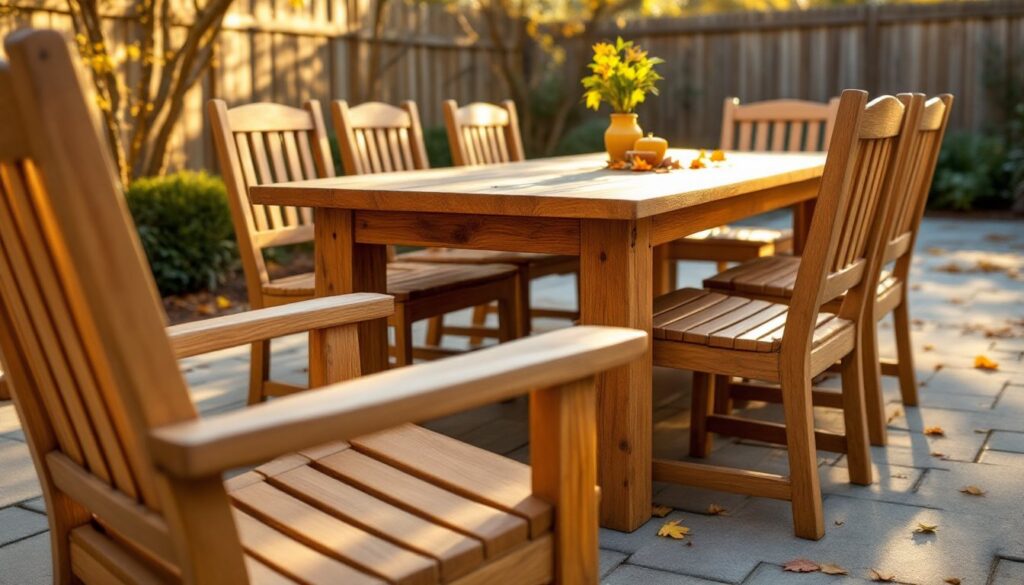
Pricing is higher than mass-market patio sets but competitive with mid-to-high-end retail brands. A basic Amish cedar Adirondack chair runs $200-$350: a poly lumber version is $300-$450. A full dining set (table and six chairs) in white oak can range from $2,500 to $5,000+ depending on size and finish. These aren’t budget purchases, but cost-per-year drops significantly when furniture lasts 20+ years instead of 3-5.
Shipping logistics vary by workshop. Some deliver within a regional radius (100-200 miles) using their own trucks. Others use freight companies, which adds $150-$400 depending on distance and item size. Inspect furniture immediately upon delivery, document any damage with photos before the driver leaves. Most workshops self-insure and will repair or replace damaged pieces, but you need evidence for claims.
Assembly is usually minimal. Tables may require attaching legs with bolts, but most pieces arrive fully assembled. Bring a friend to unload heavy items, a solid oak dining table can weigh 150+ lbs. Knowing proper lifting techniques and workshop safety helps prevent injury during setup.
Matching existing furniture is easier if you order from the same workshop and specify stain color or wood species. Different cedar batches can vary in tone, so ask about finish samples before finalizing an order. Some builders offer small swatches or reference photos to preview colors.
Weight considerations matter for rooftop decks or older structures. Solid hardwood furniture is heavy, a white oak chair might weigh 40 lbs, compared to 15 lbs for an aluminum equivalent. If your deck wasn’t built to current IRC code (50 lbs per square foot live load), consult a structural engineer before loading it with heavy furniture and occupants.
Resale value holds better than mass-produced furniture. Well-maintained Amish pieces often sell for 40-60% of original price on local marketplaces, compared to 10-20% for big-box brands. If you move or redesign, you can recoup a meaningful portion of your investment.
Conclusion
Amish patio furniture isn’t the cheapest option, but it’s one of the smartest for homeowners tired of the replace-every-three-years cycle. Solid joinery, domestic hardwoods, and hand-applied finishes create furniture that weathers storms, resists rot, and improves with age. With basic annual maintenance, cleaning, occasional refinishing, and hardware checks, these pieces will outlast mortgages and trends alike. If you’re planning a patio upgrade, factor in long-term value alongside upfront cost. The furniture that costs twice as much but lasts four times as long is the better deal.