Table of Contents
ToggleGrey bedroom furniture has become a cornerstone of modern interior design, and for good reason. It bridges the gap between stark minimalism and cozy warmth, giving homeowners a neutral foundation that works with nearly any decor style. Whether someone’s working with a cramped rental bedroom or a spacious master suite, grey furniture adapts without fighting for attention. Unlike white, which can feel sterile, or dark wood, which can overwhelm small spaces, grey offers flexibility. It’s not a trend that’ll look dated in five years, it’s a practical choice that grows with changing tastes and life stages.
Key Takeaways
- Grey furniture bedroom designs provide a neutral, versatile foundation that adapts to any decor style while promoting relaxation and hiding wear better than lighter finishes.
- Choosing the right shade of grey matters—understand undertones (blue, green, or warm) and test samples in your natural light before purchasing to avoid clashing with walls and existing pieces.
- Essential grey bedroom furniture includes a quality bed frame, full-extension dresser, matching or mixed nightstands, and a storage bench to maximize both style and function.
- Layer textures with area rugs, use contrasting metal finishes (brass, chrome, or matte black), and incorporate bold artwork to prevent grey bedrooms from feeling flat or one-dimensional.
- Avoid monochromatic grey spaces by breaking up the color with contrasting walls, textiles, or different grey shades, and ensure adequate layered lighting to showcase the furniture’s depth.
- Mix wood tones intentionally using grey furniture as a buffer between warm and cool finishes, and incorporate natural materials like rattan or wicker to soften grey’s formal appearance.
Why Grey Furniture Works Perfectly in Bedrooms
Grey furniture succeeds in bedrooms because it functions as a true neutral. Unlike beige, which can skew warm or cool depending on undertones, grey maintains consistency across lighting conditions. A charcoal dresser looks intentional in morning sunlight and equally grounded under evening lamps.
From a practical standpoint, grey hides minor wear better than lighter finishes. Scuffs and dings blend into mid-tone grey surfaces, extending the lifespan of painted or laminated pieces. Solid wood furniture with grey stain still shows grain character while offering the color’s calming effect.
Grey also plays well with both warm and cool color palettes. Pair it with blush pink and brass for warmth, or with navy and chrome for a cooler, more contemporary feel. This versatility matters when homeowners want to refresh a room’s look without replacing expensive furniture. A simple swap of textiles and wall color can completely transform the space while the grey furniture remains the constant anchor.
The color’s psychological impact shouldn’t be overlooked. Grey promotes relaxation without the clinical feel of pure white or the heaviness of black. It recedes visually, making furniture feel less imposing, a valuable trait in bedrooms where the goal is rest, not visual stimulation.
Choosing the Right Shade of Grey for Your Bedroom Furniture
Not all greys are created equal, and picking the wrong shade can throw off an entire room. The key is understanding undertones. Most greys lean slightly blue, green, or purple. In bedrooms with northern exposure (cooler, bluer natural light), avoid blue-grey furniture, it’ll amplify the cold feel. Instead, opt for greige (grey-beige hybrids) or greys with warm brown undertones.
For south-facing bedrooms with abundant warm light, cooler greys with blue or green undertones balance the space. Test samples against your wall color and bedding in both morning and evening light. Paint manufacturers like Benjamin Moore and Sherwin-Williams offer sample pots, buy one, paint a scrap piece of plywood, and lean it against the furniture you’re considering.
Shade depth matters just as much as undertone. Light greys (think dove or pearl) work in small bedrooms, reflecting light and preventing the space from feeling cramped. They pair well with white trim and light wood floors. Medium greys (like pewter or slate) offer more visual weight, suitable for larger bedrooms or spaces where the furniture needs to make a statement without dominating.
Charcoal and dark greys create drama but require careful handling. They work best in rooms with ample natural light and high ceilings. In compact bedrooms, limit dark grey to accent pieces like a single nightstand or bench rather than a full bedroom set. The contrast between dark furniture and lighter walls can actually make a small room feel larger by creating visual layers, but overdoing it leads to a cave-like atmosphere.
Essential Grey Furniture Pieces for a Complete Bedroom
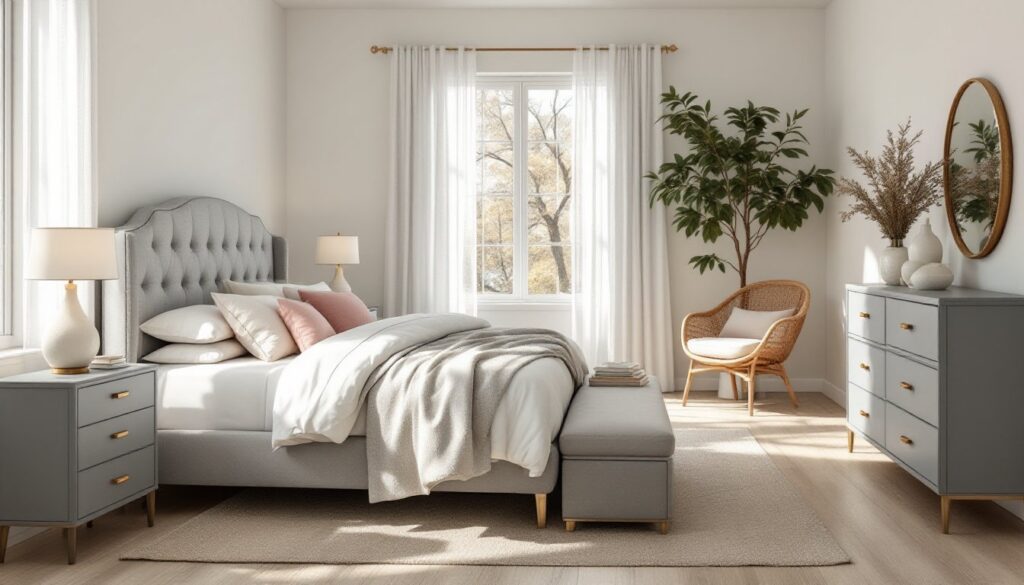
Start with the bed frame, it’s the room’s focal point. A grey upholstered bed with a tufted headboard adds texture and softness, ideal for traditional or transitional styles. For modern or industrial spaces, a grey-stained wood platform bed with clean lines works better. Look for solid hardwood or engineered wood with dovetail joinery, not particleboard with veneer that’ll chip within a year.
A dresser is the workhorse. A standard six-drawer dresser measures roughly 60 inches wide by 30 inches tall, offering adequate storage for most adults. Opt for full-extension drawer glides (not the cheap plastic tracks) so drawers pull fully out without tipping. Grey painted finishes are popular, but make sure the manufacturer uses multiple coats with proper sanding between layers, cheap paint jobs wear through at corners and edges within months.
Nightstands matter more than people think. They should sit at mattress height or slightly below for easy reach. Two-drawer nightstands in matching grey provide symmetry, but mixing materials (one grey wood nightstand on one side, a grey metal one on the other) adds visual interest without breaking cohesion. Nightstands with built-in USB ports or wireless charging pads are worth the extra cost for modern convenience.
Consider a grey storage bench at the foot of the bed. It serves triple duty: seating for putting on shoes, storage for extra blankets, and a visual anchor that completes the room’s layout. Look for benches with lift-top storage or pull-out drawers rather than open shelving, which tends to become a laundry pile magnet.
Color Schemes That Complement Grey Bedroom Furniture
Grey and white is the safest combination, but it risks feeling flat. Add warmth with cream or ivory walls instead of stark white. This softens the space while maintaining the clean, airy feel. Incorporate natural wood tones through flooring, picture frames, or a live-edge accent piece. The warmth of oak or walnut prevents the grey-white palette from feeling too clinical.
For drama, pair grey furniture with deep jewel tones. Navy walls with grey furniture create a sophisticated, cocoon-like atmosphere. Emerald green or burgundy accent walls work similarly, especially when balanced with white bedding and light-colored rugs. These bold choices work best in larger bedrooms where dark colors won’t overwhelm.
Warm palettes using terracotta, rust, or burnt orange bring energy without clashing. These earthy tones complement grey furniture’s neutrality while adding personality. Layer in textiles, throw pillows, blankets, curtains, in these shades rather than committing to painted walls. It’s easier to swap out a $40 pillow than repaint an entire room if the look doesn’t work.
Pastel combinations offer a softer approach, particularly relevant to current interior design trends focused on calming bedrooms. Blush pink, sage green, or powder blue walls with grey furniture create a gentle, restful environment. This approach works well in smaller bedrooms where darker colors would feel oppressive. Keep the ceiling white to maintain an open feel.
Styling Tips to Make Your Grey Furniture Bedroom Stand Out
Layering textures prevents grey bedrooms from feeling one-dimensional. Start with a textured area rug, jute, wool, or a high-pile shag, to anchor the space. The rug should extend at least 18-24 inches beyond the bed’s sides and foot for proper proportion. Against grey furniture, natural fiber rugs in cream or tan add warmth without competing visually.
Metal finishes create essential contrast. Brushed brass or copper hardware on grey dressers adds warmth, while chrome or black matte hardware leans modern. Don’t mix more than two metal finishes in one bedroom, it starts looking unintentional. Carry the chosen finish through in lighting fixtures, curtain rods, and mirror frames for cohesion.
Artwork and wall decor need strategic placement. Grey furniture benefits from bold, colorful art rather than black-and-white prints, which flatten the space. Oversized pieces (at least two-thirds the width of the furniture below) make more impact than gallery walls of small frames. Hang artwork so the center sits at eye level, typically 57-60 inches from the floor.
Lighting makes or breaks the space. Grey absorbs more light than white furniture, so bedrooms need layered lighting: ambient (overhead), task (bedside lamps), and accent (picture lights or LED strips). Choose warm-white bulbs (2700-3000K color temperature) rather than cool daylight bulbs, which’ll emphasize any blue undertones in grey furniture and make the room feel harsh.
Mixing Wood Tones and Materials with Grey Furniture
Matching wood tones exactly is outdated, and unnecessary. Grey furniture actually benefits from mixed wood finishes because it acts as a buffer between warm and cool tones. A medium oak floor with grey furniture and a walnut-stained wooden mirror creates visual interest through intentional contrast.
The trick is varying the wood tones enough that they’re clearly different, not almost-but-not-quite matching. Pair light woods (maple, ash, light oak) with dark woods (walnut, mahogany, espresso) using the grey furniture as the transition point. Avoid combining two similar mid-tone woods, say, cherry and mahogany, which look like a failed matching attempt.
Incorporating metal and glass breaks up potential monotony. A grey upholstered bed with brass side tables and a glass-topped dresser creates layers while maintaining cohesion. The different materials catch and reflect light differently, adding depth. Metal bed frames in black or bronze with grey-stained wood nightstands work particularly well in industrial or modern farmhouse styles.
Rattan and wicker provide organic texture that complements grey’s neutral base, drawing from home styling guides emphasizing natural materials. A rattan chair or woven basket storage pairs beautifully with grey furniture without adding color. These natural materials soften grey’s sometimes-formal appearance, making bedrooms feel more lived-in and welcoming.
Common Mistakes to Avoid with Grey Bedroom Furniture
The biggest mistake is creating a monochromatic grey box, grey furniture, grey walls, grey bedding. It’s visually exhausting and feels unfinished. Break it up with contrasting wall colors or, if keeping walls grey, use furniture in different shades (light grey bed, dark grey dresser) and add colorful textiles.
Ignoring undertones leads to clashing greys that fight each other. A blue-grey dresser next to a green-grey nightstand looks accidental, not intentional. When buying furniture pieces separately over time, bring paint chips or fabric swatches from existing pieces to ensure new additions have compatible undertones.
Skimping on lighting creates a dull, flat space. Grey needs adequate light to show its nuances. Relying solely on overhead lighting casts harsh shadows and makes grey furniture look drab. Invest in at least two bedside lamps and consider a floor lamp or sconces for ambient lighting. Dimmer switches offer flexibility for different times of day.
Neglecting scale and proportion throws off the room’s balance. Oversized furniture overwhelms small bedrooms, while undersized pieces look lost in large spaces. As a general rule, furniture should occupy about two-thirds of the room’s footprint, leaving one-third for circulation. Measure doorways before buying, many DIYers have discovered too late that a dresser won’t fit through the bedroom door.
Finally, treating grey as purely modern limits design possibilities. Grey furniture works in traditional, farmhouse, coastal, and eclectic styles when styled appropriately. Don’t force contemporary minimalism just because the furniture is grey. A grey distressed dresser with ornate pulls fits farmhouse style perfectly, while sleek grey lacquer suits modern spaces. Reflecting guidance from room design inspiration, the style comes from how the furniture is finished and accessorized, not the color itself.