Table of Contents
ToggleGrey furniture has become the Swiss Army knife of living room design, versatile, practical, and somehow always right. Whether a homeowner is flipping a dated space or starting fresh, grey anchors a room without boxing it in. It pairs as easily with bold accent colors as it does with neutrals, and it doesn’t scream “I’m too trendy” like some fads do. The right grey sofa, sectional, or chair can turn a chaotic space into something cohesive, and in 2026, that flexibility is exactly what DIYers and decorators are after.
Key Takeaways
- Grey living room furniture serves as a versatile neutral foundation that adapts to any color scheme without competing with accent colors or wall decor.
- Light grey works best in naturally bright spaces, while dark grey (charcoal, graphite) grounds larger rooms and hides stains better in high-traffic households.
- Start with quality anchor pieces like a durable grey sofa or sectional with kiln-dried hardwood frames, then layer in texture, pattern, and color through throws, pillows, and rugs.
- Grey furniture holds resale value better than bold colors and resists showing wear when upholstered in performance fabrics like polyester-linen blends or microfiber.
- Avoid the ‘hotel lobby’ look by combining multiple textures, introducing patterns, adding wood tones, incorporating greenery, and using warm-toned lighting to bring depth to grey living room spaces.
Why Grey Furniture Dominates Modern Living Room Design
Grey works because it’s a neutral that doesn’t feel sterile. Unlike beige, which can read as dated, or white, which shows every smudge, grey balances warmth and practicality. It doesn’t compete with wall colors, artwork, or accent pieces. Instead, it lets them shine.
From a design standpoint, grey acts as a bridge. It connects cool tones (blues, greens) and warm tones (terracotta, mustard, blush) without clashing. Designers at MyDomaine consistently highlight grey’s adaptability in layered, textured interiors.
There’s also a practical side. Grey upholstery hides pet hair better than black and shows less wear than lighter colors. For families with kids or pets, that’s not a small thing. Microfiber and polyester-blend grey fabrics resist staining and stand up to daily use without looking shabby in a year.
Finally, grey furniture holds resale value. A grey sectional or loveseat appeals to more buyers than a bright red one. When homeowners eventually move or redecorate, grey pieces adapt, or sell, easily.
Choosing the Right Shade of Grey for Your Living Room
Not all greys are created equal. The wrong shade can make a room feel either washed out or cave-like. Before buying, consider the room’s natural light, wall color, and existing finishes.
Light grey furniture (think dove, silver, or pale ash) works best in rooms with ample natural light. South- or west-facing windows allow light grey sofas to stay crisp without looking dingy. These shades open up small spaces and pair beautifully with white trim, blonde wood floors, or Scandinavian-style decor. Light grey also complements contemporary furniture lines that lean minimal.
But, light grey can feel cold in north-facing rooms or basements. If the space lacks warmth, choose a grey with beige or taupe undertones (sometimes called “greige”).
Light Grey vs. Dark Grey Furniture
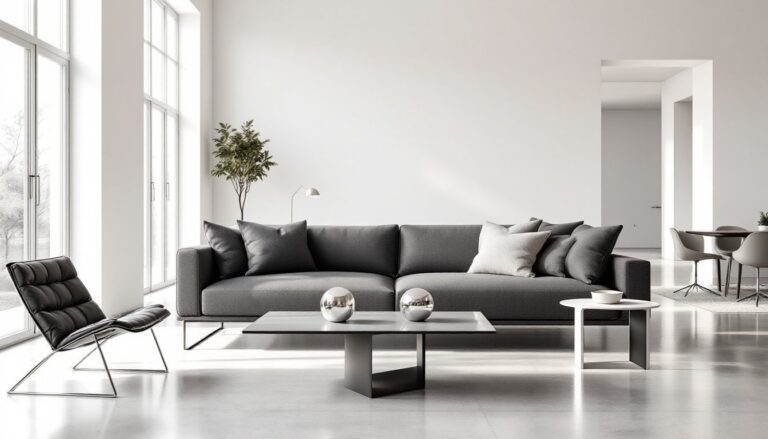
Dark grey furniture (charcoal, graphite, slate) brings weight and drama. It grounds a room and works especially well in open-concept spaces where the living area needs visual definition. Charcoal sectionals anchor high-ceilinged rooms without feeling heavy if balanced with lighter walls and rugs.
Dark grey hides stains and wear better than light grey, making it a smart pick for high-traffic households. It also pairs with industrial, modern farmhouse, and moody eclectic styles. But in small, dim rooms, dark grey can shrink the space. Use it thoughtfully.
To test a shade, bring home fabric swatches or paint samples and view them in the room at different times of day. Grey shifts dramatically depending on lighting, morning sun versus evening incandescent bulbs can make the same fabric look entirely different.
Essential Grey Furniture Pieces to Anchor Your Living Room
Start with the largest piece first. In most living rooms, that’s the sofa or sectional. A grey sofa in a durable fabric, like a polyester-linen blend or performance microfiber, serves as the foundation. Look for frames with kiln-dried hardwood and sinuous spring or eight-way hand-tied coil construction for longevity. Avoid particleboard frames: they sag within a few years.
For larger spaces or families, a grey sectional maximizes seating without crowding the room. L-shaped sectionals fit neatly into corners, while U-shaped models create a conversational zone. Modular sectionals offer flexibility, pieces can be rearranged as needs change.
Add a grey accent chair to fill dead corners or provide extra seating without bulk. Mid-century modern styles in grey velvet or linen add visual interest. Wingback or slipper chairs in darker charcoal introduce texture.
A grey ottoman does double duty as a footrest and extra seating. Opt for one with hidden storage to stash throws, remotes, or kids’ toys. Upholstered ottomans in grey tweed or woven fabric add softness: wooden-legged models with grey cushions lean more contemporary.
Don’t forget side tables and media consoles in grey-washed wood or matte grey finishes. These extend the color palette without overwhelming the room. Mixing furniture styles, like pairing modern comfort pieces with vintage-inspired tables, keeps the space from feeling like a showroom.
Color Schemes That Complement Grey Living Room Furniture
Grey furniture thrives in layered color schemes. The key is contrast and warmth, without those, grey reads flat.
White and grey is classic but requires texture to avoid looking sterile. Add chunky knit throws, natural fiber rugs, and wood accents. Shiplap or beadboard walls in soft white keep the combo from feeling too clinical.
Navy and grey delivers sophistication. Navy throw pillows, curtains, or an accent wall create depth without clashing. This pairing works in both traditional and modern spaces. Brass or gold hardware adds warmth.
Blush and grey softens the cool tones. Dusty rose pillows, a blush area rug, or salmon-pink artwork introduce warmth without going full pastel. This combo is especially popular in transitional and elegant furniture collections.
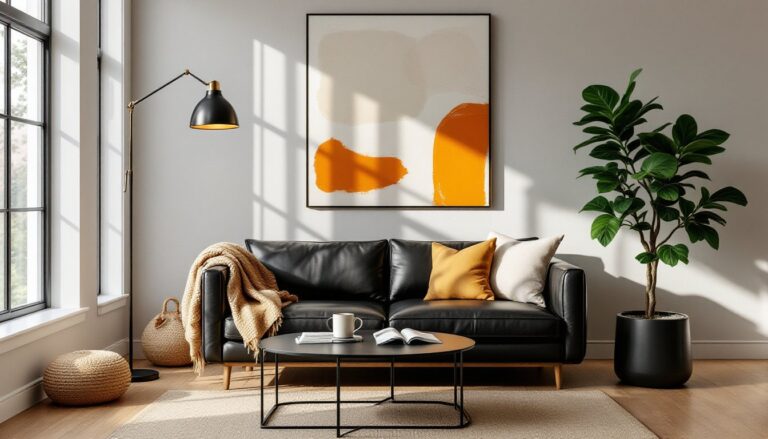
Mustard or ochre and grey brings energy. A mustard accent chair, throw pillows, or curtains pop against charcoal or mid-tone grey sofas. This scheme leans mid-century modern and pairs well with walnut or teak furniture.
Sage green and grey taps into the biophilic design trend. Sage pillows, potted plants, or a green accent wall create a calming, nature-inspired space. This combo shines in rooms with natural wood floors or exposed beams.
Black and grey goes moody and dramatic. Pair dark grey furniture with black metal light fixtures, picture frames, and side tables. Balance the darkness with white walls, light wood floors, or a cream rug. Modern design enthusiasts at Dwell often showcase this high-contrast palette.
Styling Tips: How to Keep Grey Furniture from Looking Bland
Grey can feel lifeless if not styled intentionally. Here’s how to avoid the “hotel lobby” look.
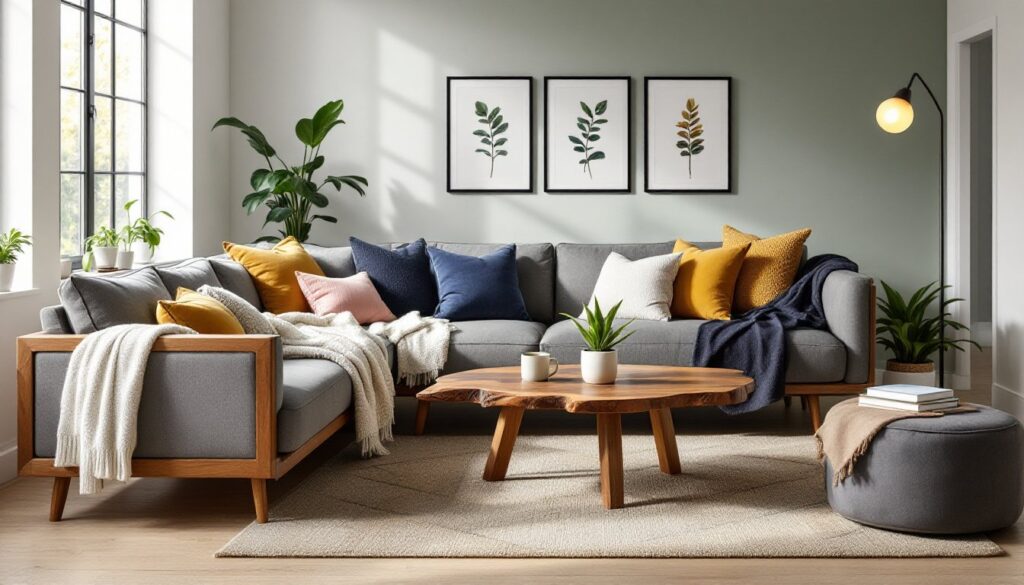
Layer textures. Mix materials, a velvet grey sofa with linen pillows, a wool throw, a jute rug, and a leather pouf. Different textures catch light differently, adding dimension. Flat, uniform finishes make everything blend together.
Introduce pattern. Geometric throw pillows, a striped rug, or patterned curtains break up solid grey. Don’t go overboard, two or three patterns in complementary colors are enough. Keep scale varied (small, medium, large prints).
Add wood tones. Grey pairs beautifully with warm woods like oak, walnut, or reclaimed pine. A live-edge coffee table, floating shelves, or wooden picture frames introduce organic warmth. Even rustic furniture styles can balance grey’s coolness.
Use metallics sparingly. Brass, copper, or matte black metal accents (lamps, picture frames, cabinet pulls) add shine and break up monotony. Stick to one or two metal finishes per room to avoid visual clutter.
Bring in greenery. Houseplants add life and color. Fiddle leaf figs, snake plants, or pothos vines soften grey furniture and improve air quality. If plants aren’t your thing, botanical prints work too.
Don’t skip the rug. A large area rug, at least 8′ x 10′ for most living rooms, grounds the furniture and defines the seating area. Choose a rug with color and pattern to anchor the space. All furniture front legs should sit on the rug for a cohesive look.
Layer lighting. Overhead lighting alone flattens a room. Add floor lamps, table lamps, and wall sconces at different heights. Warm-toned LED bulbs (2700K–3000K) prevent grey from looking cold. Dimmer switches let you adjust mood.
Swap out accessories seasonally. Rotate throw pillows, blankets, and artwork with the seasons. Jewel tones in fall, pastels in spring, and crisp whites in summer keep the room feeling fresh. Grey furniture makes these swaps easy, almost any color works.
For homeowners furnishing on a budget, start with quality grey anchor pieces from retailers like Ashley Furniture, then layer in affordable accents and DIY decor projects. The neutral base allows flexibility as tastes and trends evolve.
Conclusion
Grey living room furniture isn’t a trend, it’s a foundation. It adapts to changing styles, hides wear, and pairs with nearly any color scheme. The trick is choosing the right shade, anchoring the room with quality pieces, and layering in texture, color, and warmth. Done right, grey doesn’t fade into the background, it lets everything else shine.