Table of Contents
ToggleHigh-end bedroom furniture isn’t just about price tags, it’s about investing in pieces that combine superior materials, expert craftsmanship, and timeless design. Whether someone’s renovating a master suite or upgrading from starter furniture, understanding what separates luxury pieces from mass-market options helps make choices that last decades, not just years. Quality bedroom furniture transforms a sleeping space into a retreat where comfort meets aesthetics, and every detail matters. This guide walks through what defines luxury furniture, which pieces deliver the biggest impact, and how to select and maintain an investment that pays dividends in daily comfort.
Key Takeaways
- High-end bedroom furniture combines premium materials (solid hardwoods, full-grain leather, hand-forged hardware), expert craftsmanship, and construction methods like dovetail and mortise-and-tenon joinery designed to last decades rather than years.
- Statement beds with solid hardwood frames (1.5″–2″ thick rails), quality dressers with 5/8″–3/4″ dovetail-jointed drawer boxes, and properly sized nightstands (24″–30″ tall) form the foundation of a luxury bedroom that balances aesthetics with functionality.
- Customization options, including specified dimensions, wood species, stain colors, and hardware finishes, justify the 15–30% premium in high-end bedroom furniture pricing while solving permanent space and design challenges.
- Maintaining high-end bedroom furniture requires climate control (40–55% humidity), weekly dusting with microfiber cloths, and avoiding silicone-based polishes to preserve finishes and prevent wood warping or cracking.
- A realistic budget for quality bedroom furniture ranges from $3,000–$8,000 for platform beds, $2,500–$6,000 for dressers, and $1,200–$3,000 for nightstand pairs, with lead times of 10–16 weeks for custom orders.
What Defines High-End Bedroom Furniture?
High-end bedroom furniture distinguishes itself through three core attributes: premium materials, hand-finished craftsmanship, and construction methods built for longevity.
Solid hardwoods, like walnut, cherry, oak, and maple, dominate luxury pieces, not veneers over particleboard. Full-grain leather, stone surfaces, and hand-forged metal hardware signal quality. Joints rely on mortise-and-tenon or dovetail construction rather than staples or glue. Drawers glide on self-closing undermount slides rated for 75+ pounds, not side-mounted tracks.
Finishes matter, too. High-end manufacturers apply multiple coats of catalyzed conversion varnish or hand-rubbed oils that protect wood while showcasing grain. Color remains consistent across pieces because they’re finished in controlled batches, not sprayed on an assembly line.
Customization options separate luxury from off-the-shelf. Buyers can specify dimensions, wood species, stain colors, and hardware finishes. Lead times run 8–16 weeks because pieces are made to order, not pulled from warehouse inventory.
Many top-tier brands offer lifetime warranties on structural components, a confidence signal that frames, joinery, and core construction will outlast trends. According to design experts at Architectural Digest, investment-grade furniture often appreciates when maintained properly, functioning as both functional asset and design statement.
Essential High-End Furniture Pieces for Your Bedroom
Statement Beds and Headboards
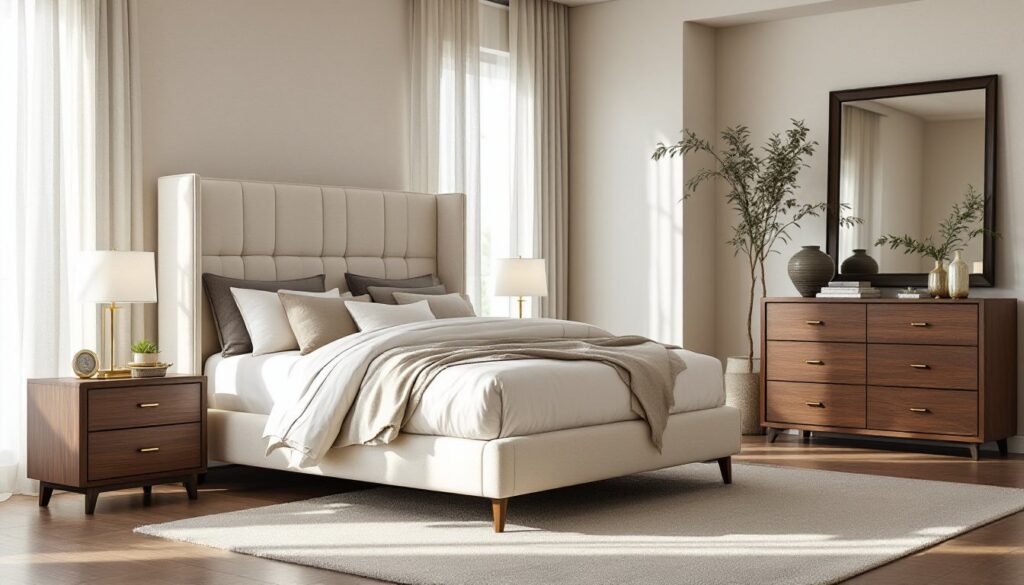
The bed anchors every bedroom design. High-end options include platform beds with integrated slat systems (eliminating box springs), four-poster canopy frames in solid hardwood, and upholstered beds featuring tight-tacked Belgian linen or Italian leather.
Frame dimensions follow standard mattress sizing, but luxury versions add 2–4 inches to width and length for visual presence. A king platform bed might measure 82″ W × 88″ L versus the mattress’s 76″ × 80″. Headboard heights range from 48″ to 72″ floor-to-top, with taller designs making 9–10′ ceilings feel proportional.
Look for solid hardwood frames (1.5″–2″ thick rails) with center support beams and multiple legs, critical for king and California king sizes. Upholstered headboards should use high-density foam (2.5+ lb/ft³ density) over solid backing, not cardboard. Designer beds highlighted in Elle Decor’s luxury collection showcase how statement headboards, whether channel-tufted, nail-head trimmed, or carved wood, define room character.
Frame heights affect bedding layers and ease of access. Standard 16″–20″ heights suit most adults: lower Japanese-style platforms (12″–14″) create modern minimalism but challenge mobility-limited users.
Premium Dressers and Nightstands
Dressers in the luxury category feature solid wood drawer boxes with 5/8″–3/4″ thick sides (not 3/8″ ply), dovetail joinery, and full-extension glides. Standard six-drawer dressers measure roughly 60″ W × 18″ D × 32″ H, but custom widths accommodate specific wall spans.
Drawer bottoms use solid wood panels or plywood thicker than 1/4″, critical for longevity. Top surfaces should be finished on all sides to prevent warping from humidity changes. Premium pieces include felt-lined top drawers for jewelry and cedar-lined bottom drawers for woolens.
Nightstands range from 24″–30″ tall to align with standard mattress height (top of mattress sits around 25″ from floor). Look for two or three drawers rather than open shelves if concealing charging cables and bedside clutter matters. Soft-close drawers prevent late-night noise.
Matching doesn’t mean identical. Many designers pair one substantial dresser with asymmetric nightstands or mix wood tones within the same species. Cohesion comes from shared design language, hardware finish, leg style, or proportion, not catalog sets.
Materials and Craftsmanship That Matter
Wood species dramatically affect appearance, durability, and price. Walnut offers rich, dark chocolate tones with dynamic grain: cherry develops a warm patina over years: white oak delivers clean, contemporary grain with excellent stability. Avoid furniture listing “hardwood” without specifying species, it’s often a mix of lower-grade woods.
Solid wood vs. veneer: High-end furniture uses solid wood for structural components (legs, frames, drawer boxes) and sometimes book-matched veneers on large panels like dresser tops and headboards. Quality veneers aren’t inferior: they prevent warping on wide surfaces while showcasing dramatic grain patterns. Poor-quality furniture uses thin veneer over particleboard or MDF, tap it and you’ll hear a hollow sound versus solid wood’s resonant knock.
Joinery methods reveal manufacturing rigor:
- Dovetail joints: Interlocking “tails” and “pins” (typically on drawer corners) resist pulling apart under stress
- Mortise-and-tenon: Post-and-hole joinery for bed frames and chair rails, often secured with dowels or draw-bore pegs
- Dado grooves: Channels cut into frame sides to seat drawer bottoms and cabinet backs, preventing racking
Avoid butt joints (two flat edges glued/stapled together) or cam-lock fasteners (metal discs and screws), hallmarks of flat-pack furniture.
Finishes protect and beautify. Catalyzed lacquer or conversion varnish provides hard, moisture-resistant surfaces suited to high-contact items like nightstands. Hand-rubbed oil finishes (tung oil, Danish oil) showcase wood depth but require periodic reapplication. Water-based finishes have improved dramatically: premium versions match solvent-based durability with lower VOCs.
Leather and upholstery deserve scrutiny. Full-grain leather (top layer intact, showing natural marks) ages beautifully: top-grain leather (surface-corrected) offers uniformity: bonded leather (scraps glued to backing) deteriorates within years. For model home furniture often sold at discount, check upholstery grade, commercial-rated fabrics (30,000+ double rubs) outlast residential grades.
How to Choose High-End Bedroom Furniture for Your Home
Start with room dimensions and ceiling height. Measure wall lengths, note door swings, and account for 36″–42″ walkways around the bed. A California king fits a 12′ × 14′ room technically, but feels cramped: 14′ × 16′ allows nightstands and a dresser without traffic-flow compromises.
Test in person whenever possible. Sit on the bed frame at seated and lying positions. Open every drawer, smooth, quiet operation without binding signals quality slides and proper assembly. Check drawer box thickness with a fingernail tap: solid 3/4″ wood sounds and feels substantial.
Style coherence with existing architecture matters. Heavy, carved furniture suits traditional homes with crown molding and hardwood floors. Clean-lined platform beds and lacquered case goods fit modern spaces with drywall and polished concrete. Mid-century modern works in ranch homes and urban lofts alike.
Customization justifies luxury pricing. If standard dressers are too deep for a narrow wall, or nightstand height doesn’t align with a low platform bed, custom dimensions solve the problem permanently. Most high-end makers charge 15–30% premiums for size modifications.
Budget realistically:
- Quality platform bed (queen/king): $3,000–$8,000
- Upholstered bed with statement headboard: $4,500–$12,000
- Six-drawer dresser: $2,500–$6,000
- Nightstands (pair): $1,200–$3,000
Prices vary by wood species, finish complexity, and maker. Regional furniture makers sometimes match national brand quality at lower prices due to reduced overhead. According to inspiration galleries like Home Bunch, mixing investment pieces (bed, primary dresser) with mid-range accents (nightstands, bench) stretches budgets without sacrificing overall quality perception.
Lead times for custom work run 10–16 weeks, sometimes longer for exotic woods or complex finishes. Plan bedroom renovations around this timeline, order furniture before demolition if keeping existing pieces isn’t an option.
If considering stylish home furniture from mass-market sources alongside custom pieces, quality-check construction methods. Mixing price points works when base standards (solid wood drawer boxes, quality slides) remain consistent.
Caring for Your Luxury Bedroom Investment
Climate control preserves wood furniture. Maintain 40–55% relative humidity year-round: levels below 30% cause cracking, above 60% invite warping. Use whole-home humidifiers in winter and dehumidifiers in humid climates. Avoid placing furniture near heating vents or direct sunlight, both accelerate finish degradation and wood movement.
Routine cleaning requires only:
- Weekly dusting with microfiber cloths (never feather dusters, which scratch)
- Monthly waxing for oil-finished pieces using paste wax or manufacturer-specified products
- Immediate spill cleanup with barely damp cloth, dried immediately
Avoid silicone-based polishes (Pledge, Endust), they build sticky residue and cloud lacquer finishes over time. For water rings or light scratches, a furniture touch-up marker matched to stain color works better than attempting DIY refinishing.
Hardware maintenance: Tighten bed frame bolts and drawer pulls every 6 months. Wood movement from seasonal humidity changes loosens connections. Keep an Allen wrench set and screwdriver on hand, most manufacturers use metric hardware (4mm and 5mm common).
Leather care depends on finish. Aniline leather (unprotected surface) requires conditioning every 3–6 months with pH-neutral products. Semi-aniline and pigmented leathers need only damp-cloth cleaning. Test any leather product on a hidden spot first.
Moving and adjusting: When relocating furniture, lift, don’t drag. Even hardwood legs can snap under lateral stress. Disassemble bed frames rather than moving them intact: it’s safer for the piece and the walls.
Professional refinishing becomes necessary after decades or if damage occurs. Expect $500–$1,200 per piece for complete stripping, stain matching, and refinishing. Quality furniture survives multiple refinishing cycles: its solid wood construction means there’s material to sand and repair.
Warranty coverage varies by manufacturer. Register pieces immediately and save all documentation. Many warranties cover structural defects (frame cracking, joint failure) but exclude finish wear, which is considered normal use. Clarify coverage on drawer slides and hardware, premium brands often include these under warranty.
For long-term value, document your furniture with photos and purchase receipts. High-end pieces can be appraised for insurance riders if their value exceeds standard homeowner’s coverage limits (typically $1,500–$2,500 per item without a rider).