Table of Contents
ToggleShopping for a king bedroom furniture set means navigating measurements, materials, and configurations, not just picking what looks nice. A coordinated suite offers visual cohesion and functional convenience, but only if it fits your space, budget, and lifestyle. This guide breaks down what’s actually included in these sets, how to match style with structural reality, and what price ranges to expect based on materials and craftsmanship. Whether upgrading from a smaller bed or furnishing a new primary bedroom, understanding the trade-offs between bundled sets and piecemeal purchases saves time, money, and buyer’s remorse.
Key Takeaways
- A king bedroom furniture set typically includes a bed frame, dresser, and nightstands with finish consistency guaranteed across all pieces, saving 15–30% compared to buying items separately.
- King bedroom furniture sets range from $800 for entry-level engineered wood to $10,000+ for premium solid hardwood with hand-applied finishes and lifetime warranties.
- Measure your room, doorways, and stairwells before purchasing—king bed frames add 2–4 inches per side beyond the mattress dimensions, and tall headboards may not fit ceilings under 8 feet.
- Modern platform beds and traditional sleigh beds serve different aesthetics; platform beds skip box springs while sleigh and poster beds feature decorative posts and require 6–12 inches of additional length.
- Timing purchases during major holidays like Black Friday or Memorial Day can yield 20–40% discounts, while delivery and assembly fees add $150–$500 to your total investment.
- Test assembly access by confirming hallway width and door clearances before delivery—many retailers offer $100–$300 in-home assembly services if flat-pack furniture assembly isn’t an option for you.
What’s Included in a King Bedroom Furniture Set?
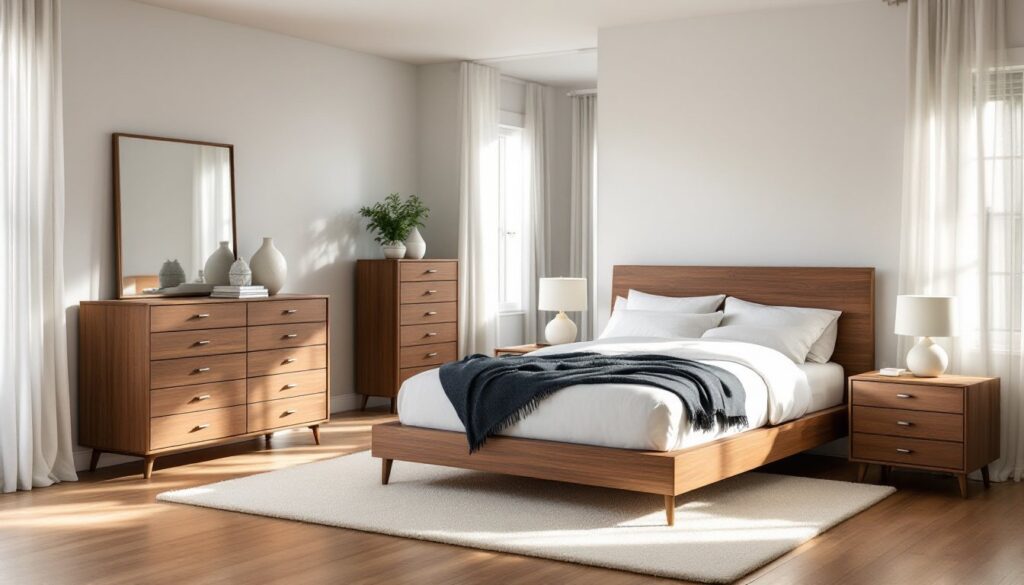
Most king bedroom furniture sets bundle three to five pieces designed to share proportions and finishes. The core components typically include the king bed frame (headboard, footboard, side rails), a dresser with six to nine drawers, and one or two nightstands.
Some manufacturers add a chest of drawers (usually five to six drawers in a vertical format) or a mirror sized to mount above the dresser. Bed frames may arrive as panel beds, platform beds, or sleigh beds, each with different footprint and assembly requirements. Panel beds use a box spring: platform beds have integrated slat systems and skip the box spring.
Check whether the set includes the mattress foundation or just the frame. Many sets omit the mattress and box spring entirely, assuming buyers source those separately based on firmness preference. Also confirm hardware and assembly instructions are packaged with each piece. Solid wood sets often ship partially assembled: veneer or engineered wood sets usually arrive flat-packed.
Be aware of nominal vs. actual dimensions for bed frames. A standard king mattress measures 76″ × 80″, but the bed frame’s outer footprint adds 2–4 inches per side for rails and molding. Measure doorways, stairwells, and the final room before ordering, some headboards exceed 60 inches wide and won’t navigate tight corners without disassembly.
Top Benefits of Buying a Complete King Bedroom Set
Purchasing a bundled set guarantees finish consistency across pieces. Stains, paint sheen, and wood grain vary batch to batch: buying separately often results in mismatched tones even within the same product line. Manufacturers apply finishes in controlled environments and photograph sets under consistent lighting, reducing the guesswork.
Cost savings range from 15–30% compared to buying individual pieces. Retailers discount bundled inventory to move volume and reduce SKU complexity. This margin matters most on solid hardwood or upholstered sets where per-item pricing climbs quickly.
Sets also streamline proportional balance. Nightstand heights align with mattress top (typically 24–28 inches), and dresser widths complement bed frame scale. Mismatched furniture often looks awkward because drawer pulls, leg styles, or crown molding don’t relate visually.
From a logistics standpoint, coordinated delivery simplifies scheduling. One shipment, one assembly date, one white-glove service call if needed. Piecemeal orders stretch delivery windows over weeks and multiply the risk of damaged or backordered items.
The trade-off: less flexibility. If a homeowner prefers a vintage dresser or already owns nightstands, paying for redundant pieces wastes money. In those cases, buying the bed frame solo and sourcing complementary storage separately makes more sense. But for furnishing a blank room or replacing worn-out mismatched furniture, sets offer speed and coherence.
Popular King Bedroom Furniture Styles and Materials
Style and material choices dictate durability, maintenance, and price. Here’s how the most common categories break down.
Modern and Contemporary King Sets
Modern sets emphasize clean lines, low profiles, and minimal ornamentation. Platform beds eliminate the need for a box spring, using slats spaced 2–3 inches apart to support the mattress directly. Look for frames with integrated LED lighting or built-in USB charging ports, these features add convenience without visual clutter.
Materials lean toward solid hardwood (oak, walnut, maple) with natural or dark espresso stains, or engineered wood (MDF, particleboard) with laminate or veneer finishes. Engineered wood costs less but scratches more easily and doesn’t hold hardware as securely over time. Solid hardwood handles repeated moves and hardware adjustments better.
Metal accents, brushed nickel pulls, steel legs, or powder-coated frames, appear frequently in contemporary designs. These sets pair well with neutral palettes and geometric decor. According to luxury design trends, mixed materials like wood-and-metal combinations remain popular in 2026.
Upholstered headboards in linen, velvet, or faux leather soften modern aesthetics. Channel tufting or wingback profiles add texture without traditional carved details. Keep in mind that fabric headboards require periodic vacuuming and stain treatment, not ideal near pets or in humid climates.
Traditional and Rustic King Sets
Traditional sets feature raised panel detailing, turned posts, and crown molding. Sleigh beds and poster beds dominate this category, often crafted from solid cherry, mahogany, or birch. These woods accept stain evenly and age gracefully, developing patina over decades.
Rustic sets use reclaimed wood, distressed finishes, or live-edge slabs for a weathered look. Drawer fronts may show knots, saw marks, or hand-planed texture. Hardware tends toward wrought iron or antique bronze pulls. Construction methods matter here, look for dovetail joints in drawer boxes and mortise-and-tenon joinery in bed frames. These techniques outlast stapled or dowel-only assembly.
Finish durability varies. Lacquered or polyurethane-sealed pieces resist moisture and scratches: waxed or oiled finishes require annual reapplication but allow easier touch-up of localized damage. Many interior design resources recommend catalyzed conversion varnish for high-traffic bedrooms, it cures harder than standard poly and holds up to daily wear.
Traditional sets occupy more visual and physical space. Footboards add 6–12 inches to bed length: carved posts may extend 65+ inches high. Confirm ceiling clearance and test whether the footboard interferes with sitting on the bed edge, taller users sometimes bump shins on low footboards.
How to Choose the Right King Bedroom Set for Your Space
Start with a floor plan. Measure room dimensions and mark door swings, closet access, and electrical outlets. A king bed needs at least 24 inches of clearance on each side for comfortable movement and bedmaking. Add 36 inches at the foot if the room includes a bench or allows walking past the bed.
Map furniture placement before ordering. Dressers typically sit opposite the bed or along an adjacent wall. Nightstands flank the bed: their depth (16–20 inches) should leave walkway clearance. Use painter’s tape on the floor to outline each piece’s footprint, this reveals traffic flow issues that drawings miss.
Ceiling height affects bed frame selection. Poster beds and tall upholstered headboards (50–70 inches) overwhelm rooms with 8-foot ceilings. Low-profile platform beds or panel beds under 54 inches suit compact spaces better.
Consider storage needs. Dressers range from 52 to 72 inches wide. A couple sharing the room may need a nine-drawer dresser plus a five-drawer chest to replace closet space. Beds with built-in drawers or hydraulic lift storage add capacity without increasing room footprint, useful in homes with limited closet square footage.
Lighting and outlets influence nightstand choice. If table lamps are planned, ensure nightstands have open tops (not shelves or hutches that block lamp bases). Some sets include integrated outlets or wireless charging pads in nightstand surfaces, convenient if wall outlets sit behind the bed frame.
Test assembly access. Headboards and dressers often ship in single large boxes. Confirm stairwell width (usually 36 inches minimum), hallway turns, and door clearances. Disassembling trim or removing doors may be necessary for oversized pieces. Some retailers offer in-home assembly: factor that $100–$300 service cost into budgeting if the buyer lacks the tools or patience for flat-pack furniture.
Budget Considerations: What to Expect When Shopping for King Bedroom Sets
King bedroom set pricing spans a wide range based on materials, construction, and brand positioning. Here’s a realistic breakdown as of mid-2026, though regional markets and sales cycles affect actual costs.
Entry-level sets ($800–$1,800) use engineered wood with laminate or paper-backed veneer finishes. Expect cam-lock or dowel assembly, stapled drawer boxes, and particleboard backs. These sets serve rental properties, starter homes, or short-term use. Durability is limited, drawer slides often fail within five years, and veneer chips if moved multiple times. But, they provide functional, coordinated furniture at accessible price points.
Mid-range sets ($1,800–$4,000) incorporate solid wood frames with hardwood veneers, metal drawer glides, and reinforced joinery. Dovetail drawers, felt-lined top drawers, and dust panels between drawers signal better craftsmanship. Many sets in this bracket include USB charging ports, soft-close drawer slides, and warranty coverage (typically five years). This tier balances cost with longevity for families planning to keep furniture 10–15 years.
Premium sets ($4,000–$10,000+) feature solid hardwood throughout, hand-applied finishes, and mortise-and-tenon or dowel-and-glue joinery. Drawer interiors use solid wood or plywood (not MDF). Hardware is solid brass or stainless steel. Upholstered pieces use eight-way hand-tied springs and top-grain leather or designer fabrics. These sets often ship fully assembled or with white-glove delivery included. Expect lifetime warranties on structural components.
Timing purchases around major holidays (Presidents’ Day, Memorial Day, Labor Day, Black Friday) yields 20–40% discounts. Floor model clearance in January and July offers deeper cuts but limits style selection. Some home design platforms track seasonal furniture sales trends, helping buyers time purchases.
Delivery and assembly fees add $150–$500 depending on location and service level. Curbside delivery (buyer moves furniture inside) costs least: room-of-choice delivery with box disposal adds $50–$150: full assembly and old furniture removal tops out the range. Inspect pieces before signing delivery paperwork, freight damage claims after signature acceptance are difficult to resolve.
Financing options through retailer credit cards often defer interest for 12–24 months. Read terms carefully: deferred interest plans charge retroactive interest on remaining balances after the promotional period. Third-party services like Affirm or Klarna offer fixed-term installment loans with transparent APRs, better for budgeting but may carry higher rates than promotional credit.
Factor in mattress and bedding costs if starting from scratch. A quality king mattress runs $800–$3,000: foundation or box spring adds $150–$400. Sheets, duvet, pillows, and mattress protector add another $200–$600. These aren’t included in furniture sets but are essential to budget alongside them.