Table of Contents
ToggleOpen floor plans deliver space, light, and flexibility, but they also hand you a blank canvas that’s easy to botch. Without walls to guide furniture placement, many homeowners end up pushing everything against the perimeter or floating pieces randomly, which kills flow and wastes the layout’s potential. Smart furniture arrangement in an open living room isn’t about following a template: it’s about creating purposeful zones, managing traffic patterns, and choosing pieces that work at the right scale. Get it right, and the room feels effortless. Get it wrong, and you’re constantly rearranging or wishing you had those walls back.
Key Takeaways
- Open floor plan furniture layout succeeds by creating purposeful zones through strategic placement, traffic flow management, and properly scaled pieces rather than pushing furniture against walls.
- Define zones using furniture orientation, area rugs (8×10 to 9×12 feet minimum), and layered lighting to establish distinct living, dining, and workspace areas without physical dividers.
- Float your sofa 12 to 24 inches off the wall to open circulation pathways, improve acoustics, and enhance flow between different functional zones in the room.
- Choose low-profile seating (28 to 32 inches high), glass or acrylic pieces, and open shelving to maximize sightlines and preserve the natural light and spaciousness that make open floor plans appealing.
- Scale your furniture properly by selecting an 84 to 96-inch sofa for typical living rooms, maintaining 36 to 48 inches of clearance for walkways, and balancing visual weight across different pieces.
- Embrace negative space and breathing room between furniture pieces to prevent the layout from feeling cluttered while maintaining the airy, open quality that defines the floor plan.
Why Open Floor Plan Furniture Placement Makes or Breaks Your Space
The challenge with open floor plans isn’t the lack of space, it’s the lack of definition. Without architectural boundaries, furniture has to do the heavy lifting. Poor placement creates dead zones, awkward sightlines, and circulation bottlenecks that make a 600-square-foot space feel cramped.
Traffic flow is the first casualty of bad layout. If someone has to walk behind the sofa to reach the kitchen or squeeze between the coffee table and TV stand, the arrangement is working against the room’s function. Open plans thrive on clear, wide pathways, typically 36 to 48 inches minimum, that let people move through the space without disrupting activity zones.
Furniture also establishes visual hierarchy. In a room without walls, the eye needs landing points, anchor pieces that signal where to sit, gather, or focus. A well-placed sectional or area rug tells visitors where the living zone begins and ends. Skip that step, and the room reads as chaotic, no matter how tasteful the individual pieces are.
Finally, consider acoustics and privacy. Open layouts amplify sound, and furniture can help buffer noise between zones. A tall bookshelf or console table positioned strategically can provide subtle separation without sacrificing openness.
Define Your Zones Without Walls
The key to a functional open floor plan is treating it like multiple rooms that happen to share airspace. Zoning carves the layout into discrete areas, living, dining, workspace, without physical dividers.
Start by identifying activities. In most open living rooms, you’ll have a primary seating area for conversation or TV viewing, possibly a secondary zone for reading or gaming, and often a dining or work surface nearby. Map these out based on natural features: windows, electrical outlets, and adjacency to the kitchen or entry.
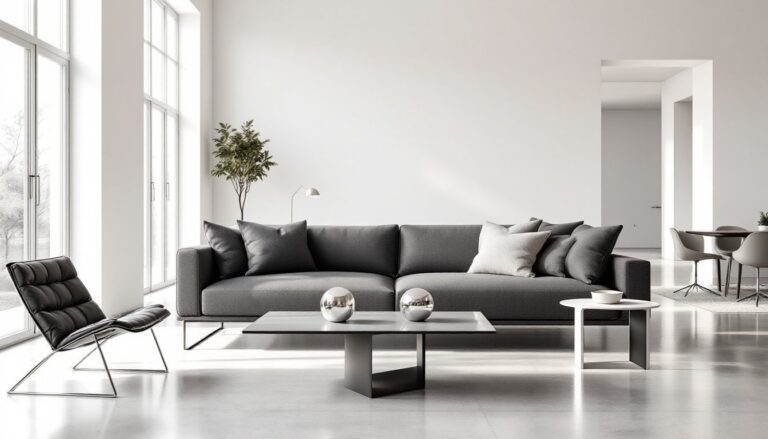
Use furniture orientation to create implied boundaries. A sofa back facing the dining area acts as a soft divider. An open bookshelf or console table behind the sofa provides separation while maintaining sightlines. Avoid blocking views entirely, the goal is definition, not isolation.
Lighting reinforces zones effectively. A pendant or chandelier over the dining table anchors that area, while floor lamps flanking the sofa highlight the living zone. Layered lighting creates distinct moods and helps each area feel intentional rather than accidental. Designers often recommend home styling techniques that layer rugs, lighting, and furniture to establish cohesive zones.
Use Area Rugs to Anchor Conversation Areas
An area rug is one of the cheapest, fastest ways to define a living zone. It grounds furniture visually and acoustically, softening hard flooring and absorbing sound.
Size matters. A common mistake is choosing a rug that’s too small, just big enough to sit under the coffee table. The rug should extend under at least the front legs of all seating pieces in the conversation area. For a standard sofa and two chairs, that usually means an 8×10-foot or 9×12-foot rug. If the sectional is large, go bigger. The back legs can stay off the rug, but front legs should be on it.
Leave 12 to 18 inches of bare floor between the rug edge and walls or adjacent zones. This creates a visual frame and prevents the rug from looking like wall-to-wall carpet.
Material and pattern also play a role. In high-traffic open plans, choose durable options: wool, polypropylene, or flatweave rugs hold up better than shag or delicate natural fibers. Patterns can help disguise wear and add visual interest, but keep scale in mind, oversized patterns can overwhelm a small seating zone.
Strategic Furniture Arrangements for Flow and Function
Arranging furniture in an open floor plan requires thinking about movement, not just aesthetics. The layout should invite people in, guide them through the space, and keep key areas accessible without requiring furniture gymnastics.
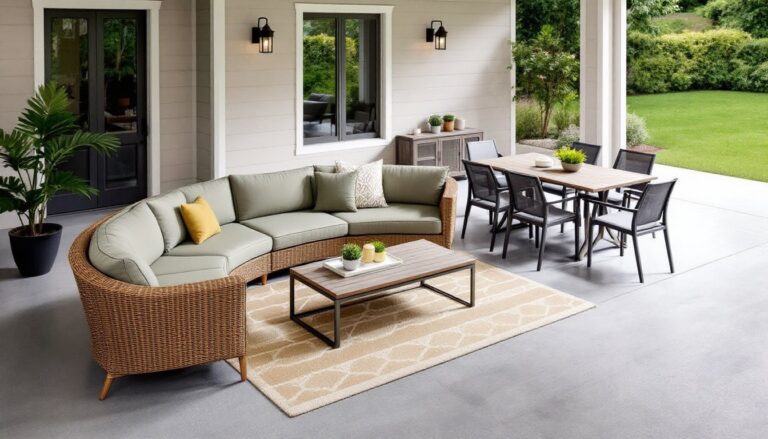
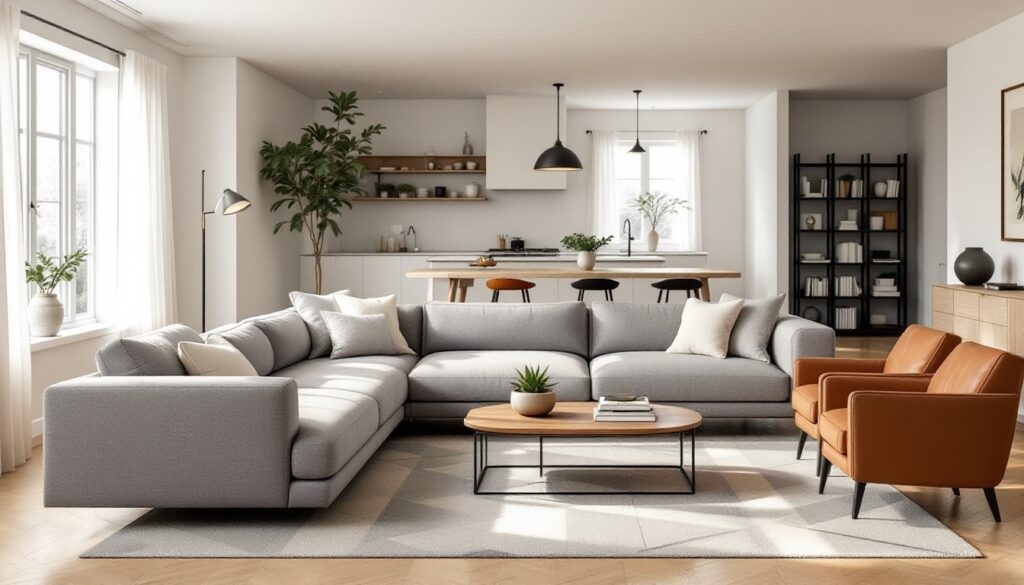
L-shaped and U-shaped arrangements are workhorses in open plans. They create natural conversation areas while leaving one or two sides open for circulation. A sectional in an L-shape along two walls provides ample seating and keeps the center of the room clear. A U-shape, sofa plus two chairs or a loveseat, works when the room is wide enough to float furniture away from walls.
Avoid lining everything up along the perimeter. That approach might seem like it maximizes floor space, but it actually makes the room feel hollow and uninviting. Furniture pushed to the edges creates a bowling alley effect, with too much empty space in the middle and no clear gathering point.
Position seating to face each other or at right angles, not in a straight row. This encourages conversation and creates intimacy. If the TV is a focal point, angle chairs slightly toward both the screen and the sofa so people aren’t stuck staring at the side of someone’s head.
Keep a coffee table or ottoman within 18 inches of seating. Closer than that and it’s a shin hazard: farther and it’s not functional. Round or oval tables work well in tight layouts because they eliminate sharp corners.
Float Your Sofa to Create Natural Pathways
Floating the sofa, pulling it away from the wall, is one of the most effective layout moves in an open floor plan, but it’s also the one homeowners resist most.
When a sofa sits against a wall, it forces all traffic around the perimeter of the room. Floating it even 12 to 24 inches off the wall opens up circulation behind the seating area, creating a natural pathway that connects different zones. This is especially important when the living area sits between the entry and kitchen.
The space behind a floated sofa isn’t wasted. Use it for a narrow console table (10 to 14 inches deep) to hold lamps, books, or decor. This adds function and gives the sofa a finished look from all angles. Many modern home designs embrace floating layouts to enhance flow and maintain clean sightlines across open spaces.
Floating also improves acoustics. A sofa against drywall can amplify sound, while a buffer of air softens it. In open plans where kitchen and living areas share sound, every bit of absorption helps.
If the room is narrow or traffic is light, you can push the sofa closer to the wall. But in a true open layout where people move through the living area regularly, floating is non-negotiable for good flow.
Maximize Sightlines and Light With Smart Furniture Choices
One of the biggest perks of an open floor plan is the sense of spaciousness and natural light. Furniture should enhance that, not block it.
Low-profile seating keeps sightlines open. A sofa with a low back (28 to 32 inches high) won’t obstruct views across the room or block windows. Armless chairs, benches, or slipper chairs are also great for maintaining visual flow.
Avoid tall, bulky pieces in the center of the room. Bookcases, armoires, and high-back chairs belong against walls or in corners where they won’t chop up the space. If you need storage or separation, use open shelving or furniture with legs and negative space underneath, this lets light pass through and keeps the room feeling airy.
Glass or acrylic furniture (coffee tables, side tables, chairs) is a trick borrowed from small-space design. It provides function without visual weight. This works especially well when you’re layering multiple pieces in a tight zone.
Consider window placement. Don’t block natural light sources with furniture backs. If the sofa must go in front of a window, choose one with a low profile or position it slightly to the side so light can spill around it.
Reflective surfaces, mirrors, metallic finishes, glossy paint, bounce light and make the space feel larger. A mirror on the wall behind a dining table or over a console can double the perceived depth of the room.
Balance and Scale: Sizing Furniture for Open Layouts
Scale is where most DIY layouts fall apart. In an open floor plan, furniture needs to be substantial enough to fill the space without looking like doll furniture, but not so oversized that it dominates or blocks movement.
Start with the sofa. In a typical open living room (roughly 12×16 feet or larger), a sofa should be 84 to 96 inches long. Anything shorter looks lost. Sectionals can go bigger, 120 inches or more, if the room supports it. Just make sure there’s still 36 to 48 inches of clearance for walkways.
Coffee tables should be roughly two-thirds the length of the sofa and no taller than the seat cushions (usually 16 to 18 inches high). Oversized cocktail ottomans can work in large spaces, but keep them proportional to the seating.
When mixing furniture styles or periods, keep visual weight in mind. A chunky leather sectional paired with delicate mid-century side chairs can look intentional if the scales are balanced, use a substantial rug and solid coffee table to tie them together. But a heavy farmhouse table next to a sleek modern sofa might need a transitional piece (like a rustic wood console or industrial metal shelving) to bridge the gap.
Dining tables in open layouts should relate to the living furniture in scale and style. If the living zone has a large sectional, a small bistro table will look out of place. Aim for a dining table that seats at least four to six comfortably (60 to 72 inches long) unless the space is truly tiny.
Finally, resist the urge to fill every corner. Negative space, empty floor, breathing room between pieces, is just as important as the furniture itself. It keeps the layout from feeling cluttered and preserves the open, airy quality that makes the floor plan appealing in the first place. Many homeowners find layout inspiration that emphasizes proportion and breathing room to create balanced, livable spaces.