Table of Contents
ToggleBuilding a proper outdoor bar area isn’t just about dropping a table and chairs onto the patio. It’s about creating a durable, functional entertaining space that can handle weather, foot traffic, and years of use without constant upkeep. Metal patio bar furniture delivers on all those fronts, if you choose the right materials and understand what you’re working with. Whether you’re setting up a simple bistro corner or a full-scale outdoor bar with seating for six, metal furniture offers structural integrity and weather resistance that wood and wicker can’t match without significant maintenance. Here’s what you need to know before you buy.
Key Takeaways
- Metal patio bar furniture outperforms wood and wicker due to superior longevity, weather resistance, and minimal maintenance requirements year-round.
- Aluminum is lightweight and rust-proof (ideal for ease of movement), while steel and wrought iron provide maximum stability and impact resistance for high-traffic bar areas.
- Proper finishing—especially powder coating and welds—is critical; choose materials rated for your climate (check ASTM B117 standards for coastal areas).
- A complete outdoor bar setup requires a 40–42 inch bar-height table, 28–30 inch stools with footrests, a bar cart, shade structure, and leveling feet for uneven surfaces.
- Annual maintenance—including powder coat inspections, gentle cleaning, joint lubrication, and immediate rust treatment—extends metal bar furniture lifespan by decades.
- Match the metal type and finish to your design style: matte black steel for industrial looks, white aluminum for coastal themes, and cast aluminum with scrollwork for traditional bistro aesthetics.
Why Choose Metal for Your Patio Bar Furniture
Metal furniture solves the biggest problem with outdoor setups: longevity. Wood requires annual sealing and refinishing. Wicker unravels. Plastic cracks under UV exposure. Metal, when properly finished, holds up to rain, sun, temperature swings, and the occasional dropped bottle without needing much intervention.
Weight and stability matter more in bar furniture than standard patio seating. Bar-height tables and stools see more leverage and tipping risk. Metal frames provide a lower center of gravity and better anchoring, especially on uneven surfaces like flagstone or pavers. A steel or cast aluminum frame won’t wobble the way hollow plastic legs do.
Temperature tolerance is another factor. Metal doesn’t absorb moisture like wood, so freeze-thaw cycles won’t cause splitting or warping. Powder-coated finishes expand and contract with the base material, reducing chipping. That’s critical if your furniture stays outside year-round instead of being stored each winter.
Metal also offers design flexibility. Tubular steel can be bent into curves and angles that wood can’t achieve without laminating or joinery. Cast aluminum allows for intricate patterwork in tabletops and chair backs. If your outdoor bar has a modern, industrial, or mid-century aesthetic, metal delivers the clean lines and structural honesty those styles demand.
Popular Types of Metal Used in Outdoor Bar Furniture
Not all metals perform the same outdoors. Choosing the wrong alloy or finish will leave you with rust stains, corrosion, or a piece that’s too heavy to move when you need to pressure-wash the deck.
Aluminum: Lightweight and Low-Maintenance
Aluminum is the workhorse of outdoor furniture. It doesn’t rust (it oxidizes, but that’s a protective layer, not corrosion), weighs roughly a third of what steel does, and can be powder-coated in nearly any color. Cast aluminum is used for ornamental pieces, think scrollwork and detailed tabletops. Extruded aluminum (tubular stock) is used for frames and legs where strength-to-weight ratio matters.
Aluminum bar stools typically weigh 8–12 pounds each, making them easy to rearrange but still stable enough not to blow over in moderate wind. Tables with aluminum frames and tempered glass tops are common: the metal won’t corrode where it contacts the glass edge.
One downside: aluminum dents more easily than steel. A hard impact, dropping a toolbox, a falling branch, can leave a permanent ding. It’s not a structural issue, but it’s cosmetic damage that won’t buff out. For high-traffic areas or homes with kids, that’s worth considering.
Wrought Iron and Steel: Classic Durability
Wrought iron (technically low-carbon steel shaped by forging) and steel furniture are heavier and more impact-resistant than aluminum. A wrought iron barstool can weigh 15–20 pounds, and a bar table frame might hit 50+ pounds. That weight translates to stability, especially on windy patios or rooftop decks.
Steel requires a protective finish, usually powder coating, because it will rust if bare metal is exposed to moisture. Quality pieces have welded joints, not bolted ones, to eliminate gaps where water can seep in. Check welds visually: they should be smooth and fully penetrated, not just tack-welded at corners.
Some three-piece powder-coated sets use steel frames with rust-resistant finishes designed specifically for coastal or high-humidity climates. If you’re near saltwater, ask whether the finish meets ASTM B117 salt spray testing standards, that’s a 500+ hour exposure test that indicates real corrosion resistance.
Steel is also easier to repair than aluminum. If the finish chips, you can sand, prime with a rust-inhibiting metal primer, and repaint. Aluminum requires etching primer and won’t take standard spray paint as readily.
Design Styles to Match Your Outdoor Aesthetic
Metal adapts to nearly any design language, from farmhouse to contemporary. The key is matching the metal type, finish, and detailing to the rest of your outdoor space.
Industrial or modern setups favor clean lines, exposed welds, and matte black or brushed metal finishes. Look for furniture with tubular steel legs, minimal ornamentation, and geometric shapes. Bar stools with metal seats (not cushioned) and backless designs keep the look streamlined. Pair with concrete or composite decking.
Coastal or tropical styles call for lighter metals, aluminum or powder-coated steel in white, turquoise, or coral. Avoid ornate scrollwork: stick to simple curves and slatted designs that echo boardwalk furniture. Pair with teak accents or marine-grade fabrics if you’re adding cushions.
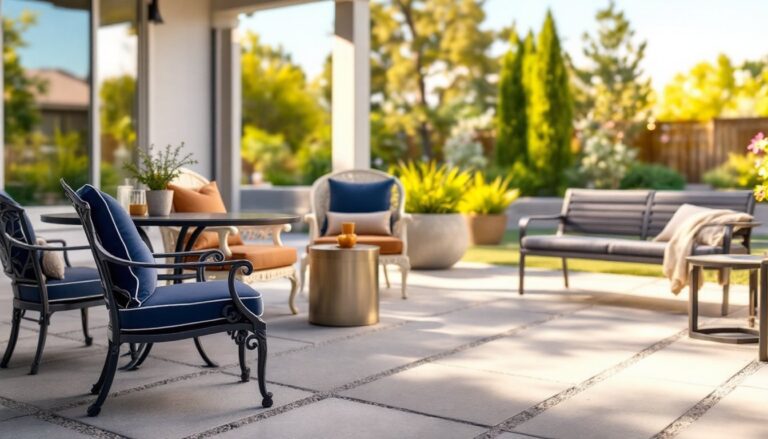
Traditional or French bistro looks use cast aluminum or wrought iron with decorative details, scrolled arms, lattice tabletops, or embossed patterns. Finishes in verdigris (aged green), oil-rubbed bronze, or matte black work here. These pieces often weigh more and feel substantial, which suits brick patios or garden settings where outdoor design ideas emphasize classic charm.
Rustic or farmhouse designs mix metal with wood, steel frames with reclaimed wood tops, or galvanized steel finishes that show intentional patina. Bar carts and drink rails with metal frames and wood shelves bridge the gap between industrial and farmhouse aesthetics.
Finish consistency matters. If your bar table has a hammered bronze finish, your stools should match or complement, not clash with a glossy enamel. Mismatched metals can work, but it takes intention. Mixing brushed stainless with matte black steel works: mixing chrome with oil-rubbed bronze usually doesn’t.
Essential Pieces for a Complete Patio Bar Setup
A functional outdoor bar needs more than just a table and chairs. Here’s what to plan for:
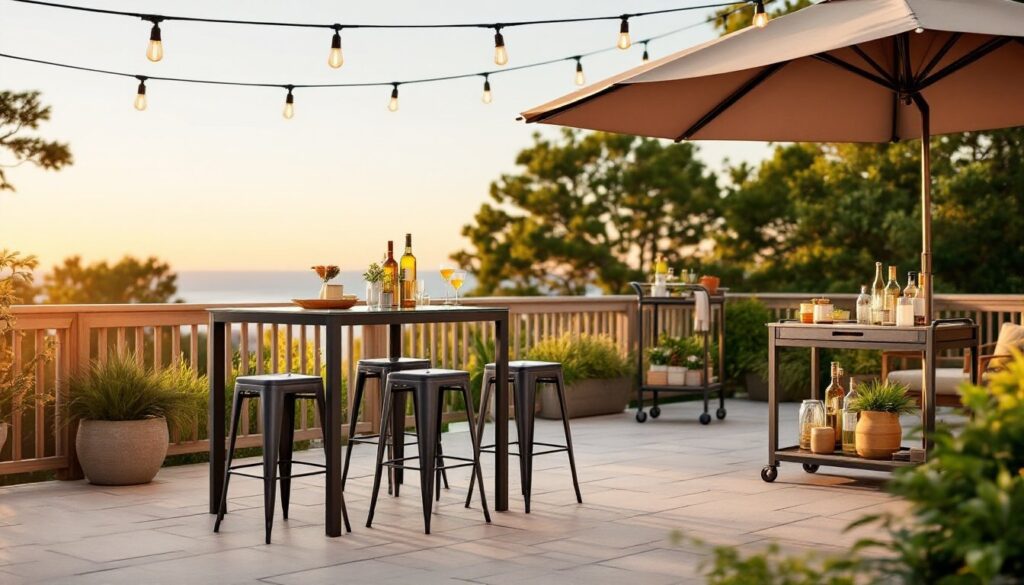
Bar-height table: Standard bar height is 40–42 inches from the ground. Tabletops should be at least 36 inches wide to accommodate drinks, plates, and elbows without crowding. Metal frame tables often pair with wood, stone, or tempered glass tops. Glass is easy to clean but shows water spots: wood needs sealing: stone (like granite or slate) is heavy but nearly indestructible.
Bar stools or counter-height chairs: Seat height should be 28–30 inches for bar-height tables. Look for footrests, they’re not optional. Without a footrest, guests’ legs dangle uncomfortably. Metal stools with built-in footrests (usually a rung or rail welded 8–10 inches below the seat) are standard. Backless stools save space: backed stools are more comfortable for longer sit-downs.
Bar cart or serving station: A rolling cart with metal frame and shelves (wood or metal) provides storage for bottles, glassware, and bar tools. Look for carts with locking casters if your patio has any slope. Two-tier carts are standard: three-tier versions offer more capacity but can get top-heavy.
Shade structure or umbrella base: Metal furniture heats up in direct sun. Aluminum less so than steel, but both get hot enough to be uncomfortable. A cantilever umbrella with a weighted metal base or a pergola with a retractable canopy keeps the bar area usable midday. Umbrella bases should weigh at least 50 pounds for a 9-foot canopy, more in windy areas.
Lighting: String lights, lanterns, or hardwired fixtures. If you’re mounting lights to metal furniture or framework, use stainless hardware to avoid galvanic corrosion (dissimilar metals in contact with moisture create an electrochemical reaction that accelerates rust).
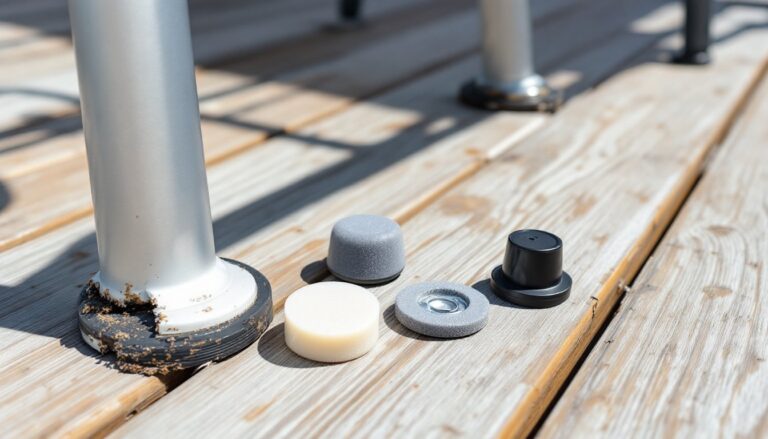
Don’t forget leveling feet. Most quality metal bar furniture includes adjustable feet or glides. On uneven surfaces like stamped concrete or natural stone, being able to dial in level prevents wobbling and uneven wear on joints.
Weatherproofing and Maintenance Tips for Metal Bar Furniture
Metal furniture is low-maintenance, not no-maintenance. A few steps will extend its life by decades.
Powder coating inspection: Check the finish annually for chips, scratches, or flaking, especially on high-contact areas like armrests and seat edges. Bare metal exposed to air and moisture will corrode. Touch up chips immediately with metal primer and matching spray paint. Most manufacturers provide touch-up paint or can supply the powder coat color code.
Cleaning: Wash with mild dish soap and water, using a soft-bristle brush for textured finishes. Avoid abrasive pads, they’ll scratch powder coating. Rinse thoroughly and dry with a towel. Letting water air-dry leads to mineral deposits and water spots, especially on dark finishes. Clean at least twice per season, more if you’re near saltwater.
Covering: Use breathable furniture covers during winter or long periods of non-use. Avoid plastic tarps, they trap condensation, which accelerates corrosion. Look for covers with vents and tie-downs. Alternatively, store furniture in a shed or garage if you have space.
Joint maintenance: Metal furniture joints (welded or bolted) can collect dirt and moisture. Spray joints with a silicone-based lubricant or corrosion inhibitor annually. If your furniture has bolted joints, check them for tightness every spring. Vibration and temperature changes can loosen hardware over time.
Rust treatment: If rust appears (common on steel, rare on aluminum), remove it immediately. Use a wire brush or sandpaper to clean down to bare metal, apply a rust converter if the corrosion is deep, then prime with a rust-inhibiting metal primer and repaint. Rust spreads, so catching it early is critical.
Winter prep: In cold climates, moisture inside tubular metal legs can freeze and expand, potentially cracking welds or coatings. Tilt chairs and tables upside down before covering them for winter, so any trapped water drains out.
Keep cushions and fabric elements stored separately. Even outdoor-rated fabric degrades faster when left on metal frames, and trapped moisture between cushion and seat accelerates metal corrosion. Store cushions in a deck box or indoors during off-season.
With proper care, quality metal patio bar furniture will outlast most other outdoor materials. It’s an investment that pays off in durability, function, and the ability to entertain outdoors without constantly replacing worn-out pieces. Choose the right metal for your climate, match the style to your space, and maintain the finish, you’ll have a setup that serves well for years.