Table of Contents
ToggleShopping for bedroom furniture piece by piece can turn into a months-long scavenger hunt. Modern bedroom furniture sets solve that problem by bundling coordinated pieces designed to work together, no guesswork required. In 2026, contemporary bedroom sets blend minimalist aesthetics with practical storage, durable materials, and streamlined profiles that fit everything from studio apartments to master suites. Whether someone’s furnishing a first home or upgrading a guest room, understanding what makes a set “modern” and how to choose the right one can save time, money, and buyer’s remorse.
Key Takeaways
- Modern bedroom furniture sets bundle coordinated pieces with clean lines, geometric shapes, and minimalist design that eliminate months of shopping and save 15–30% compared to buying items separately.
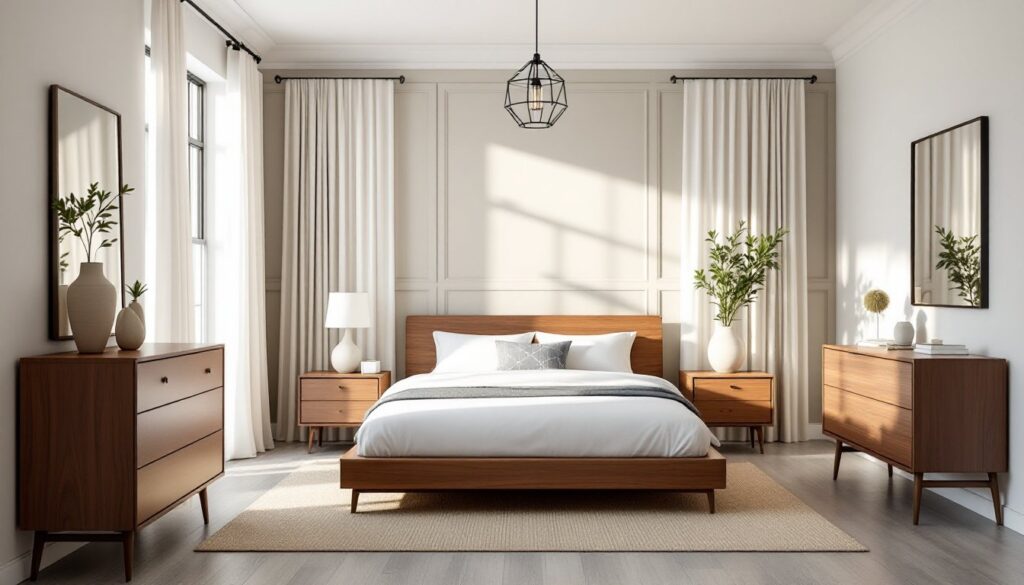
- A complete bedroom set typically includes a platform bed, dresser, mirror, and nightstands—all sharing the same finish and hardware for effortless style coordination and construction consistency.
- Measure your room carefully and choose bed size based on space (queen for 10×10 feet or larger, king for 12×12 feet minimum, full for smaller guest rooms) to ensure proper clearance and balanced furniture placement.
- Material choices range from durable solid wood ($2,000–$5,000+) to budget-friendly engineered wood ($800–$2,000), each with tradeoffs in longevity, weight, and resistance to moisture damage.
- Layer texture through bedding, lighting, and wall treatments—such as accent walls, pendant lights, and neutral-toned rugs—to prevent modern bedroom furniture from feeling sterile and create a lived-in retreat.
- Popular modern styles include mid-century modern with tapered legs and walnut finishes, Scandinavian designs with light wood tones, and industrial modern combining metal frames with reclaimed wood.
What Defines a Modern Bedroom Furniture Set?
Modern bedroom furniture sets prioritize clean lines, geometric shapes, and minimal ornamentation. Unlike traditional sets with carved details or ornate hardware, modern pieces feature flat panel surfaces, low-profile frames, and hardware that’s either concealed or deliberately simple, think brushed nickel pulls or integrated finger grooves.
The term “modern” in furniture refers to a design movement rooted in mid-20th-century principles: form follows function, and every element serves a purpose. A modern platform bed typically sits low to the ground with a solid base instead of a box spring, while dressers feature flush-mounted drawer fronts and simple rectilinear shapes.
Material palettes lean toward engineered wood with laminate finishes, solid hardwoods in natural or dark stains, and metal accents. Upholstered headboards in neutral fabrics, linen, microfiber, or faux leather, add softness without fussiness. Color schemes stick to whites, grays, blacks, taupes, and natural wood tones, though accent pieces might incorporate muted blues or greens.
Modern sets also embrace practicality. Storage beds with built-in drawers, nightstands with USB charging ports, and modular designs that adapt to different room layouts reflect contemporary lifestyles. The emphasis is on livability, not just aesthetics.
Key Benefits of Choosing a Complete Bedroom Set
Buying a complete bedroom set streamlines the decision-making process. All pieces share the same finish, hardware, and construction quality, which eliminates the challenge of matching wood tones or styles across different manufacturers.
Cost savings are significant. Retailers typically discount sets by 15–30% compared to purchasing individual pieces. A queen bedroom set (bed frame, dresser, mirror, two nightstands) might run $1,200–$2,500 depending on materials and brand, while buying those same pieces separately could cost $1,800–$3,200.
Delivery logistics get simpler, too. One order, one delivery window, and often one assembly crew. Most furniture retailers coordinate full-set deliveries to arrive together, reducing the hassle of staging multiple shipments or storing boxes.
Consistency in construction quality matters more than people realize. When all pieces come from the same product line, drawer glides, joinery methods, and finish durability are uniform. That means less chance of one nightstand’s drawer failing while the other holds up fine.
For anyone furnishing a space from scratch, whether it’s a college grad’s first apartment, a guest bedroom renovation, or a post-divorce fresh start, sets eliminate decision fatigue. Pick one, order it, and move on to the next project.
Essential Pieces in Modern Bedroom Furniture Sets
Most modern bedroom sets include four core components:
Platform bed or panel bed: Modern beds typically ditch the box spring in favor of a platform base with slats spaced 2–3 inches apart to support a mattress directly. Platform beds sit lower (12–18 inches from floor to mattress top) than traditional frames. Panel beds use a solid headboard and footboard but still rest on a low-profile frame.
Dresser: Standard dressers measure 30–36 inches tall and 60–72 inches wide, with six to nine drawers. Look for dovetail joinery on drawer boxes (interlocking wooden joints that resist pulling apart) and full-extension ball-bearing glides rated for 75+ pounds per drawer. Cheaper sets use stapled corners and roller glides that jam after a year.
Nightstands: Modern nightstands range from 20–28 inches tall to align with mattress height. They typically feature two drawers or one drawer with an open shelf. Width runs 18–24 inches. Integrated USB ports and wireless charging pads are increasingly common in 2026 models, worth the $30–$50 upcharge if someone charges devices nightly.
Mirror: Dressers often pair with a coordinating wall mirror (36 x 48 inches is common). Some sets include a chest of drawers instead, which is a vertical dresser (48–54 inches tall, 30–36 inches wide) useful in rooms with limited wall space.
Optional add-ons include storage benches, armoires, or media chests. Verify what’s included before checkout, “5-piece set” definitions vary by retailer.
Popular Modern Bedroom Styles and Materials
Mid-century modern remains dominant in 2026. Expect tapered legs, walnut or teak finishes, and angled headboards. This style pairs well with vintage textiles and brass lighting. It’s the go-to for anyone who gravitates toward contemporary design trends without veering into stark minimalism.
Scandinavian (or Nordic) modern emphasizes light wood tones, ash, birch, white oak, and matte finishes. Hardware is minimal or absent. The look is airy and uncluttered, ideal for small bedrooms or spaces with limited natural light. Many pieces feature rounded edges and softened corners for a gentler aesthetic.
Industrial modern combines metal frames (steel or iron) with reclaimed or distressed wood. Exposed bolt heads, pipe-style legs, and gunmetal finishes define the style. It’s a good fit for lofts or urban spaces with exposed brick or concrete. Be aware that metal bed frames can squeak if joints aren’t properly tightened during assembly, apply thread-locking compound (like Loctite Blue) to bolts.
Material choices break down as follows:
-
Solid wood (oak, maple, walnut): Most durable, heaviest, and priciest. Expect $2,000–$5,000+ for a queen set. Solid wood handles humidity changes better than composites but still needs acclimation (leave pieces in the room 48 hours before assembly).
-
Engineered wood (MDF, particleboard with veneer): Budget-friendly ($800–$2,000 for a queen set). Lighter weight, easier to move, but less resistant to moisture and impact damage. Veneer can peel at edges if not properly sealed.
-
Metal and upholstery: Platform beds with metal frames and fabric headboards hit the $600–$1,500 range. Durable and modern, but harder to match with wood case goods unless finishes are carefully coordinated.
When evaluating materials, check the product spec sheet for CARB Phase 2 certification, which limits formaldehyde emissions from composite wood. It’s a standard most reputable manufacturers meet, but worth verifying.
How to Choose the Right Modern Bedroom Set for Your Space
Start with room measurements. Measure the bedroom’s length, width, and ceiling height. Note door swing clearance, window placement, and any permanent fixtures (radiators, built-in closets). Allow at least 24 inches of walking space on each side of the bed and 36 inches at the foot.
Bed size drives the decision:
- Queen (60 x 80 inches): Fits rooms 10 x 10 feet or larger. Most versatile for couples or single adults.
- King (76 x 80 inches): Needs at least 12 x 12 feet. Ideal for master suites.
- Full (54 x 75 inches): Works in 9 x 10-foot guest rooms or teen bedrooms.
Don’t forget mattress thickness. Modern low-profile beds look sharp with 10–12-inch mattresses but can feel awkward with pillow-top models that add 4–6 inches.
Storage needs matter. If the bedroom lacks a walk-in closet, prioritize sets with storage beds (drawers built into the bed frame) or a tall chest in place of a second nightstand. Storage beds add 10–14 inches to the overall bed height, so factor that into clearance calculations.
Assembly requirements: Most modern sets ship flat-packed and require assembly. Budget 2–4 hours with a power drill, Phillips head bits, an Allen wrench set, and a second person. If the set includes a storage bed or heavy solid wood pieces, consider paying for white-glove delivery ($150–$300), where the crew assembles and hauls away packaging.
Similar to how complete furniture collections streamline workspace setups, bedroom sets eliminate the trial-and-error of mixing brands and styles. For rooms with tight budgets, explore offerings from retailers offering budget-friendly furniture options that balance cost and quality.
Styling Tips for Modern Bedroom Furniture
Modern furniture sets provide a neutral foundation, so layering texture and color is key to avoiding a sterile look.
Bedding and textiles: Stick to solid colors or subtle patterns, linen duvet covers, waffle-weave blankets, or geometric-print throw pillows. Avoid heavy florals or ruffles, which clash with modern lines. Layer two or three pillows in varying sizes rather than the six-pillow hotel bed approach.
Lighting: Swap builder-grade ceiling fixtures for pendant lights or a geometric chandelier. On nightstands, use table lamps with simple ceramic or metal bases. Avoid fussy shades: drum shades or cone shapes work best. Adjustable wall-mounted sconces free up nightstand surface area and add a hotel-inspired touch.
Wall treatments: Modern bedrooms benefit from an accent wall behind the bed. Options include board-and-batten paneling painted in a contrasting color, peel-and-stick wood planks, or a large-scale piece of art. Keep it simple, one focal point per wall.
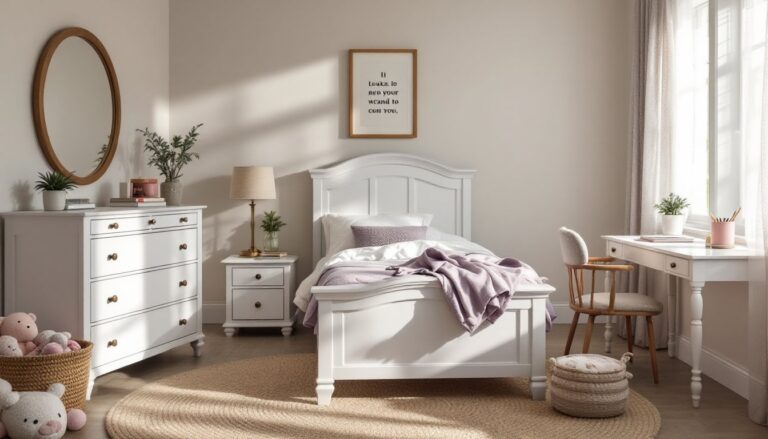
Rugs: A rug anchors the bed and softens hard flooring. For a queen bed, use an 8 x 10-foot rug positioned so the front two-thirds of the bed sit on it, with nightstands either fully on or fully off. Jute, wool, or low-pile synthetic rugs in neutral tones complement modern furniture without competing for attention.
Declutter ruthlessly: Modern design relies on negative space. Limit nightstand items to a lamp, one book, and maybe a small dish. Dressers should have minimal decor, a tray for jewelry, a single vase, or a framed photo. Inspiration from sources like modern decor galleries can help identify what to keep and what to store.
If the set includes a mirror, hang it 4–6 inches above the dresser top and center it. Use drywall anchors rated for 50 pounds if not hitting a stud. For heavy solid wood mirrors, locate studs with a stud finder and use 3-inch wood screws.
For those exploring complementary furniture styles, browsing classic furniture collections or rustic-modern hybrids can spark ideas for mixing textures while maintaining a cohesive modern base. Additional home decor inspiration often highlights how to balance modern furniture with warmer, lived-in accents.
Conclusion
Modern bedroom furniture sets deliver coordinated style, cost efficiency, and practical design in one package. By focusing on clean lines, quality materials, and smart storage, these sets suit a range of spaces and budgets. Measure carefully, choose materials that match the room’s use, and layer in texture to make the space feel lived-in rather than staged. The right set turns a bedroom into a retreat, no sawdust required.