Table of Contents
ToggleNavy blue furniture isn’t chasing trends, it’s outlasting them. Walk into any living room anchored by a navy sofa or sectional, and you’ll notice something: the space feels intentional. Not cold, not loud, just composed. Navy grounds a room without dominating it, which is why designers and DIYers alike keep coming back to it. Whether someone’s working with a small city apartment or a sprawling suburban home, a navy blue furniture set offers flexibility in styling and durability in appeal. This guide breaks down what makes navy furniture work, what types are worth considering, and how to style it without second-guessing every throw pillow.
Key Takeaways
- Navy blue living room furniture sets outlast trends because they function as both neutral and statement-making pieces, pairing seamlessly with warm woods, metals, and a wide spectrum of accent colors.
- Choose between sofa-and-loveseat combos for flexible seating arrangements or modular sectionals for open-concept spaces, but always prioritize kiln-dried hardwood frames and eight-way hand-tied springs for durability.
- Invest in high-quality fabric such as performance microfiber or performance velvet for households with pets and kids, as these materials resist staining better than traditional upholstery and hide everyday wear.
- Map out your room with painter’s tape before purchasing to avoid costly mistakes like blocking vents or doorways, and account for at least 30 to 36 inches of clearance around sectionals for comfortable movement.
- Layer your navy furniture with warm accent tones like mustard or terracotta, multiple light sources, natural wood elements, and varied throw pillow textures to create a composed, inviting living room that feels intentional rather than cold.
Why Navy Blue Living Room Furniture Never Goes Out of Style
Navy sits in that rare category of colors that read as both neutral and statement-making. Unlike lighter blues that can feel juvenile or overly coastal, navy carries weight. It pairs cleanly with warm woods, metals, and a wide spectrum of accent colors, from mustard and coral to blush and gray.
From a practical standpoint, navy upholstery hides wear better than lighter fabrics. Spills, pet hair, and everyday scuffing don’t show as readily on darker tones, which matters if the living room sees heavy use. Microfiber and performance fabrics in navy are particularly forgiving for households with kids or pets.
Navy also adapts to shifting design trends. Pair it with brass hardware and velvet textures for a glam look. Swap in linen throw pillows and jute rugs for something more casual. According to Elle Decor, navy remains a staple in upscale interiors because it layers well without competing for attention. That adaptability means the furniture doesn’t need replacing when someone changes out accessories or repaints walls.
The color works across architectural styles, too. A navy sectional fits just as naturally in a mid-century ranch as it does in a modern farmhouse or industrial loft. That’s not something you can say about trendier colors like millennial pink or emerald green, which tend to date themselves faster.
Types of Navy Blue Living Room Furniture Sets to Consider
Choosing the right configuration depends on room size, traffic flow, and how the space gets used. Here’s what to know about the most common setups.
Sofa and Loveseat Combinations
A sofa and loveseat combo works well in formal living rooms or spaces where seating needs to be split across two walls. Standard sofas run 78 to 90 inches in length, while loveseats typically measure 52 to 64 inches. This setup provides flexibility, guests can cluster on one piece or spread out across both.
Look for frames built with kiln-dried hardwood and corner blocks for stability. Avoid particleboard or softwood frames if the furniture will see daily use: they won’t hold up under stress. Eight-way hand-tied springs are the gold standard for seat support, but sinuous (S-shaped) springs are acceptable in mid-range furniture if they’re properly spaced and secured.
If the room layout requires separating seating areas, say, one cluster near a fireplace and another facing a TV, this configuration makes more sense than a sectional. It’s also easier to move through doorways and up stairs, which matters in older homes with tight corners.
Sectional Furniture Sets
Sectionals maximize seating in open-concept spaces or family rooms where the couch serves as a room divider. They come in L-shapes, U-shapes, and modular configurations that can be rearranged.
Measure carefully before buying. A sectional that’s too large will block traffic paths or overwhelm the room. Leave at least 30 to 36 inches of clearance between the sectional and other furniture for comfortable movement. For smaller spaces, look for apartment-scale sectionals with narrower arm styles, track arms or English roll arms take up less visual space than bulky pillow arms.
Modular sectionals offer the most flexibility. Individual pieces connect with brackets, so homeowners can reconfigure the layout if they move or want to refresh the room. Brands offering modular systems often sell additional pieces separately, which is useful for expanding seating later. Many furniture retailers now carry modular options in navy, often with performance fabrics that resist staining.
Chaises are a popular add-on for sectionals, but they’re not always practical. If someone actually plans to stretch out and nap on the chaise, make sure it’s deep enough, at least 60 inches, and that the room layout allows for it. A cramped chaise just becomes wasted square footage.
How to Choose the Right Navy Blue Furniture Set for Your Space
Start by measuring the room, not just wall-to-wall, but also accounting for windows, doors, radiators, and electrical outlets. Use painter’s tape on the floor to map out the furniture footprint before ordering. This prevents the all-too-common mistake of buying a sectional that blocks a vent or a sofa that jams against a doorway.
Fabric choice matters as much as color. Velvet looks luxe but shows crushing and water spots. Linen has texture but wrinkles easily and isn’t kid-friendly. Performance fabrics (often polyester blends treated with stain-resistant finishes like Crypton or Sunbrella) are the most durable option for high-traffic homes. They clean with soap and water, resist fading, and hold up under abrasion.
For homes with pets, skip anything with loose weave or looped fabric, claws will snag it. Tight-weave microfiber or performance velvet are better bets. If allergies are a concern, avoid down-filled cushions: they trap dander. Opt for high-resilience foam wrapped in polyester batting instead.
Frame construction is where budget furniture cuts corners. Flip the piece over if shopping in person and check the underside. Quality frames use corner blocks (triangular wood braces) and doweled joints, not just staples or glue. Legs should be screwed into the frame, not just glued on. If buying online, look for weight specifications, heavier furniture usually indicates solid construction.
Cushion fill affects both comfort and longevity. High-density foam (1.8 to 2.5 lbs per cubic foot) holds its shape better than cheaper foam, which compresses and sags within a year. Down-blend cushions feel softer but require regular fluffing. Some manufacturers offer a hybrid: a foam core wrapped in down, which balances support and comfort.
Consider professional delivery and setup, especially for sectionals. These pieces are heavy, often 200 to 400+ pounds, and maneuvering them through doorways without damaging walls or the furniture itself takes experience. Many retailers include white-glove delivery (placement and box removal) for a reasonable fee: it’s worth it to avoid DIY disasters involving stuck sofas and scratched floors.
Decorating and Styling Tips for Navy Blue Living Room Sets
Navy anchors a room, so the rest of the decor can be bolder or more subdued depending on the desired mood. Start with wall color. Navy furniture pops against white or light gray walls but also works with deeper tones like charcoal, sage, or even black for a moody, layered look.
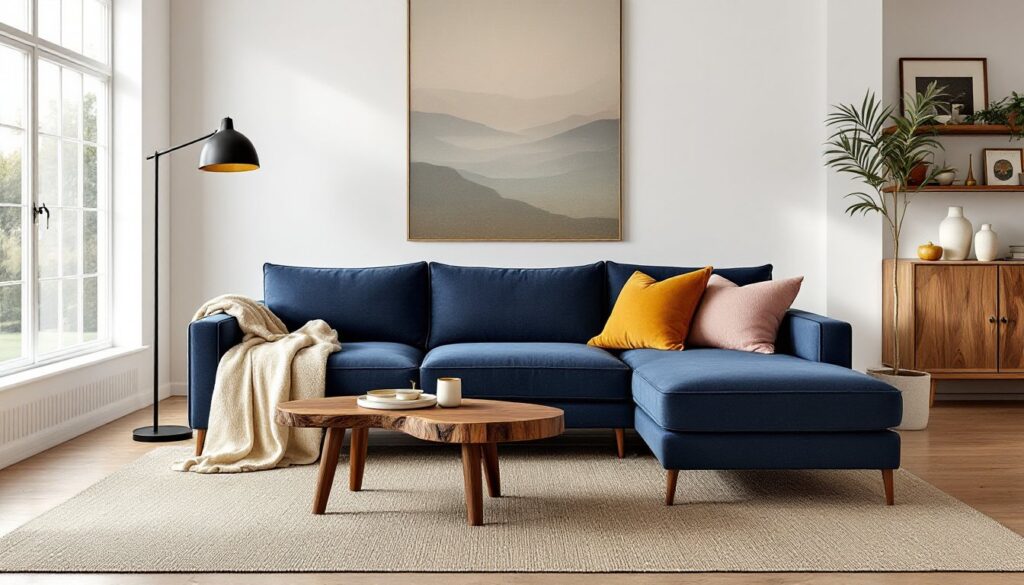
Accent colors are where personal style comes in. Warm tones, burnt orange, mustard yellow, terracotta, create a cozy, inviting vibe. Cooler tones like blush pink, seafoam, or lavender lean more serene. Metallics (brass, gold, copper) add warmth: silver and chrome keep things crisp. Designers featured on Architectural Digest often layer navy with rich jewel tones like emerald or burgundy for a sophisticated, saturated palette.
Rug selection matters more than most people think. A rug that’s too small makes furniture look like it’s floating. For a sectional, the rug should extend at least 18 inches beyond the front legs on all sides. Natural fibers like jute or sisal add texture and work in casual spaces. Wool rugs feel softer underfoot and come in endless patterns: a geometric or striped design can break up the visual weight of a solid navy sofa.
Throw pillows and blankets are the easiest way to refresh the look seasonally. Stick to odd numbers (three or five pillows per seat) for a balanced but not overly styled appearance. Mix textures, linen, velvet, faux fur, and vary the sizes (18-inch, 20-inch, and 22-inch squares work well together). Avoid matching everything too closely: it reads as stiff.
Lighting can make or break a navy-heavy room. Because navy absorbs light, layer in multiple sources: overhead fixtures, floor lamps, and table lamps. Aim for warm white bulbs (2700K to 3000K) to keep the space from feeling cold. Brass or matte black lamp bases complement navy without clashing.
Wood tones add warmth and prevent the room from skewing too cool. Mid-tone woods like walnut or oak work well: very dark wood can make the space feel heavy unless balanced with lighter elements. A live-edge coffee table or reclaimed wood shelving introduces organic texture that softens the formality of upholstered pieces.
Artwork and decor should include at least one element that repeats the navy to tie the room together, but don’t overdo it. A navy accent in a framed print or a ceramic vase is enough. The rest can pull from the accent color palette. According to Design Milk, mixing modern art with classic navy furniture creates a dynamic tension that keeps interiors from feeling predictable.
Conclusion
Navy blue furniture sets deliver on versatility, durability, and style without demanding constant upkeep or trendy overhauls. Whether someone opts for a sectional or a sofa-loveseat combo, the key is choosing solid construction, functional fabric, and a layout that fits the room’s flow. With the right styling, thoughtful accent colors, layered lighting, and quality textiles, a navy living room becomes the kind of space that works hard and looks good doing it.