Table of Contents
ToggleTransforming a patio into a true outdoor living space starts with the right lounge furniture. Whether it’s a compact balcony or a sprawling backyard deck, the furniture chosen sets the tone for how the space gets used, lazy Sunday mornings with coffee, evening gatherings with friends, or solo reading sessions under the sun. But outdoor furniture isn’t just about looks. It needs to withstand UV exposure, moisture, temperature swings, and the occasional forgotten rainstorm. Choosing pieces that balance comfort, durability, and style requires understanding materials, layouts, and maintenance routines that keep everything looking sharp season after season.
Key Takeaways
- Quality outdoor patio lounge furniture made from powder-coated aluminum, marine-grade stainless steel, or sustainably harvested teak lasts 10–15+ years compared to budget pieces that fail within 3–5 years.
- Sectionals with modular seating and chaise lounges are the most popular outdoor lounge furniture types, with modular designs offering flexibility for different patio layouts and easier off-season storage.
- Choose cushion fabrics rated for 1,000+ hours of UV resistance, such as solution-dyed acrylic (Sunbrella), and use high-density foam (minimum 1.8 lb/ft³) to prevent water absorption and mildew.
- Arrange patio lounge furniture around a focal point (fire pit, view, or water feature) with 6–8 feet between opposing seats for optimal conversation comfort and proper clearances for safety and traffic flow.
- Maintain outdoor lounge furniture weekly by brushing off debris and wiping frames, monthly by vacuuming cushions and checking joints, and seasonally by deep-cleaning cushions and treating wood materials.
Why Invest in Quality Outdoor Patio Lounge Furniture?
Budget patio furniture might look tempting at big-box stores, but it often shows wear within a single season. Thin cushion foam compresses, frame welds crack, and fabrics fade to washed-out versions of their original colors.
Quality outdoor lounge furniture offers a measurably better return. Frames built from powder-coated aluminum, marine-grade stainless steel, or sustainably harvested teak resist corrosion and structural failure. High-density foam cushions wrapped in solution-dyed acrylic fabrics (like Sunbrella) maintain their shape and color through years of sun exposure. These materials cost more upfront but eliminate the cycle of replacing cheap furniture every few years.
There’s also the comfort factor. Well-designed lounge pieces feature ergonomic angles, deeper seats, and proper lumbar support, details that turn a patio into a space people actually want to use. A thoughtfully chosen sectional or daybed becomes the go-to spot for morning coffee or evening unwinding, not just seasonal decoration.
Finally, quality furniture holds resale value and complements home aesthetics. Poorly made pieces detract from outdoor spaces, while durable, stylish options enhance curb appeal and overall property value. For homeowners planning to stay put or sell, that difference matters.
Popular Types of Outdoor Lounge Furniture for Your Patio
Sectionals and Modular Seating
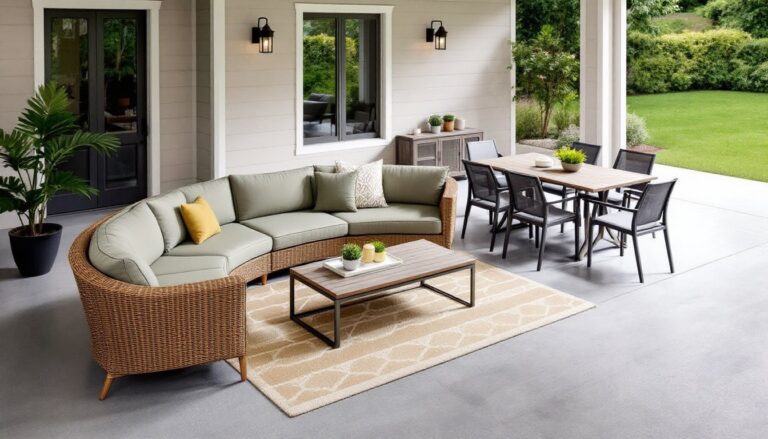
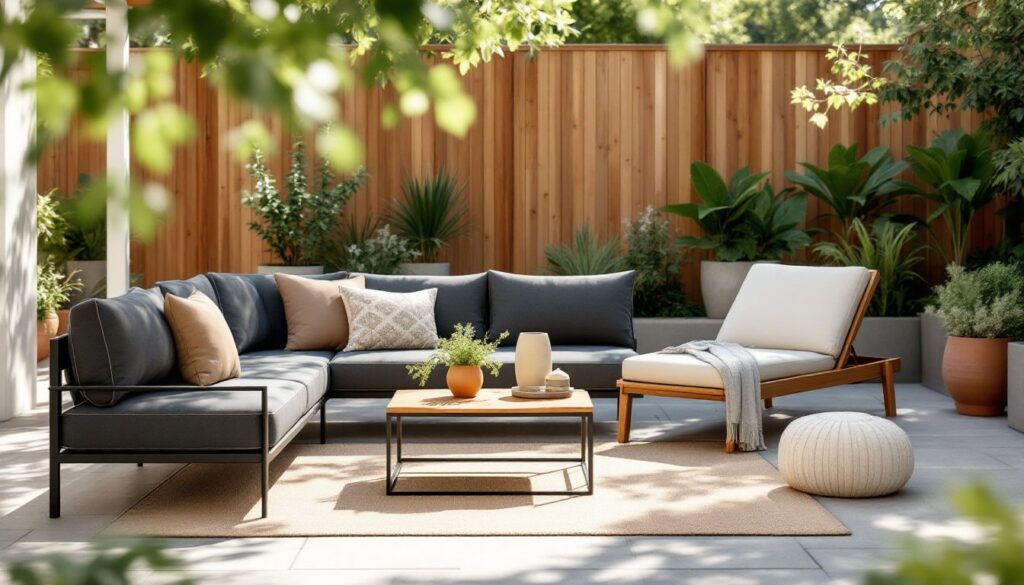
Outdoor sectionals and modular seating systems dominate patio layouts for good reason, they’re flexible, social, and space-efficient. Individual modules (corner pieces, armless centers, ottomans) can be rearranged to fit L-shaped decks, U-shaped conversation pits, or straight-line arrangements against railings.
Look for sectionals with aluminum or powder-coated steel frames. Avoid thin-gauge steel that rusts through at the joints. Cushions should use high-density polyurethane foam (minimum 1.8 lb/ft³ density) wrapped in solution-dyed acrylic or polyester fabrics rated for 1,000+ hours of UV resistance. Cheaper cushions use open-cell foam that absorbs water and mildews.
Modular sets also make storage easier. In regions with harsh winters, individual pieces stack more compactly in sheds or garages than one-piece sofas. Some homeowners investing in outdoor lounge seating prioritize modules with hidden storage compartments for throw pillows or outdoor blankets.
Tip: Measure the patio’s usable square footage before ordering. A common mistake is choosing a sectional that fits the deck’s total dimensions but blocks walkways or door swings. Leave at least 24 inches of clearance around seating areas for traffic flow.
Daybeds and Chaise Lounges
For patios focused on relaxation over entertaining, daybeds and chaise lounges deliver. These pieces prioritize individual comfort with adjustable backrests, generous cushioning, and canopy options for shade.
Chaise lounges typically feature reclining mechanisms (ratchet-style or smooth sliding) and wheels for repositioning. Frames should be resin wicker over powder-coated aluminum or solid teak. Avoid chaises with plastic clips holding the reclining mechanism, these snap under repeated use. Metal ratchets or stainless-steel pins hold up better.
Daybeds function as outdoor couches or nap spots. Many include retractable canopies (made from UV-rated polyester or Sunbrella fabric) that provide afternoon shade without installing permanent pergolas. Canopy frames should attach with stainless-steel hardware: aluminum rivets corrode and loosen within a season.
Both options work well on covered patios or poolside, where users spend extended time lounging rather than moving between seats. They’re less ideal for small balconies or multi-purpose patios where space flexibility matters more.
Choosing the Right Materials for Durability and Style
Material selection determines how long outdoor furniture lasts and how much maintenance it demands. Here’s what works, and what doesn’t, in real-world conditions.
Aluminum: Lightweight, rust-proof, and affordable. Powder-coated finishes resist chipping better than painted surfaces. Frames should use welded joints, not bolted, bolts loosen over time and create wobble. Aluminum works in all climates but can feel hot to the touch in direct sun.
Teak: A premium choice for traditional or coastal aesthetics. Teak contains natural oils that resist rot, insects, and moisture without treatment. It weathers to a silver-gray patina unless sealed annually with teak oil. Authentic teak (not “teak-look” eucalyptus or acacia) costs $1,200–$3,000 for a quality lounge chair but lasts decades. Check for Grade A teak, harvested from the tree’s heartwood.
Resin wicker: Synthetic wicker (polyethylene or PVC) mimics natural rattan without the maintenance. It won’t crack, fade, or unravel in UV exposure. Quality resin wicker uses HDPE (high-density polyethylene) strands woven over aluminum frames. Cheap versions use hollow PVC that sags and splits. Many of the designs featured in outdoor living ideas from Southern Living showcase how resin wicker fits traditional Southern porches.
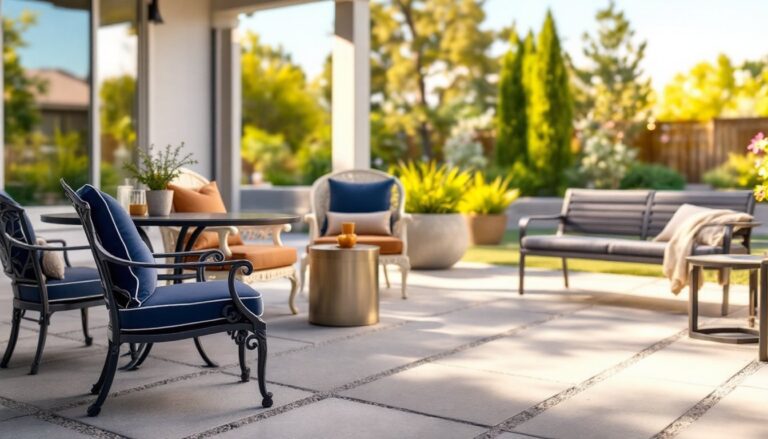
Wrought iron: Heavy, stable, and classic, but high-maintenance. Wrought iron rusts unless powder-coated or painted regularly. It works well in covered patios or dry climates. In coastal or humid areas, expect to sand and repaint every 2–3 years.
Cushion fabrics: Solution-dyed acrylics (Sunbrella being the most recognized) resist fading and mildew. Look for fabrics rated for 1,000+ hours of UV exposure. Avoid cotton or untreated polyester, they’ll bleach and rot. Cushion cores should be quick-dry foam or polyester-wrapped foam with drainage channels. Solid foam blocks absorb rain and take days to dry.
Safety note: Avoid furniture with sharp welds, exposed screw heads, or splintering wood edges, especially around kids or pets.
How to Arrange Your Patio Lounge Furniture for Maximum Comfort
Furniture arrangement impacts usability more than most homeowners expect. A poorly planned layout leads to awkward traffic flow, wasted space, and furniture that never gets used.
Start with a focal point. This might be a fire pit, an outdoor TV, a view, or a water feature. Arrange seating to face or surround the focal point. For fire pits, maintain a 36-inch clearance from flames to furniture edges (check local fire codes, some jurisdictions require more).
Create conversation zones. Position lounge pieces in U-shapes or L-shapes with 6–8 feet between opposing seats. Closer feels cramped: farther makes conversation awkward. Add a low coffee table or ottoman in the center for drinks and feet.
Mind the sun and shade patterns. Walk the patio at different times of day to see where shade falls. Place daybeds or chaises in morning shade for coffee spots, or in afternoon shade for post-work relaxation. Avoid putting seating in unshaded areas where it’ll bake all day, cushions degrade faster, and nobody uses them.
Leave clearances. Maintain 24 inches minimum between furniture and railings, walls, or planters for walking paths. For patios with sliding doors, leave 36 inches of clearance so the door can open fully without hitting furniture.
Use rugs to define zones. Outdoor rugs (polypropylene or recycled plastic) visually anchor furniture groupings and make patios feel more finished. Choose rugs slightly larger than the seating area, front legs of all furniture should sit on the rug, not just the coffee table.
Anchor lightweight pieces. Aluminum and resin wicker furniture can blow over in strong winds. Use furniture anchors (straps or weights) or position heavier pieces (like a teak bench or stone side table) to block wind corridors.
These principles align with strategies used in patio design articles from Better Homes & Gardens, which emphasize functional outdoor layouts over purely decorative staging.
Maintenance Tips to Keep Your Outdoor Lounge Furniture Looking New
Even weather-resistant furniture needs routine care. Skip maintenance, and even premium materials degrade faster than expected.
Weekly (during use season):
- Brush off debris, pollen, and leaves. Organic matter traps moisture and causes mildew or staining.
- Wipe down frames with a damp cloth. For stubborn dirt, use mild dish soap and water, no harsh detergents or solvents that strip finishes.
Monthly:
- Vacuum cushions to remove dust and pollen from fabric pores. This prevents embedded dirt that scrubbing later can’t remove.
- Check frame joints for looseness. Tighten bolts or screws as needed. Aluminum frames rarely need this, but wicker-over-metal and wood furniture do.
- Inspect for rust spots on metal frames. Sand lightly with 220-grit sandpaper, then touch up with matching spray paint or clear coat.
Seasonally:
- Deep-clean cushions: Remove covers (if zippered) and machine wash in cold water on gentle cycle. For non-removable cushions, scrub with a solution of 1/4 cup mild detergent + 1 gallon warm water, rinse thoroughly, and air dry. Never use bleach on solution-dyed fabrics, it weakens fibers without whitening.
- Treat wood furniture: Teak needs an annual application of teak oil or sealer to maintain color. Untreated teak weathers to gray, which is fine structurally but changes the look. For painted wood, inspect for chips and repaint as needed.
- Check canopy fabrics: Look for tears, loose stitching, or UV degradation (fabric feels brittle). Canopies typically last 3–5 years before needing replacement.
- Lubricate moving parts: Apply silicone spray (not WD-40, which attracts dust) to reclining mechanisms, hinges, and wheels.
Off-season storage:
- Store cushions indoors in a dry, ventilated space. Even “waterproof” cushions degrade faster when left outdoors year-round.
- Cover furniture with breathable covers (polyester with vents), not plastic tarps that trap condensation and cause mildew. Secure covers with bungee cords or tie-downs.
- In areas with snow loads, remove glass tabletops and stack chairs to prevent frame stress.
PPE reminder: Wear nitrile gloves when using cleaning solutions or rust treatments. Use safety glasses when spray-painting or working with solvents.
Homeowners who follow these routines typically get 10–15 years from quality aluminum or resin wicker furniture, and 20+ years from teak, compared to 3–5 years for neglected budget pieces.