Table of Contents
ToggleMiami’s year-round sunshine and tropical warmth make outdoor spaces as valuable as any room indoors. But that same climate, salt air, relentless UV rays, sudden afternoon downpours, and 80% humidity, turns furniture shopping into a high-stakes decision. Choose wrong, and cushions mildew within months or frames rust before hurricane season ends. This guide walks through what works in South Florida’s unique conditions, from materials that shrug off corrosion to styles that complement coastal living, plus where to shop locally and how to keep everything looking sharp without constant replacement.
Key Takeaways
- Miami’s salt spray, UV rays, and 90%+ humidity require marine-grade patio furniture materials like aluminum, HDPE wicker, and solution-dyed acrylic fabrics that standard outdoor sets cannot withstand.
- Marine-grade aluminum frames with powder-coated finishes and HDPE wicker on 8-strand weave patterns outperform steel and natural rattan in South Florida’s corrosive climate.
- Sunbrella cushion fabrics with UV ratings above 1,500 hours and quick-dry foam cores prevent mildew and moisture damage that plagues standard polyester cushions in Miami’s humidity.
- Monthly cleaning, quarterly inspections of welds and joints, and prompt touch-ups of powder coating chips prevent rust and deterioration that can destroy patio furniture investments within one season.
- Coastal modern and Cuban-inspired styles dominate Miami patio design in 2026, featuring neutral palettes, modular sectionals, and bold geometric accents that complement tropical living.
- Local Miami showrooms, estate sales, and custom fabricators along Biscayne Boulevard offer tested patio furniture solutions, while budget-conscious homeowners can reupholster cushions or refinish frames for 70% savings versus replacement.
Why Miami’s Climate Demands Special Patio Furniture Considerations
South Florida isn’t just hot, it’s a corrosion accelerator. Salt spray from the Atlantic travels miles inland, coating surfaces with microscopic sodium chloride that eats through finishes and welds. UV index regularly hits 10+ from March through October, breaking down polymers and fading dyes faster than in most U.S. cities. Daily humidity hovers between 60–90%, creating perfect conditions for mold, mildew, and wood rot.
Standard patio furniture sold in Phoenix or Portland fails here. Steel frames without marine-grade powder coating develop surface rust within one season. Untreated wood warps and splits. Foam cushions without proper drainage channels turn into sponges, breeding mildew that stains fabrics and triggers allergies. Even high-end teak requires monthly maintenance to prevent silvering and cracking.
Then there’s weather volatility. Afternoon thunderstorms dump two inches of rain in 20 minutes, pooling water in chair seats and soaking through inadequate cushion covers. Tropical storms and hurricanes demand furniture light enough to move into storage or heavy enough to anchor securely. Choosing pieces built for Miami’s realities saves thousands in replacements and avoids the frustration of watching a patio set deteriorate before it’s paid off.
Best Materials for Patio Furniture in Miami’s Tropical Environment
Weather-Resistant Options That Last
Marine-grade aluminum tops the list for frames. Unlike steel, it won’t rust. Look for powder-coated finishes in colors beyond builder-grade white, darker tones hide salt residue better. Welded joints outlast bolted assemblies: check connection points before buying. Brands using 1.2mm wall thickness or greater hold up to wind without flexing.
All-weather wicker made from high-density polyethylene (HDPE) resin mimics natural rattan but resists UV degradation and moisture. Quality pieces use 8-strand weave patterns over aluminum frames. Avoid PVC wicker, it cracks within two years under Florida sun. Hand-woven costs more but lasts a decade with basic cleaning.
Teak and eucalyptus work if maintained properly. Both contain natural oils that resist insects and decay, but require sanding and sealing with marine-grade teak oil every 4–6 months to prevent silvering. Eucalyptus costs half as much as teak but needs more frequent treatment. Skip pine, cedar, or pressure-treated lumber unless building custom pieces with plans to replace boards every few years.
Powder-coated steel survives if the coating remains intact. Inspect welds and joints annually for chips that expose bare metal. Touch up immediately with automotive rust primer and matching powder-coat spray. Once rust starts, it spreads underneath coatings like cancer.
Cushions need solution-dyed acrylic fabrics (Sunbrella is the benchmark) with UV ratings above 1,500 hours. Quick-dry foam cores with open-cell structure shed water instead of absorbing it. Avoid polyester fills, they mat down and hold moisture. Zipper pulls should be stainless steel or resin: brass corrodes green. Many homeowners invest in outdoor furniture covers during rainy season, but proper fabric choice matters more than constant covering.
Glass tabletops should be tempered, minimum 0.25-inch thick, with polished edges. Cheaper annealed glass shatters into shards: tempered breaks into pebbles. Aluminum or stainless mounting hardware only, no zinc-plated clips that rust and stain glass.
Top Styles and Trends for Miami Outdoor Spaces
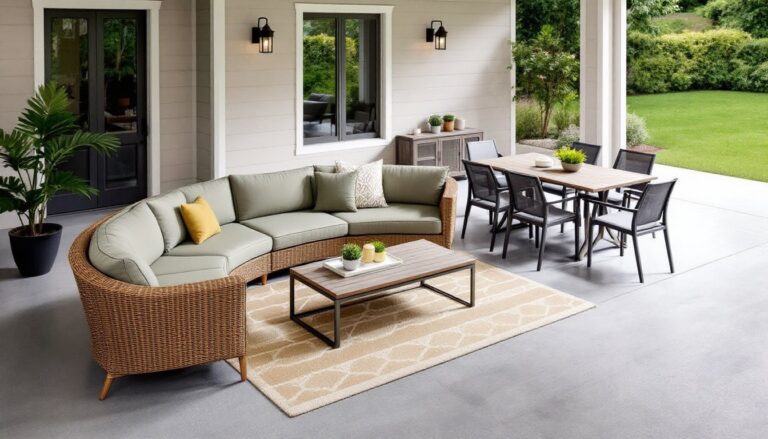
Coastal modern dominates Miami patios in 2026, clean lines, neutral palettes (whites, taupes, soft grays), and mixed materials like teak armrests on aluminum sectionals. The look borrows from Southern coastal design traditions but strips away fussiness. Modular seating lets homeowners reconfigure layouts for intimate dinners or pool parties.
Cuban-inspired geometry brings color without kitsch. Think bold tile mosaics on tabletops, wrought-iron scrollwork in chair backs, and jewel-tone cushions (emerald, sapphire, burnt orange) against white frames. Pairs well with stucco walls and terracotta planters.
Minimalist teak platforms appeal to condo owners with limited space. Low-profile sectionals (seat height 14–16 inches) with hidden storage compartments maximize small balconies. Folding bistro sets in powder-coated aluminum store flat against railings.
Daybeds and cabanas turn patios into all-day lounges. Aluminum frames with retractable Sunbrella canopies provide shade without permanent structures that trigger HOA battles. Look for models with tilting backs and waterproof cushions thick enough (4+ inches) for napping.
Fire features remain popular even though heat. Natural gas or propane fire tables (not wood-burning, smoke codes and ash are a headache) extend usable evenings during Miami’s mild winters. Choose tempered glass guards and auto-shutoff valves. Permit requirements vary by municipality, so check with local building departments before installation.
Where to Buy Patio Furniture in Miami
Local showrooms let you test before buying, critical for sectionals and dining sets. Check weight, cushion firmness, and whether frames wobble. Addison House in the Design District carries mid-to-high-end lines with floor models often available at 20–30% off. Patio & Things in Doral stocks budget-friendly options and offers assembly services.
Big-box stores (Home Depot, Lowe’s, Costco) sell seasonal inventory March through July. Quality varies, inspect welds and fabric closely. Costco’s return policy makes it lower-risk for testing durability. Expect delivery waits of 3–6 weeks during peak season.
Online retailers like Wayfair and Overstock offer broader selection and competitive pricing, but returns mean dealing with freight carriers and restocking fees up to 25%. Read reviews specifically mentioning Miami or Florida climate, what works in Colorado may fail here. Check that sellers provide detailed material specs (aluminum gauge, fabric UV rating, foam type).
Estate sales and liquidations yield high-end pieces at fractions of original cost, especially from waterfront properties. Many owners sell barely-used furniture when relocating. Inspect carefully for rust, frame damage, and mildew. Factor in reupholstery costs for dated cushions, a local shop charges $60–$100 per seat cushion with customer-supplied fabric.
Custom fabricators along Biscayne Boulevard and in Hialeah build commercial-grade furniture using marine hardware. Expect 30–40% more than retail, but pieces are built to spec for your space and climate. Ideal for odd dimensions or matching existing architectural details.
Essential Maintenance Tips for Miami Patio Furniture
Monthly cleaning prevents buildup that accelerates wear. Hose down frames and cushions, scrubbing with mild dish soap and a soft-bristle brush. Avoid pressure washers, they force water into joints and strip coatings. Rinse thoroughly: soap residue attracts dirt.
Inspect welds and joints every three months for cracks, rust spots, or loose hardware. Touch up chips in powder coating immediately with automotive primer and matching spray paint. Tighten bolts, salt air loosens fasteners faster than you’d expect.
Cushion care extends life by years. Remove cushions during heavy rain or when gone more than a day. Stand them on edge in covered areas to air-dry after cleaning. Wash covers monthly in cold water with oxygen bleach (not chlorine, which degrades solution-dyed fabrics). Many find inspiration for outdoor cushion storage solutions that protect investments year-round.
Teak maintenance requires sanding with 120-grit paper twice yearly to remove gray oxidation, followed by two coats of marine teak oil. Work in sections, wiping excess oil after 15 minutes. Skip this, and wood dries out, cracks form, and joints loosen.
Hurricane prep starts before storm watches. Store lightweight furniture in garages or ground-floor interior rooms. Anchor heavier pieces with ratchet straps to deck joists (not railings) using stainless steel eye bolts. Remove cushions and glass tops, they become projectiles in 75+ mph winds. Keep photos of your setup for insurance claims.
Off-season storage (June through November, peak hurricane months) preserves furniture and clears space for storm prep. Clean and dry everything first. Stack chairs, wrap cushions in contractor bags with desiccant packs, and cover frames with breathable tarps (not plastic, which traps moisture).
Budget-Friendly Ways to Upgrade Your Miami Patio
Reupholster instead of replace. Cushion foam and fabric cost $30–$50 per seat versus $200+ for new chairs. Buy Sunbrella remnants from fabric stores in Hialeah at 40% off retail. A basic sewing machine handles straight seams: hire an upholsterer for complex piping or welting.
Refinish aluminum frames. Strip old powder coating with aircraft remover (wear neoprene gloves and full-face respirator), sand to bare metal with 80-grit, prime with self-etching metal primer, and apply automotive spray paint in light coats. Total cost under $75 for a four-piece set. Work in a ventilated area away from ignition sources.
DIY side tables from concrete pavers and cinder blocks. Stack three 8×8×16-inch blocks, top with a 16×16-inch paver, secure with concrete adhesive. Seal with waterproof masonry sealer. Cost: under $20 per table. Add industrial casters for mobility.
Shade solutions beat Miami heat without permanent structures. Cantilever umbrellas (9–11-foot spans) with crank-lift mechanisms provide adjustable coverage. Base weights need 100+ pounds, fill with sand, not water (it evaporates and breeds mosquitoes). Offset designs keep poles out of seating areas. Expect $150–$300 for quality units that survive wind gusts.
Outdoor rugs define zones and add comfort underfoot. Polypropylene rugs resist mold and fade, clean with a hose, and cost $1–$3 per square foot. Avoid natural fibers like jute or sisal, they rot in humidity. Use rug pads rated for outdoor use to prevent slipping and allow airflow underneath.
Lighting upgrades transform ambiance cheaply. Battery-powered LED string lights with solar panels eliminate wiring, last 3–5 years, and cost $25–$50 for 25-foot strands. Mount on stainless-steel hooks or nylon-coated wire. Hurricane-rated fixtures withstand wind better than lightweight decorative options.