Table of Contents
ToggleShopping for high-end outdoor furniture means you’re past the “whatever’s on sale” phase. You want pieces that hold up to UV rays, seasonal moisture, and years of backyard gatherings without looking tired by July. Sunset West has built a reputation for exactly that, commercial-grade construction wrapped in residential style. This guide walks through what sets the brand apart, which collections fit different spaces, and what you’ll actually spend to outfit your patio with furniture that lasts a decade or more.
Key Takeaways
- Sunset West patio furniture uses commercial-grade materials like powder-coated aluminum frames and high-density polyurethane foam to withstand years of exposure without deteriorating.
- The brand’s modular sectionals feature hidden anchors that prevent pieces from shifting in wind while allowing flexible reconfiguration for different patio layouts.
- Quality indicators include aluminum tubing with 1.2–1.5mm wall thickness, solution-dyed acrylic fabrics, and stainless steel hardware to resist rust and fading in coastal or humid climates.
- Sunset West patio furniture typically ranges from $2,500–$4,500 for sofas and $5,000–$10,000 for sectionals, with custom fabric selections taking 8–12 weeks to arrive.
- Proper maintenance—including monthly cushion vacuuming, breathable covers in winter, and spot-cleaning spills immediately—extends the lifespan to a decade or more while keeping pieces showroom-ready.
What Makes Sunset West Patio Furniture Stand Out?
Sunset West positions itself squarely in the luxury outdoor market, and the price tags reflect that. But the cost isn’t just about aesthetics, it’s rooted in construction methods borrowed from hospitality and commercial installations.
The brand uses powder-coated aluminum frames rather than stamped steel or resin wicker over thin tubing. Aluminum won’t rust, weighs substantially less than wrought iron (making rearranging feasible), and handles coastal salt air without pitting. Powder coating is baked on at high temps, creating a chip-resistant shell that holds color better than spray paint.
Cushion cores are high-density polyurethane foam wrapped in Dacron, not the cheap stuff that compresses into a pancake after one summer. Fabrics are solution-dyed acrylics, think Sunbrella or equivalent, where pigment is added during fiber production instead of topically dyed afterward. That means color goes through the entire thread, so fading is minimal even after years of full sun exposure.
Welds on frame joints are ground smooth and double-sealed. It’s a detail you won’t notice until you compare a Sunset West chaise to a big-box equivalent and feel the difference in rigidity. No wobble, no flex when you sit down hard.
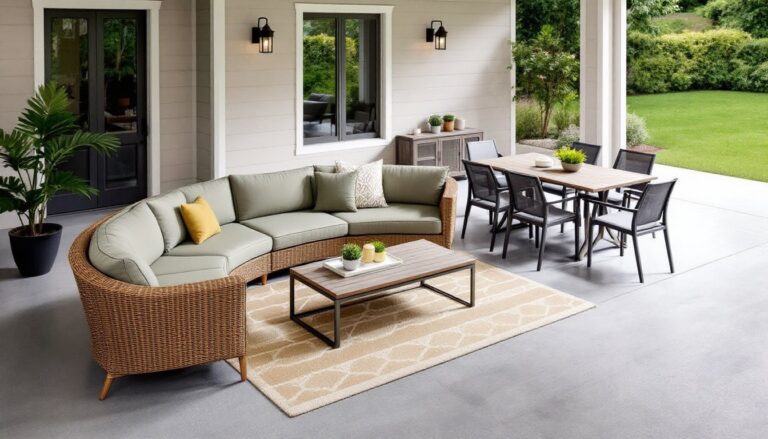
Another differentiator: modular sectionals with hidden anchors. Pieces lock together with clips underneath the frame so configurations don’t drift apart on a windy afternoon, but you can still reconfigure layouts when you want.
Popular Sunset West Patio Furniture Collections
Sunset West rotates collections, but a few core lines have staying power. Here’s what you’ll see on showroom floors in 2026.
Coronado Collection: Deep seating with track arms and a low profile. It’s the go-to for modern layouts where you want clean lines without looking cold. Frames are aluminum with a matte finish, cushions run 5–6 inches thick. Works well under covered patios or pergolas because the low back doesn’t block sightlines.
La Jolla Collection: Higher backs, rolled arms, more traditional proportions. If your home leans coastal or transitional rather than mid-century, La Jolla fits better. The wicker weave on some pieces is hand-woven high-density polyethylene (HDPE) over aluminum, not hollow PVC resin. HDPE doesn’t crack in freeze-thaw cycles and bounces back after compression.
Majorca Collection: Bar-height and counter-height options for outdoor kitchens or pool bars. Swivel barstools with footrests and backs that actually support your lumbar. Tabletops are powder-coated aluminum or tempered glass with aluminum borders. Glass can scratch, so if you’re setting down tools or rough planters regularly, stick with solid tops.
Provence Collection: Dining tables and side chairs with sling seating. Sling fabric (usually Batyline mesh) is UV-stabilized PVC-coated polyester. It’s breathable, dries fast after rain, and doesn’t hold heat the way solid cushions can. Mesh does eventually stretch, but quality slings last 7–10 years before needing replacement.
Materials and Construction Quality
Sunset West publishes detailed spec sheets, and it’s worth reading them before you buy. Here’s what matters:
- Frame gauge: Aluminum tubing is typically 1.2 to 1.5mm wall thickness. Thinner than 1.2mm will eventually dent or bend under heavy use.
- Weave density: Wicker pieces should have tight, consistent spacing with no visible gaps at stress points (corners, joints). Loose weaves unravel faster.
- Fabric weight: Solution-dyed acrylics run 8–10 oz per square yard for furniture-grade applications. Lighter fabrics pill and tear more easily.
- Foam density: High-density foam is rated around 1.8 to 2.2 lbs per cubic foot. Anything under 1.5 lbs compresses too quickly.
- Hardware: Stainless steel bolts and anchors, not zinc-plated. Zinc flakes off in humid climates.
If you’re near the coast or in a high-humidity zone, double-check that all metal components, not just the frame, are marine-grade or stainless. One rusted bolt can stain a $3,000 sofa.
Choosing the Right Sunset West Furniture for Your Space
Measure your patio or deck before you fall in love with a sectional configuration. Outdoor furniture takes up more visual and physical space than you think, especially once you account for cushion overhang and the clearance needed to walk around pieces comfortably.
Space planning basics:
- Leave 30–36 inches of walkway between furniture and walls, railings, or planters. Less than 30 inches feels cramped and makes moving cushions or cleaning underneath difficult.
- Deep-seating sofas and chairs typically measure 36–40 inches deep including cushions. That’s 8–12 inches deeper than indoor seating.
- Dining tables need 42–48 inches of clearance behind chairs when occupied so people can push back and stand without bumping into railings or planters.
Covered vs. uncovered patios: If your furniture will live under a roof or pergola year-round, you have more flexibility with cushion fabrics and can lean into lighter colors without worrying about constant sun bleaching. Full-exposure spaces benefit from darker or patterned fabrics that camouflage inevitable dirt and pollen buildup between cleanings.
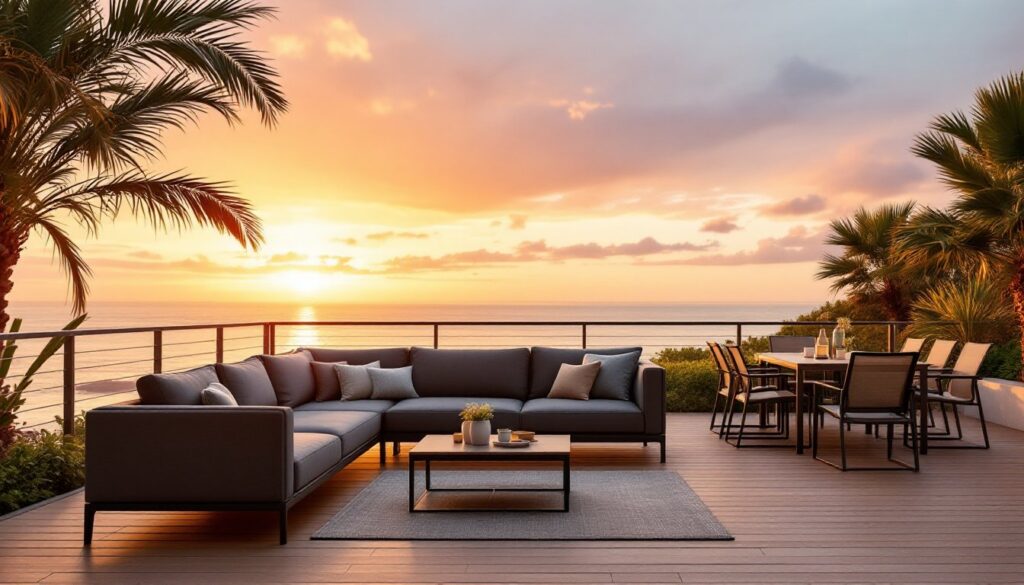
Sectional configurations: Most Sunset West sectionals are modular. Start with a corner piece, add armless middle sections, and cap with a one-arm or armless end. If you’re working with a narrow deck (8–10 feet wide), an L-shaped layout often fits better than a U-shape. U-configurations need at least 12 feet of width to avoid feeling boxed in.
Dining vs. lounge priority: If you entertain with sit-down meals regularly, allocate more budget and square footage to a dining set with six to eight seats. If your outdoor time skews toward casual drinks and conversation, deep seating with a coffee table and side tables serves you better. Don’t try to cram both into a small space, you’ll end up with a cluttered layout that doesn’t do either function well.
Fire pit compatibility: Sunset West offers fire tables in some collections. If you’re adding a separate fire feature, keep upholstered furniture at least 24–30 inches away from open flames. Embers can land on cushions, and radiant heat degrades foam and fabric faster than UV exposure.
Maintenance and Care Tips for Long-Lasting Beauty
Luxury outdoor furniture isn’t maintenance-free, but it’s designed to tolerate neglect better than cheaper alternatives. Here’s how to keep it looking showroom-ready.
Routine cleaning:
- Frames: Wipe aluminum and wicker frames with a damp microfiber cloth every few weeks. For stubborn grime, use a mild dish soap solution (a few drops per gallon of water). Avoid abrasive scrubbers, they’ll scratch powder coating.
- Cushions: Vacuum cushions monthly to remove pollen, dust, and debris that works into fabric weave. Spot-clean spills immediately with cool water and a soft brush. Most solution-dyed fabrics can handle a diluted bleach solution (1 part bleach to 10 parts water) for mold or mildew, but test an inconspicuous area first.
- Glass tabletops: Use a standard glass cleaner or a vinegar-water mix. Dry with a lint-free cloth to prevent water spots.
Seasonal prep:
- Before winter: If you store cushions indoors, let them air-dry completely before packing them in bins or bags. Trapped moisture breeds mold. Frames can stay outside, but cover them with breathable furniture covers, not plastic tarps, which trap condensation. Some homeowners inspired by west-facing garden designs prefer to leave furniture uncovered in mild climates where snow and ice aren’t factors.
- Spring setup: Hose down frames and cushions, let them dry in the sun, then inspect zippers, seams, and welds for damage. Address small issues before they escalate.
Stain removal:
- Grease/oil: Blot (don’t rub), then apply a degreaser or dish soap. Rinse thoroughly.
- Wine, coffee, or juice: Blot, rinse with cold water, then treat with an enzyme cleaner or mild detergent.
- Tree sap or bird droppings: Scrape off excess with a plastic scraper, then use rubbing alcohol on a cloth to dissolve residue.
What to avoid:
- Pressure washers on wicker or fabric (too aggressive, can split weave or delaminate fabric backing).
- Harsh chemicals like acetone, paint thinner, or chlorine bleach at full strength.
- Leaving wet cushions piled in a heap. Stand them on edge or lay flat in the sun to dry.
Replacement parts: Sunset West sells replacement cushions, sling fabric, and some hardware through authorized dealers. If a cushion cover tears or a frame weld cracks (rare but possible), you don’t have to replace the entire piece. Budget for cushion replacement every 7–10 years in high-UV areas, longer if furniture is mostly shaded.
Where to Buy and What to Expect for Pricing
Sunset West sells through authorized dealers and specialty patio retailers, not big-box stores. That means you’re dealing with showrooms that offer design consultations, fabric samples, and delivery/assembly services. Some dealers also carry floor models at a discount if you’re willing to take what’s on display.
Price ranges (2026 estimates):
- Deep-seating sofas: $2,500–$4,500 for a three-seat sofa with cushions.
- Sectional configurations: $5,000–$10,000 depending on the number of pieces and fabric grade.
- Dining sets (table + six chairs): $3,500–$6,500.
- Chaises and daybeds: $1,800–$3,200.
- Accent tables and side tables: $400–$900.
Prices fluctuate with material costs (aluminum and fabric both see commodity-driven swings) and regional freight. Coastal markets and metro areas tend to run 10–15% higher than rural regions.
Buying tips:
- Order early: Custom fabric selections can take 8–12 weeks for production and shipping, longer during peak spring season (March–May).
- Check for floor samples: Showrooms often discount floor models by 20–40% at the end of summer. Inspect for frame integrity and cushion condition, minor fading is fine, but avoid pieces with torn fabric or wobbly joints.
- Negotiate delivery: Some dealers include white-glove delivery (unpacking, assembly, debris removal) in the price. Others charge $200–$500 depending on distance. Ask upfront.
- Warranty coverage: Sunset West typically offers a three-year commercial warranty and a five-year residential warranty on frames, with shorter coverage (one to two years) on fabric and cushions. Get the warranty terms in writing and understand what’s excluded (normal wear, fading, mildew from improper storage).
Online vs. in-person: A few authorized dealers sell Sunset West online, but seeing fabric and frame quality in person helps avoid surprises. Photos often oversaturate colors, and judging cushion firmness from a spec sheet is tough. Those seeking modern design inspiration often appreciate the tactile experience of showroom shopping. If you’re furnishing a full patio and spending $8,000+, a showroom visit is worth the drive.
Alternatives to consider: If Sunset West’s price point is a stretch, look at Brown Jordan, Kingsley Bate, or Gloster for similar construction quality. For a step down in price with decent durability, brands like Woodard or Tropitone split the difference between luxury and mass-market. Just as farmhouse decor trends influence indoor furniture choices, outdoor style preferences vary widely, prioritize build quality over aesthetics that may shift in a few years.
Conclusion
Sunset West delivers on the promise of furniture that looks good and lasts, assuming you’re willing to pay for it upfront and maintain it properly. If your outdoor space is an extension of your living area rather than an afterthought, and you plan to stay in your home long enough to justify the investment, the brand holds up well against competitors. Just measure twice, order early, and don’t skip the seasonal cleaning.