Table of Contents
ToggleStandard patio sets from big-box stores all start to look the same after a while, same wicker weave, same neutral cushions, same forgettable lines. If your outdoor space feels like it could belong to anyone on the block, it’s time to consider unique patio furniture that actually reflects your style and makes guests pause. Unusual materials, sculptural silhouettes, and one-off pieces turn a generic deck or patio into an extension of your home’s personality. Whether you’re hunting for statement seating, building something from reclaimed materials, or sourcing artisan-made tables, this guide covers 15 standout ideas to help you create an outdoor area that’s genuinely yours.
Key Takeaways
- Unique patio furniture transforms outdoor spaces from generic to memorable by serving as conversation starters while offering superior craftsmanship and durability compared to mass-produced alternatives.
- Sculptural seating, live-edge wood tables, and unconventional materials like Corten steel and powder-coated aluminum define personal style—light-colored finishes work best in full sun to avoid heat absorption.
- DIY patio furniture projects using pallets, cinder blocks, and repurposed materials deliver one-of-a-kind pieces at a fraction of custom costs while guaranteeing perfect fit for your space.
- Sourcing unique patio furniture from local artisans, architectural salvage yards, estate sales, and specialty retailers requires more effort than big-box shopping but ensures pieces nobody else on your street will have.
- Material choice is critical—seal live-edge wood with marine-grade finishes, use outdoor-rated grout on tile tables, and confirm weather resistance on vintage pieces to ensure longevity in outdoor conditions.
Why Unique Patio Furniture Makes a Difference
Generic outdoor furniture does the job, but it rarely does much else. Unique pieces shift the focus from “functional seating area” to “destination.” Guests gravitate toward interesting furniture, it becomes a conversation starter, a photo backdrop, and a reflection of how you approach design.
From a practical standpoint, standout furniture often means better craftsmanship and materials. Artisan-made chairs, custom metal tables, and salvaged wood benches typically outlast mass-produced resin or particleboard alternatives. You’re investing in durability alongside aesthetics.
Unique doesn’t always mean expensive. Upcycled projects, local maker collaborations, and vintage finds can cost less than premium catalog sets while delivering far more character. The key is intentionality, choosing pieces that serve your space and style rather than defaulting to what’s available at the nearest warehouse.
Statement Pieces That Define Your Outdoor Style
Sculptural Chairs and Artistic Seating
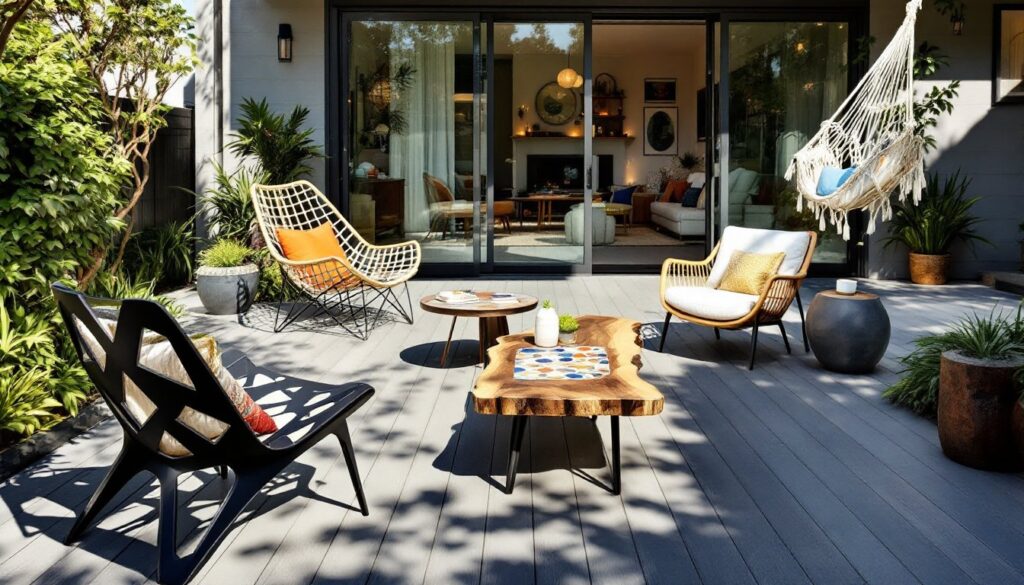
Sculptural seating turns function into form. Think powder-coated steel chairs with geometric cutouts, rattan peacock chairs with dramatic fan backs, or molded concrete seats that double as garden art. These pieces anchor a patio’s visual identity and work well as solo accents or pairs flanking a doorway.
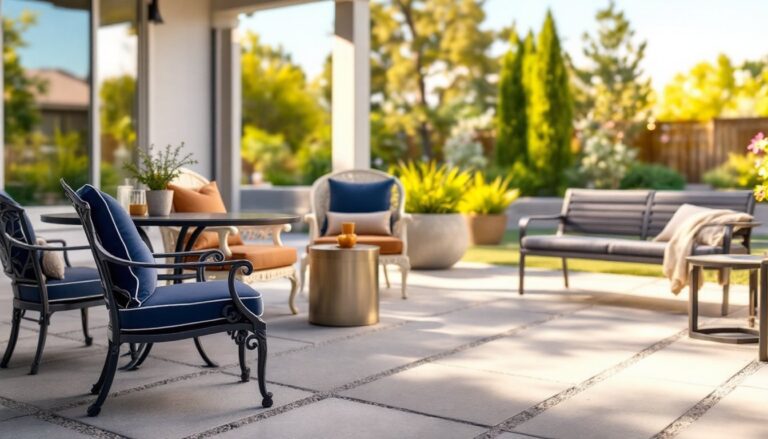
Acapulco chairs, those mid-century vinyl cord chairs on powder-coated frames, remain popular for good reason. They’re lightweight, weather-resistant, and come in colors beyond the standard taupe. For something more substantial, look at cast aluminum chairs with Art Deco or nature-inspired patterns. They’re heavy enough to stay put in wind and won’t rust like wrought iron.
If your patio sees full sun, avoid dark metal seating unless you’re adding thick cushions. Black steel chairs in July sun can hit 140°F surface temps, enough to leave marks on bare skin. Lighter finishes or natural materials like teak stay cooler.
Hanging chairs and swings bring movement and a bit of whimsy. Suspended egg chairs or macramé hammock swings need solid overhead support, either a beam rated for at least 250 pounds or a freestanding frame. Don’t hang heavy seating from porch ceiling joists without confirming they’re structural, not just decorative trim.
Conversation-Starting Tables and Surfaces
Tables set the tone for how a space gets used. A live-edge walnut slab on hairpin legs says something different than a mosaic-tiled bistro table or an industrial cart converted into a coffee table.
Live-edge wood tables bring organic texture, but they need proper sealing for outdoor use. Look for slabs treated with marine-grade spar urethane or epoxy resin, both offer UV and moisture resistance. Untreated wood will crack, warp, and gray within a season. If you’re sourcing raw slabs, let them acclimate to outdoor humidity for at least two weeks before finishing.
Mosaic and tile-top tables handle weather well and add color without fabric. DIY versions using reclaimed tiles, broken pottery, or glass can be grouted onto a plywood base, then sealed. Use outdoor-rated thinset and grout, indoor products will crack in freeze-thaw cycles.
Repurposed industrial pieces, vintage factory carts, cable spools, or metal drums, make rugged, low-maintenance tables. Sand any rust, prime with a rust-inhibiting primer like Rust-Oleum, then topcoat with exterior enamel. Add locking casters if you want mobility: outdoor spaces often need flexible layouts for parties or seasonal shifts.
For dining tables, remember that 29–30 inches is standard height, while coffee tables sit around 16–18 inches. If you’re mixing DIY and store-bought seating, double-check heights so chairs actually fit.
Unconventional Materials for One-of-a-Kind Furniture
Material choice separates forgettable furniture from pieces people remember. Beyond the usual teak and all-weather wicker, consider these:
- Corten steel: Weathering steel that develops a stable rust patina. It won’t corrode through like regular steel, and the orange-brown finish adds an industrial edge. Expect some rust staining on adjacent surfaces during the first year.
- Concrete and fiber-cement: Heavy, durable, and surprisingly versatile. Modern concrete furniture can be smooth and minimalist or textured and raw. Seal it to prevent moisture absorption and staining. Not ideal if you rearrange layouts often, these pieces don’t move easily.
- Reclaimed wood: Barn siding, pallet wood, or salvaged decking adds history and texture. Strip old finishes, check for rot or insect damage, and seal with exterior-grade products. Avoid pressure-treated lumber older than 2003 if you’re repurposing, it may contain arsenic-based preservatives.
- Powder-coated aluminum: Lightweight, rust-proof, and available in nearly any color. Quality powder coating resists chipping better than paint. It’s a go-to for modern, clean-lined furniture that won’t need constant upkeep.
- Natural stone: Granite, slate, or bluestone table tops are near-indestructible and handle hot dishes without issue. They’re cold to the touch and heavy, plan for permanent or semi-permanent placement.
When working with unconventional materials, storage becomes a factor. Concrete and steel can stay out year-round in most climates. Wood furniture, even treated, lasts longer with seasonal covers or indoor storage in harsh winters.
DIY and Upcycled Patio Furniture Projects
Building your own furniture guarantees uniqueness and lets you tailor dimensions to your space. These projects range from beginner-friendly to intermediate skill levels.
Pallet furniture is the entry point for many DIYers. Disassemble pallets, sand thoroughly (splinters are real), and rebuild into benches, sectionals, or planters. Use deck screws (not nails) for structural joints. Stain or paint with exterior products. Heat-treated pallets (stamped “HT”) are safer than chemically treated ones (“MB” indicates methyl bromide).
Cinder block and lumber combinations create modular seating or shelving. Stack blocks as supports, slot in 2×10 or 2×12 boards for seats or surfaces. No fasteners needed, but you can add construction adhesive for permanence. Paint blocks with masonry paint if you want color. This setup works well for tight budgets, under $100 for a decent-sized sectional.
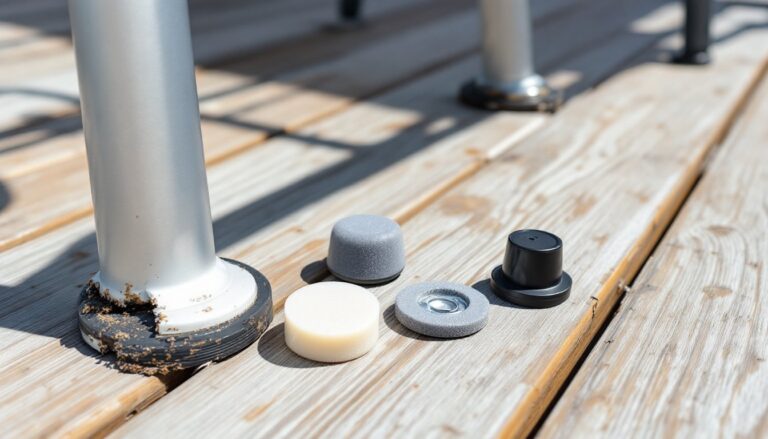
Tree stump side tables bring rustic charm with minimal effort. Cut a stump to 16–20 inches tall, strip bark, sand the top smooth, and finish with spar urethane. Add furniture pads or rubber feet to the bottom to protect deck surfaces. Let stumps dry for several months before sealing to prevent cracking.
Repurposed furniture conversions: Old dressers become potting benches, vintage doors turn into tabletops, filing cabinets get powder-coated and repurposed as drink carts. The trick is weatherproofing, prime all surfaces, use exterior paint, and seal hardware with clear coat to prevent rust.
Safety note: Always wear eye protection, gloves, and a dust mask when cutting, sanding, or painting. Use a miter saw or circular saw with a guide for straight cuts: a jigsaw handles curves. If you’re new to power tools, practice cuts on scrap lumber first.
Permits aren’t typically required for furniture projects, but if you’re building permanent structures like built-in benches with footings, check local codes. Some jurisdictions have setback requirements for any fixed outdoor construction.
Where to Find Truly Unique Patio Furniture
Sourcing standout pieces takes more effort than a single big-box run, but the payoff is furniture nobody else on your street will have.
Local artisans and makers: Many metalworkers, woodworkers, and furniture designers sell through studio websites, Instagram, or local markets. Custom work costs more upfront but delivers exact dimensions and finishes. Expect lead times of 4–8 weeks for commissioned pieces.
Architectural salvage yards: Reclaimed doors, industrial shelving, old factory stools, and vintage metal chairs show up here. Prices vary wildly, sometimes cheaper than new, sometimes premium for rare finds. Bring measurements and a pickup truck: most salvage yards don’t deliver.
Estate sales and auctions: Mid-century modern outdoor furniture, wrought iron sets, and vintage teak pieces surface regularly. Inspect for rust, rot, and structural integrity before bidding. Refinishing metal furniture is straightforward: badly weathered wood may not be salvageable.
Online marketplaces: Etsy features independent makers: 1stDibs and Chairish focus on vintage and high-end design. Facebook Marketplace and Craigslist are hit-or-miss but occasionally yield gems. Filter by location to avoid outrageous shipping costs on heavy items.
Specialty outdoor retailers: While not as common as mass-market stores, the curated outdoor furniture collections at design-focused retailers often include unique pieces from smaller brands. These sources bridge the gap between DIY and full custom work.
Regional styles: If you’re in the South, porch-focused design trends often emphasize swings, rockers, and wicker with historical nods. In the Southwest, carved wood and wrought iron dominate. Leaning into regional aesthetics can help narrow your search and ensure pieces suit your climate.
Furniture design showcases: Sites like Homedit’s outdoor furniture features highlight emerging designers and unusual material applications. They’re useful for identifying trends and makers you won’t find in typical retail channels.
When buying vintage or custom furniture, ask about materials and finishes. Not all old outdoor furniture was built to last outdoors, some pieces were originally indoor furniture that migrated to patios over time. Confirm weather resistance or plan to refinish accordingly.