
Table of Contents
ToggleWooden patio furniture offers a warmth and natural aesthetic that plastic and metal can’t touch. But not all wood furniture is built the same, some species rot within a season, while others last decades with minimal care. Whether someone’s replacing a worn-out bistro set or furnishing a new deck, understanding wood types, construction quality, and maintenance requirements saves money and frustration. This guide walks through the practical considerations for selecting wood patio furniture sets that’ll stand up to sun, rain, and backyard gatherings without becoming a maintenance nightmare.
Key Takeaways
- Wooden patio furniture sets offer natural warmth and stability, but durability depends heavily on wood species—teak lasts decades while cedar requires annual maintenance and eucalyptus demands the most upkeep.
- Teak dominates high-end outdoor markets due to natural oils that resist rot and insects, though Grade A heartwood starts around $1,500 for basic sets and requires annual oiling to maintain its original honey-brown color.
- Cedar, acacia, and eucalyptus provide budget-friendly alternatives ($300–$1,800) but need stronger maintenance commitment, with end-grain sealing and UV-blocking finishes essential to prevent warping and cracking.
- Quality joinery (mortise-and-tenon joints, through-bolted connections, or marine epoxy) and stainless steel hardware are critical indicators that separate long-lasting patio furniture from sets that fail within a few seasons.
- Proper drainage, seasonal recoating, winter storage in unheated spaces, and annual hardware inspection can extend the life of wood furniture sets to 20+ years while enhancing their appearance over time.
Why Choose Wooden Patio Furniture for Your Outdoor Space
Wood brings several distinct advantages to outdoor living areas. The material naturally insulates, staying cooler to the touch in summer heat compared to metal or resin alternatives. A quality wooden set also adds immediate visual weight and character to a patio or deck, there’s a reason landscape designers consistently recommend it.
From a structural standpoint, wood patio furniture sets handle weight and stress differently than synthetic options. Properly joined hardwood frames distribute loads across multiple contact points, making them stable on uneven surfaces. They’re also repairable: a cracked slat or loose mortise-and-tenon joint can be fixed with woodworking basics, while cracked resin usually means replacement.
The environmental angle matters to many homeowners. Responsibly sourced wood is renewable and biodegradable, unlike petroleum-based plastics. Look for FSC (Forest Stewardship Council) certification if sustainability is a priority, it indicates the wood comes from managed forests with replanting programs.
That said, wood demands more attention than aluminum or all-weather wicker. It expands and contracts with humidity, requires periodic sealing or oiling, and will deteriorate without proper drainage and airflow. Anyone unwilling to commit to seasonal maintenance should consider other materials.
Popular Types of Wood for Patio Furniture Sets
Teak: The Gold Standard for Outdoor Durability
Teak dominates the high-end outdoor furniture market for good reason. The wood contains natural oils (primarily tectoquinone) that repel water and resist rot, insects, and fungal decay. These oils also give teak a slightly oily feel when new.
Grade matters significantly with teak. Grade A teak comes from the heartwood of mature trees (typically 40+ years old) and offers the highest oil content and tightest grain. Grade B or C uses younger wood or sapwood with lower natural protection. The price gap is substantial, expect Grade A teak sets to start around $1,500 for a basic four-piece dining set, with larger or more detailed pieces climbing past $5,000.
Teak weathers to a silver-gray patina if left untreated, which many homeowners prefer. Those wanting to maintain the original honey-brown color need to apply teak oil or sealer annually. The wood is dense and heavy, a teak bench typically weighs 60-80 pounds, making it less prone to wind damage but harder to rearrange.
One construction detail to check: look for mortise-and-tenon joinery or stainless steel hardware. Brass or uncoated steel will corrode against teak’s acidic oils, leaving black stains and weakened joints.
Cedar, Acacia, and Eucalyptus: Budget-Friendly Alternatives
Western red cedar is the most common North American option. It contains natural preservatives (thujaplicins) that resist decay, though not as effectively as teak. Cedar is lightweight and works well for chairs and small tables but isn’t ideal for pieces bearing concentrated loads like benches or dining tables with center pedestals. A four-piece cedar patio set typically runs $400-$900.
Cedar’s soft, fibrous grain dents easily. Dragging furniture across concrete or gravel will gouge it. Plan to sand and reseal cedar annually if it’s exposed to full sun and rain. Without protection, it weathers to a driftwood gray and can develop surface cracks (checking) along the grain.
Acacia (often sold as “acacia wood” or “golden teak”) offers a middle ground. It’s a dense Asian or Australian hardwood with moderate natural oils and rot resistance. Acacia handles moisture better than cedar but not as well as teak. Pricing sits between the two, expect $700-$1,800 for a mid-range dining set.
Acacia’s grain varies widely depending on species and growing conditions. Some pieces show attractive contrast between light sapwood and dark heartwood: others look bland. Finishes can be inconsistent across a set if the wood comes from different harvests, so inspect before buying.
Eucalyptus has become popular in big-box stores due to its fast growth and affordability ($300-$800 for basic sets). It’s denser than cedar but still prone to warping if moisture penetrates unsealed end grain. The wood accepts stain well, so many manufacturers pre-treat it to mimic teak or mahogany.
Eucalyptus requires the most maintenance of this group. Plan to recoat with exterior wood sealer every 6-12 months, especially on horizontal surfaces where water pools. Skip this, and the wood will crack and splinter within two seasons. For those interested in exploring furniture building tutorials for custom outdoor projects, eucalyptus offers a workable option that cuts and joins easily with standard woodworking tools.
How to Select the Right Wooden Patio Set for Your Needs
Start with space and function. Measure the patio or deck area, accounting for clearance around the table, budget at least 36 inches on all sides for chair movement and foot traffic. A standard six-person rectangular dining table measures roughly 60 × 36 inches: round tables seating four to six run 48-60 inches in diameter.
Consider the primary use. Dining sets need stable, level surfaces and comfortable seat heights (typically 17-18 inches from ground to seat). Conversation sets prioritize deeper seating (20-24 inches) and lower tables (14-18 inches) for drinks and snacks. Don’t mix the two, a deep lounge chair paired with a 29-inch dining table creates awkward reach and posture.
Inspect joinery closely, especially on sets under $1,000. Quality outdoor wood patio furniture uses one of three methods:
- Mortise-and-tenon joints locked with marine-grade adhesive and dowels
- Through-bolted connections with stainless steel hardware and washers
- Traditional joinery (dovetails, lap joints) with marine epoxy
Avoid sets assembled entirely with brad nails or short screws driven into end grain, these connections fail as wood expands and contracts. Wiggle joints at display models: any play or creaking indicates poor construction.
Hardware should be stainless steel (304 or 316 grade) or hot-dipped galvanized. Standard zinc-plated screws rust through in 1-2 seasons outdoors. Check underneath tabletops and inside chair frames: manufacturers sometimes use cheaper fasteners where they won’t be seen.
Finish quality varies. Factory-applied oil or sealer should look even, without drips, bare spots, or sticky residue. Unfinished wood (common with teak) should feel smooth with no splinters or tear-out. If buying online, verify whether the set ships assembled, flat-packed, or requires partial assembly. Flat-pack furniture with pre-drilled holes often has alignment issues, expect to spend time tweaking.
Weight and portability matter for seasonal climates. A 100-pound teak table won’t blow over in storms, but it’s a beast to move into storage. Cedar and eucalyptus sets are easier to relocate but need anchoring in windy areas. Some manufacturers offer leveling feet or adjustable glides for uneven surfaces: these add $50-$100 to the cost but solve a lot of wobble problems on brick or flagstone patios.
Many Southern home design enthusiasts favor wood patio furniture sets that complement traditional architecture, look for slatted backs, curved arms, and natural finishes rather than modern angular designs if matching historical styles.
Maintenance Tips to Keep Your Wooden Furniture Looking New
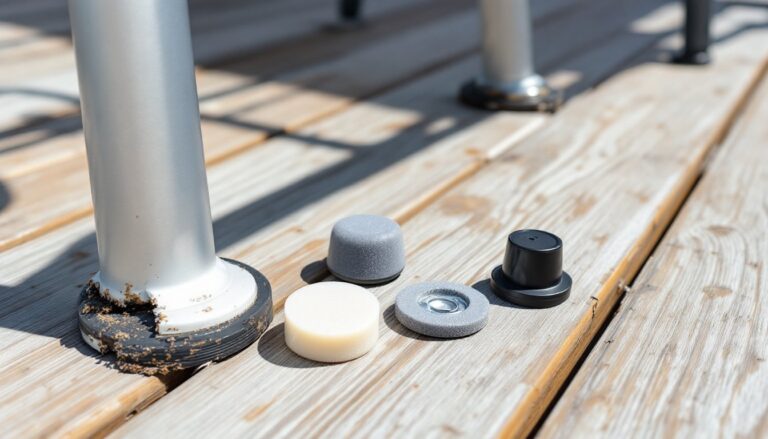
Start with drainage. Wood furniture should never sit in standing water or directly on soil. Use rubber or plastic furniture pads under legs to create a 1/8-inch air gap. On wooden decks, confirm the deck boards have proper spacing (typically 1/8-1/4 inch) for drainage: tight boards trap moisture against furniture feet and accelerate rot.
Cleaning frequency depends on exposure. For full-sun locations or areas near pools, hose down furniture monthly to remove pollen, bird droppings, and salt (if near saltwater). Use a soft-bristle brush and mild dish soap for stuck-on grime. Pressure washers work on teak if kept below 1,200 PSI with a 40-degree tip, but they’ll damage softer woods like cedar, stick to hand scrubbing those.
Sealers and oils serve different purposes. Penetrating oil (tung oil, linseed oil, or dedicated teak oil) soaks into the wood, enhancing grain and providing moderate water resistance. It needs reapplication every 6-12 months and won’t prevent UV graying. Film-forming sealers (spar urethane, exterior varnish) create a surface barrier that blocks moisture and UV but requires sanding and recoating every 1-3 years as the finish cracks.
For teak, most owners choose one of three approaches:
- No finish: Let it weather to silver-gray. Clean annually.
- Teak oil: Maintain original color with 2-3 coats per season.
- Teak sealer: Lock in color with annual recoating.
For cedar, acacia, and eucalyptus, a penetrating oil followed by a UV-blocking sealer provides the best protection. Apply when wood is dry (below 15% moisture content, check with a moisture meter if possible). Two thin coats beat one heavy coat: heavy applications leave sticky surfaces that attract dust.
Pay extra attention to end grain, the exposed wood at cut edges absorbs moisture 10-15 times faster than face grain. Seal end grain with extra coats or use end-grain sealer products before applying topcoats.
Inspect hardware annually. Stainless steel bolts can still corrode in salt air: clean and apply marine grease to threads. Tighten connections as wood shrinks with seasonal humidity changes. Replace any fasteners showing rust stains, corrosion spreads fast once it starts.
Winter storage extends furniture life significantly. If storing indoors, choose an unheated space like a garage or shed: bringing wood into heated areas causes rapid moisture loss and cracking. Cover outdoor furniture with breathable covers (canvas or synthetic fabric with vents), not plastic tarps, trapped condensation promotes mold. Remove cushions and store separately: they hold moisture against wood frames.
Mold and mildew happen, especially in humid climates. Mix 1 cup oxygen bleach (not chlorine bleach) per gallon of water, scrub affected areas, and rinse thoroughly. Chlorine bleach breaks down lignin in wood and causes graying. For stubborn stains, commercial outdoor furniture cleaners formulated for specific wood types offer consistent results without guesswork.
Cracks and splinters will develop over time, especially in softwoods. Sand rough areas with 120-grit sandpaper before they snag clothing or skin. Fill deep cracks with marine epoxy tinted to match the wood, then sand flush after curing. This isn’t just cosmetic, filled cracks prevent water intrusion that leads to rot.
Conclusion
Selecting wooden patio furniture comes down to matching wood species and construction quality to the local climate and maintenance commitment. Teak handles neglect better than anything else but commands premium pricing. Cedar, acacia, and eucalyptus offer workable compromises if maintained properly. Focus on joinery and hardware quality, these determine whether a set lasts five years or twenty. With regular cleaning, seasonal sealing, and proper drainage, wood patio furniture sets deliver decades of outdoor use while aging into something that actually looks better with time.